
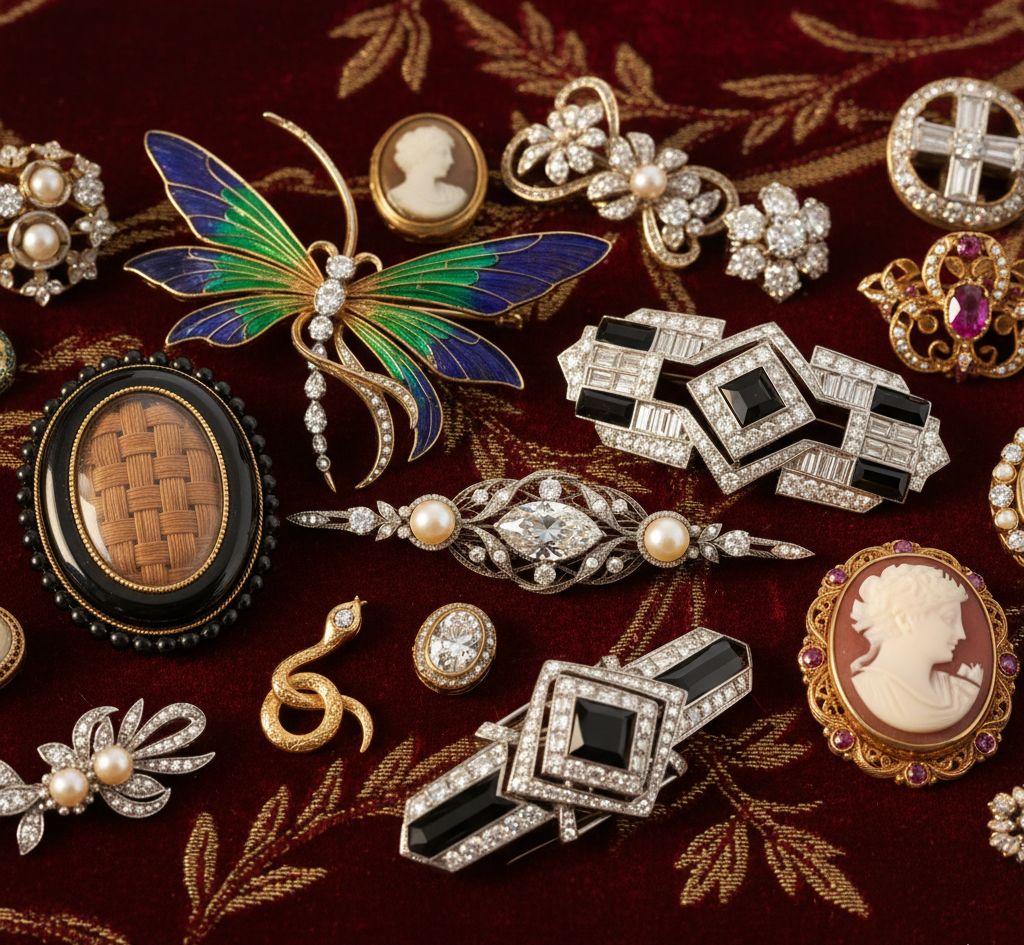
The Timeless Allure of Antique Brooch Jewellery
Open your grandmother’s jewellery box and you might find an antique brooch. The word ‘brooch’ brings to mind images of antique dresses and elegant brooches fastened as ornaments. Nowadays, you can see brooches everywhere, from catwalks to the red carpets.
Worn in the hair, on the neckline or pinned to the waist of a dress or gown, brooches are back as a fashion icon.
And this is not a style statement only meant for women. Both men and women are getting in on this trend; icons from Hollywood to royalty alike, adorn their lapels, collars, hats, and much more with brooches.
So, why is there this stunning return of antique brooch jewellery? What is the origin of brooches, and what are the different types?
This blog tries to answer all of your questions regarding one of the most favoured jewels of all time, the classic and elegant brooch.
Allure of Antique Brooch
There is something magnetic about an antique brooch. It sits quietly in a box for years, then comes alive the moment you pin it to fabric. It has weight, character, and a story no one else can claim. In a world full of fast fashion, an antique brooch feels like a small rebellion. It is a reminder that craftsmanship still matters.
Also Read: Understand Symbolism in Jewellery
The Origin of Brooch Jewellery
The origin of brooches was more functional than ornamental.
- Early Origins
The first brooches appeared long before fashion existed. Early humans used bones, thorns, and metal pins to secure clothing.
The true ancestor of the brooch is the fibula, a practical, safety-pin-like clasp dating back to the Bronze Age (around 1500 BCE).
- Celtic Brooch
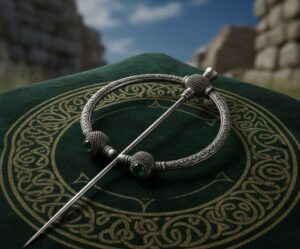
The Celts were trendsetters when it came to brooches. In Northern Europe, particularly with the Celts and Vikings, large, ornate penannular (incomplete ring) brooches were worn on the shoulder to secure outer garments, evolving into stunning examples of intricate metalwork, like the famous Tara Brooch in Ireland.
- The Renaissance and Beyond
The Renaissance ushered in an era of opulence and technical brilliance. Brooches became smaller, set with newly-cut precious gems like diamonds, rubies, and pearls, and were worn more for pure decoration than necessity.
- Victorian Era Brooches
The Victorian era then reshaped brooch design entirely. People used them for mourning, romance, and even secret codes through gemstones and motifs.
- Edwardian Era and Beyond
From the Edwardian years through the Art Deco era, jewellers experimented with platinum, diamonds, filigree, and geometric designs.
Types of Antique Brooches
Antique brooches come in many forms. Here are the categories collectors and stylists encounter most often.
- Cameo Brooches
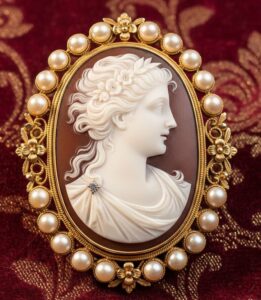
Famously associated with Queen Victoria, cameo brooches depict portraits, or a narrative, featuring legends, mythological scenes or gods and goddesses.
- Mourning Brooches
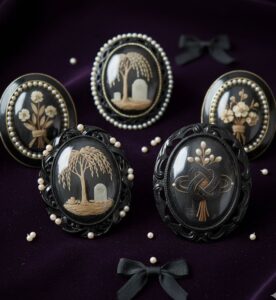
During the Victorian era, mourning jewellery became a tradition. These oval-shaped brooches under glass, depicted scenes of sorrow, and often incorporated hair and seed pearls (representative of tears).
- Portrait Miniature Brooches
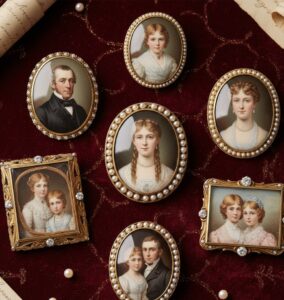
These carry hand-painted portraits on ivory or porcelain. They were often gifted between spouses or family members.
- Art Nouveau Brooches
Art Nouveau took inspiration from nature. Expect flowing lines, soft shapes, and motifs like dragonflies, flowers, and women with long hair. Materials like enamel, opal, and horn were common.
- Art Deco Brooches
This era loved clean lines, sharp angles, and bold contrasts. Think diamonds, platinum, and geometric patterns.
- Bar Brooches
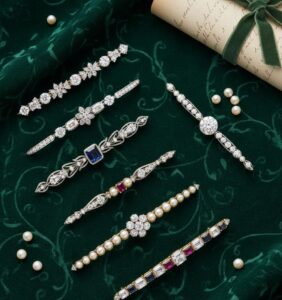
Thin, horizontal pins often decorated with gemstones or pearls. They work well on lapels or the neckline of dresses.
- Scatter Pins
A group of small brooches worn together. Birds, stars, flowers, and novelty shapes were common. Scatter pins help build playful, layered compositions on coats or sweaters.
- Victorian Sweetheart Brooches
The love brooches of the late Victorian aesthetic period were crafted from sheets of silver and designed as tokens of affection, with motifs and messages.
- Grand Tour Brooches
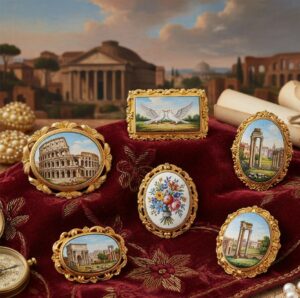
In the latter part of the 19th century, the Grand Tour became the signature European journey for the upper classes. Grand Tour brooches were among the most cherished. Landscapes, birds, vases, and floral bouquets were crafted in miniature.
- The Tara Brooch
One of the most famous medieval brooches ever discovered is the Tara Brooch. Found in Ireland in the 19th century, it dates back to the early medieval period and represents exceptional metalwork. Its intricate knot patterns, gold filigree, and glass accents show the skill and symbolism of ancient Celtic design.
How to Wear Antique Brooches Today
Brooches are surprisingly flexible.
- On a Blazer or Coat
The classic placement still works. Pin a brooch on the left lapel. For coats, go bigger. Bold brooches often get lost on thick fabric, so large pieces stand out best.
- On a Dress
Pin it at the waist to draw attention, or place it at the shoulder to add elegance.
- On Knitwear
Cardigans and sweaters are perfect for antique pieces. A cameo or floral brooch on a soft knit adds warmth and texture.
- On Scarves and Shawls
Use a brooch to hold a scarf drape in place. This is practical and stylish.
- On Bags
Pin a brooch on the strap or side of a handbag. Art Deco pieces look sharp on leather.
- In Hair
Some brooches can be converted into hair accessories with simple attachments. They work especially well for weddings and evening events.
Giftex: A World of Collectibles Auction
Buying antique and vintage brooches has become easier with the rise of online auction houses like Giftex. Their jewellery auctions offer curated pieces from India and around the world. It is a place where collectors hunt for one-of-a-kind treasures without leaving home.
One such standout was a vintage ruby and diamond brooch sold in a past Giftex auction. Set in 14k gold, it featured a refined fleur de lys motif with a central branch set in gemstones that added depth and brilliance.
You can find your own piece of history the same way.
Why Brooches Are Back Now
Brooches never really disappeared. In medieval times, they showed wealth and power. Later, they became symbols of taste, status, and sentiment. Each generation found its own way to wear them. They simply waited for the right moment to return to the spotlight.
Today’s fashion loves pieces with story and substance, which makes brooches an easy fit. They add personality to simple clothes, they work across seasons, and they feel fresh again because people want items that last.
The Enduring Appeal of Antique Brooches
Brooches offer something rare in modern fashion. They carry history, craftsmanship, and individuality. Antique brooches are perfect family heirlooms, durable pieces that can be passed down through generations, each one adding to the piece’s rich narrative.
In an age of throwaway trends, antique brooches remind us that style can last for generations.


About Post Author