
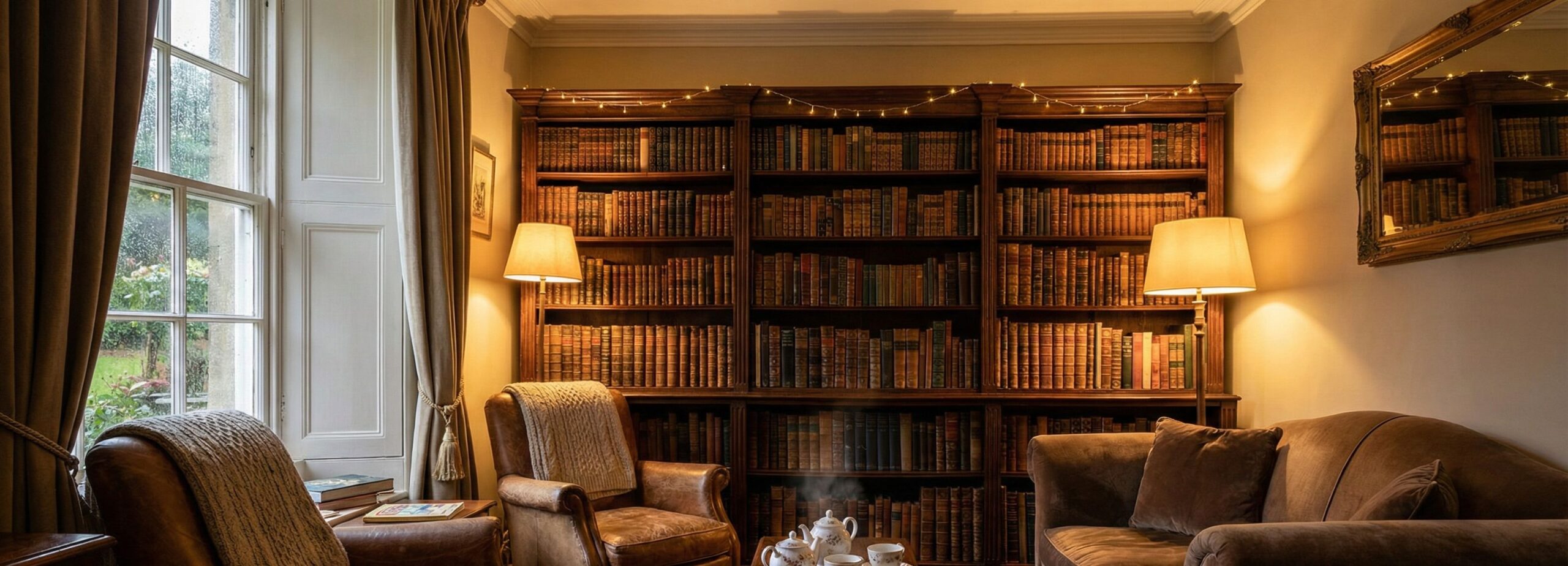
The Collector’s Sanctuary: Creating A Home Library for Your Rare Books
Marcus Tullius Cicero (106 BC – 43 BC), a prominent Roman philosopher, said
” A room without books is like a body without a soul.”
You are an antique book collector. You love the smell, the feel and the aura of a rare book. You have spent ages going through rare bookstores and visiting antiques auctions like Giftex to amass your rare collection. You now have a collection any rare book lover can be proud of. So, now what?
It’s time to create a library for rare books in your home, not only to store your books but to display them and read them. After all, these pages of history were not meant to be kept locked away but were meant to shine in the light of day (figuratively speaking, of course—UV rays are the enemy!).
A home library isn’t just a place to put books. Done well, it becomes a room that tells its own story. For book lovers and interior-design fans alike, a beautiful library can stop you in your tracks. In this guide, we will walk you through how to create a library that helps in protecting and storing your rare books while giving them the kind of display that invites you to sit down and read—because these pages weren’t meant to hide in the dark. They were meant to be read, shared and enjoyed.
Learn More About Rare Books’ Provenance Here.
Phase One: The Foundation
- Scouting the Location
Before you buy a single plank of wood or invest in that antique shelf you have had your eye on, you must decide where this sanctuary will live. Ideally, a dedicated room offers the best control over the environment.
However, do not despair if you lack a separate room. You can dedicate a specific portion of your living space to create a “reading corner.”
- Avoid basements and attics: These areas are prone to extreme temperature fluctuations and humidity, which are fatal to rare bindings and paper.
- Mind the plumbing: Never position your rare book library directly beneath a bathroom or kitchen. A single burst pipe could erase centuries of history.
- Sunlight Strategy: Choose a corner away from direct windows. Direct sunlight is a bleach that never stops working.
- The Volume Game: Planning for the Future
How many books do you want to fit? This seems like a simple question, but every collector knows the answer is always “more.” Take stock of your current collection and calculate the linear footage required. Then, add at least 20-30% more space for future acquisitions. There is nothing sadder than a library that is full the day it opens. You need space for the treasures you haven’t found yet.
Phase Two: The Vessel – Choosing Your Shelving
Serious collectors know that rare books cannot just touch any surface. We worry about acid in paper, but we often forget that wood itself is acidic.
- The Material Matter
The Wood Warning: While oak and cedar are beautiful, they emit volatile organic compounds (VOCs) and acids as they age, which can migrate into your books and cause “wood burn” or discolouration.
- The Aesthetic Compromise: If you must have wood (and let’s be honest, nothing looks as good as wood), ensure it is of the highest quality.
- Antique Shelves: Perhaps you want an antique cabinet to match your antique books. This is a beautiful choice. Since the wood has likely off-gassed decades ago, it is safer than new wood.
Phase Three: Designing the Atmosphere
Now that the technicalities are handled, we can focus on the aura. Here are some Cosy Library Ideas that bring the space to life:
- Floor-to-Ceiling Grandeur

Nothing says “library” quite like floor-to-ceiling shelving. It draws the eye upward and emphasises the volume of the room, and is the ultimate library for a book lover.
- The Window Nook (With Caution)
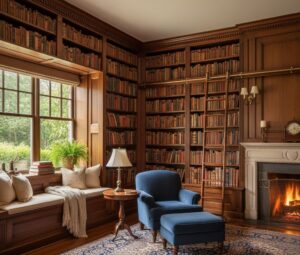
A window nook with a built-in bench is the dream. However, be vigilant. Ensure the window is treated with UV-filtering film. The nook should be your reading spot, but perhaps not the permanent storage spot for your most fragile items.
- Vintage Themes and Textures
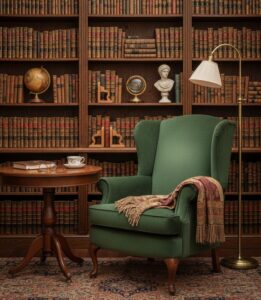
Your books are antiques; your decor should carry the same weight. Create an area that reflects this.
- Furniture: Add a vintage wingback chair or a heavy oak library table. These pieces anchor the room.
- Textiles: Drape cosy, antique shawls over the chairs. Use velvet or wool cushions.
- Curated Clutter: Break up the rows of spines by displaying vintage decorative arts—an old globe, a brass magnifying glass, or antique bookends—on the shelves.
- The Palette of Peace
Psychology plays a huge role in reading. You want to encourage focus and calm.
- The Palette: Deep greens and slate blues are ideal. These cooler, darker shades make the books pop and induce a physiological state of relaxation.
Lighting: Avoid harsh overhead lights. Use warm, low-voltage LED lamps (which emit low heat and no UV) to create pools of light for reading.
Phase Four: The Science of Preservation
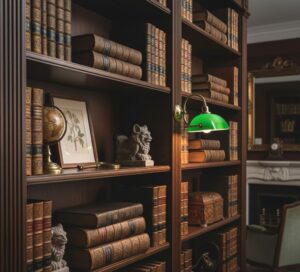
You have built the stage; now you must protect the stars.
- The Breathing Room Rule
Give your books space to breathe. They should be close enough to support each other upright, but not packed so tightly that you have to tug to get them out.
- The Spine Law
Never, ever pull a book out by the top of the spine (the headcap). This is the most common way spines break. Instead, push the two neighbouring books back slightly, then grasp the desired book by the middle of the spine.
- Size Matters
A tall book shelved next to a short book will eventually warp. The tall book will curl over the short one, permanently deforming the board.
The Fix: Shelve books by size whenever possible. It may disturb your alphabetical order, but it saves the binding.
- The Large Format Strategy
Any book with a spine wider than three inches, or taller than 18 inches (folios), should be laid flat. The bindings of these heavy giants cannot support the weight of the text block against gravity.
Stacking Limit: Do not stack these books more than three volumes high. Too much weight will crush the spines of the lower books.
- Dust and Cleanliness
Rare books don’t need pampering, but they do need consistent attention.
Dust shelves often. Use a soft brush or cloth to dust the tops of books. Stroke away from the spine to prevent pushing dust down into the text block.
Enjoy the Library You’ve Built
Creating a library for your rare books isn’t difficult. It takes care, attention, and a little design sense, but the reward is a room that feels like a personal sanctuary.
You’re not just storing books. You’re protecting them. You’re displaying them. And most importantly, you’re reading them.
Once it is finished, and you are sitting in your vintage chair with a first edition in your lap, surrounded by the calming greens of your walls and the golden light of your lamp, you will realise it was worth every penny. You haven’t just built a room; you have built a bridge to the past.
Rare books weren’t made to be locked away. They were meant to be opened, enjoyed, and passed from one pair of hands to the next.
When you build a library that honours your collection, you’re not only preserving the past—you’re adding your own chapter to it.


About Post Author