10 Iconic Indian Art Forms & Simple Ways to Add Them to Your Home
Indian art and culture are a rich tapestry of culture and history that has evolved over the centuries. One such traditional Indian art form that has captivated art lovers worldwide is the various Indian painting styles.
Indian folk art introduces cultural richness and personal space through painting styles like Madhubani, Warli and many more. Various painting styles are prevalent across various regions, each representing tradition, customs, and ideologies. Traditionally, most of the Indian painting styles existed as wall paintings or murals. In due course of time, urbanisation brought these painting forms on paper, canvas, and cloth, etc.
In this digital era, we all crave to create a space that reflects our origin, culture and something that is uniquely ours. Indian art is the best way of bringing life, colour, texture and our heritage back into our homes.
In this guide, we will explore the top Indian art forms that can add a touch of elegance to your decor, and also look at some inspiring home decor ideas.
Top 10 Indian Art Forms
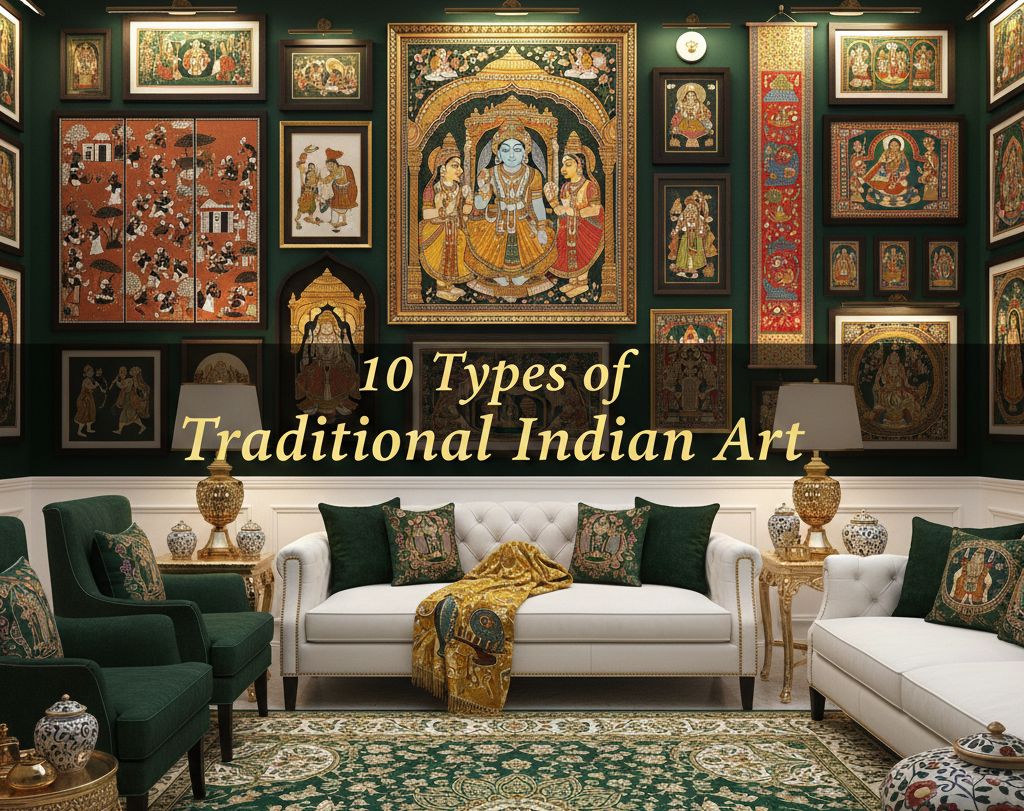
Below are ten well-known Indian art forms:
- Madhubani Painting
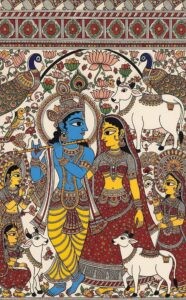
Madhubani grew in the Mithila region of Bihar, where women once painted walls during festivals and weddings. Today, it appears on canvas, fabric, and even wooden objects. These works usually show gods, animals, trees, and scenes from rural life. The colours are bold. The lines are strong. The overall effect is cheerful and full of movement.
How to use it at home:
- A single Madhubani panel above a sofa or a bed adds instant character.
- Cushion covers with Katchni-style line work add pattern without overwhelming a room.
- If you like a bigger change, a Madhubani-inspired border painted on a wall works well in entryways.
Also Read: Madhubani Painting Style
https://www.youtube.com/watch?v=UvH7xm8JfJ4
Video credit: Tiny Prints Art Academy
- Warli Painting

Warli art comes from the tribal communities of Maharashtra. It is known for its simple stick-like figures drawn in white on earthy brown surfaces. Although the figures look basic, the compositions often show farming, dancing, daily chores, or celebrations.
How to use it at home:
- Create a small Warli mural in a corner. Even a two-foot panel adds warmth.
- Warli art framed in simple wooden frames works well in hallways.
- Kalighat Painting (Bengal Pat)
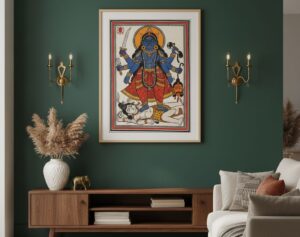
Kalighat painting began near the Kalighat temple in Kolkata as a form of scroll painting sold to pilgrims. Over time, it developed into a bold, expressive style. Themes range from gods and goddesses to social scenes and everyday characters.
How to use it at home:
- Hang a pair of Kalighat paintings side by side to create a gallery effect.
- Use Kalighat-inspired prints for accent cushions
- Pattachitra Painting
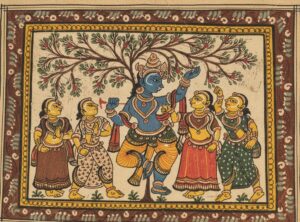
Pattachitra from Odisha is known for its detailed stories drawn on cloth or palm leaves. The colours are natural and earthy, and the style uses sharp outlines and fine decorative borders. Many works depict scenes from the life of Jagannath or stories from the Ramayana and Mahabharata.
How to use it at home:
- A Pattachitra painting works well as a statement piece in a dining room or study.
- Palm-leaf Pattachitra panels look striking in vertical arrangements on narrower walls.
- Phad Painting
Phad is a thousand-year-old tradition from Rajasthan. These long horizontal scrolls were once carried by storytellers who would narrate tales of local deities by lantern light. Phad paintings use warm tones of yellow, red, and orange and are filled with small narrative scenes.
How to use it at home:
- Since Phad scrolls are wide, place one above a long sideboard or in a hallway.
- Look for smaller Phad-inspired panels that capture the storytelling layout.
- Kalamkari

Kalamkari, which means “pen work,” is a 3,000-year-old art form practised in Andhra Pradesh. Artists use natural dyes and either hand-draw patterns with a pen or use wooden blocks for printing. The motifs often carry Persian influences and include florals, vines, and narrative scenes.
How to use it at home:
- A Kalamkari-inspired cushion or textile adds softness and pattern to a room
- Frame sections of Kalamkari fabric as art, especially if you want a lighter, textile-based look.
- Tanjore Painting
Tanjore painting from Tamil Nadu is known for its rich surfaces, gold foil work, and three-dimensional effect. Most pieces show deities placed against deep backgrounds.
How to use it at home:
- Tanjore paintings work best where you want a sense of formality, such as a prayer room or a special corner.
- Hang one above a console table paired with a brass lamp for a complete look.
- Miniature Painting
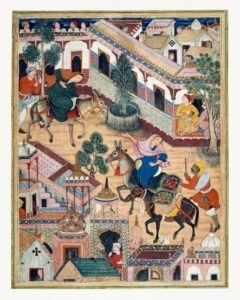
Miniature painting arrived in India with the Mughals in the 16th century. The style later blended Islamic, Persian, and Indian influences. The fine brushwork is the signature of this style.
How to use it at home:
- Miniature paintings look best when displayed in clusters because they are small.
- For a modern twist, frame them in thin black or walnut frames instead of ornate ones.
Also Read: India’s Iconic Miniature Art
- Gond Painting
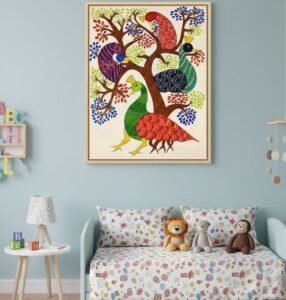
Gond art comes from the Gondi tribe of central India. These paintings use dots, lines, and dashes to create animals, trees, and stories from tribal folklore. The colours are bright, and the patterns give the works a lively energy.
How to use it at home:
- Gond paintings are great for kids’ rooms because of their playful shapes.
- Larger Gond pieces also fit living rooms since the colours brighten neutral spaces.
- Pichwai Painting
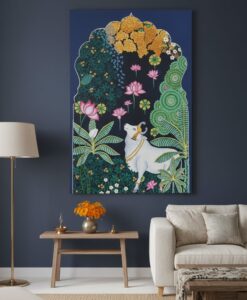
Pichwai grew near Nathdwara in Rajasthan. These works were originally large cloth hangings placed behind Krishna idols in temples. The paintings often show Shrinathji, lotus ponds, cows, and scenes from Krishna’s life. Over time, Pichwai also developed decorative versions for homes.
How to use it at home:
- A large Pichwai is a natural centrepiece for a living room.
- Smaller pieces with lotus or cow motifs work well in bedrooms.
Simple Home Decor Ideas for All These Art Forms
If you want a quick list of adaptable décor ideas, here are five practical ways to bring any of these art forms into your home:
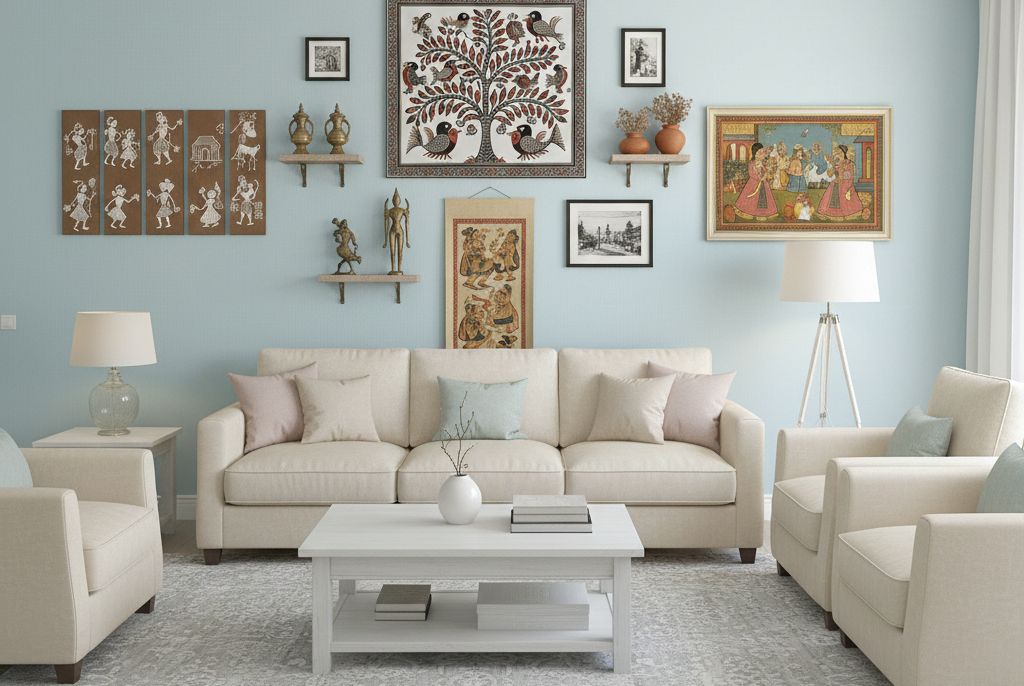
- Create a gallery wall
Mix styles but keep frames similar so everything feels connected.
- Use textiles as art
Hang Kalamkari, Pattachitra cloth, or embroidered panels on rods for a softer look.
- Pick one strong piece per room
A large Madhubani or Pichwai can anchor a room without the need for many accessories.
- Add small accents
Coasters, trays, lampshades, and storage boxes with traditional art bring hints of culture without crowding a space.
- Balance old and new
Pair traditional art with simple, modern furniture. The contrast keeps the room fresh and prevents visual clutter.
Bringing India’s Timeless Art Forms Into Everyday Homes
Traditional Indian art has always carried the stories, beliefs, and daily rhythms of the people who created it. From Madhubani to Warli to Kalamkari, each style reflects a distinct region, technique, and way of seeing the world. Together, these art forms show the depth and variety of India’s cultural landscape.
Bringing these styles into our homes is more than a décor choice. It’s a way of keeping these traditions alive while adding warmth and personality to modern spaces. These pieces also encourage us to slow down and appreciate handwork, detail, and stories told through line and colour.


About Post Author