Inside The Alluring World of Georgian Jewellery
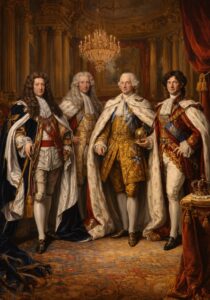
The Georgian period, from 1714 to 1837, was named for five Kings, four Georges and one William, namely George I, George II, George III, George IV, along with William IV.
This period, which included most of the Eighteenth Century and continued into the Nineteenth, was one of rapid, worldwide societal change.
In terms of jewellery design, although the name of the period obviously references England, this nation wasn’t the sole influence. Historical events in France, Germany, and Italy also influenced Georgian jewellery motifs and designs.
Authentic Georgian jewellery is rare. This is because Georgian period jewellers often melted down what they considered out-of-date pieces in order to make newer pieces. Since gold assaying wasn’t enforced until the 1900s, you won’t find antique Georgian jewellery with stamps or maker’s marks. Therefore, authentic antique Georgian jewellery needs an expert to identify it.
However, understanding the Georgian era and the jewellery produced, including the characteristics of Georgian jewellery, will help you make an informed decision if you ever come across a piece of antique Georgian jewellery.
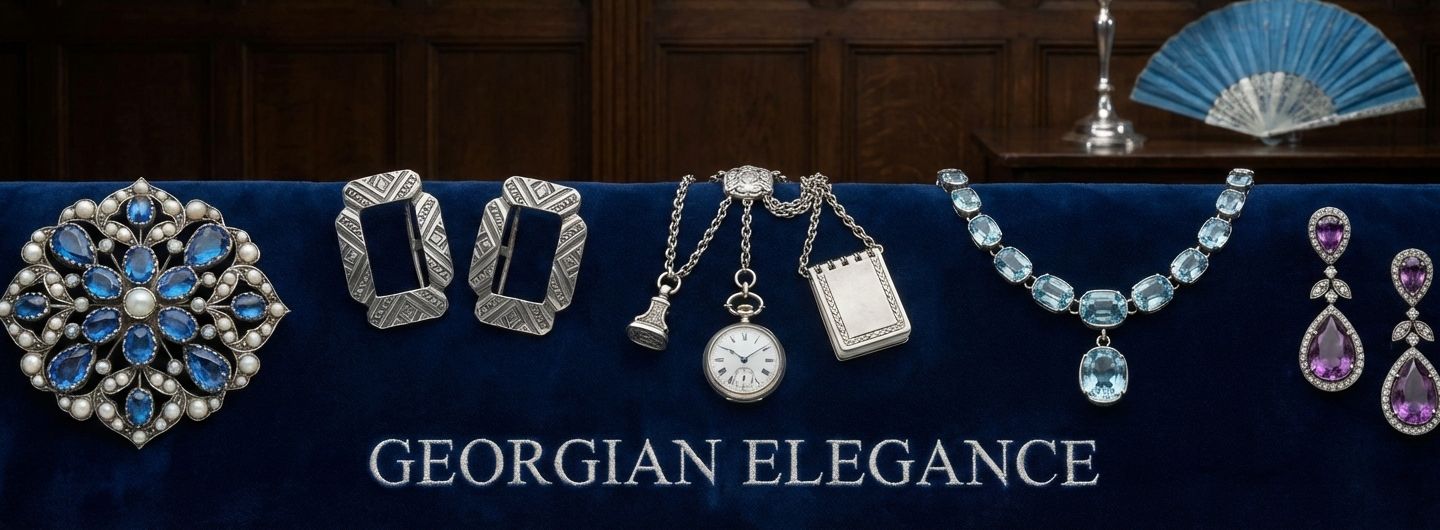
From sparkling chandelier earrings to Georgian enamel jewellery, we take you through the exuberant Georgian era jewellery.
The Georgian Lifestyle and Era
Georgian jewellery does not whisper. It glows, sparkles, and sometimes overwhelms. To understand Georgian jewellery is to step into a world where adornment was deeply tied to power, progress, and personal identity.
The Georgian era was prosperous and revolutionary, particularly in politics, art and architecture. Georgian jewellery was no exception.
Britain was expanding its influence across the globe, building an empire that brought wealth, materials, and new ideas back home.
The Georgian period unfolded alongside towering cultural achievements. Mozart composed, Gainsborough painted, and architecture moved fluidly between Rococo ornamentation, Neoclassical restraint, and later Romantic sentimentality. Jewellery followed these same aesthetic shifts.
It was an era of development. Fahrenheit invented his mercury thermometer. Handel premieres his ‘Messiah’, and Beethoven writes his first symphony.
Earlier attempts to enforce strict class boundaries through sumptuary laws had dictated who could wear certain fabrics, colours, and jewellery based on rank or income. By the mid-1700s, these laws had largely faded into irrelevance. The result was significant: jewellery was no longer reserved solely for the aristocracy. All of this, combined with leaps in science and world exploration, the introduction of rail travel and a changing role for women in society, created a rich and fascinating backdrop for Georgian jewellery.
Defining Characteristics of Georgian Jewellery
https://www.youtube.com/watch?v=eAHbkje2goY
Video Credit: Collecting Jewelry: GEORGIAN Period 1714-1837 | Jill Maurer
Georgian jewellery is instantly recognisable to trained eyes, not because of uniformity, but because of its craftsmanship and construction.
- Closed-Back Settings
One of the most defining features is the closed-back setting. Gemstones were backed with foil, often tinted, to enhance brilliance and colour in candlelight. This technique created a soft, glowing effect rather than the sharp sparkle associated with modern jewellery.
- Silver-Top, Gold-Back Construction
Diamonds were typically set in silver on the front, with a gold backing. Silver reflected light better than gold, while gold provided strength and resisted tarnish against the skin.
- Old Cuts and Natural Stones
Diamonds were hand-cut into forms such as rose cuts and old mine cuts, emphasising surface sparkle over symmetry. Coloured gemstones were valued for richness rather than perfection, often left untreated and irregular.
- Ornate Metalwork
The defining hallmark of Georgian jewellery is its extraordinarily ornate metalwork. This level of detail was only possible through hand fabrication, a process that demanded immense skill, time, and patience.
- Repoussé
One of the most important metalworking techniques of the period was repoussé. This method involved hammering malleable metal from the reverse side to create raised, sculptural designs on the surface.
Jewellery by Time of Day: A Georgian Social Code
Jewellery in the Georgian era was also governed by strict social customs, including when certain pieces should be worn. Adornment was not random. It followed an unspoken code tied to time of day, occasion, and formality.
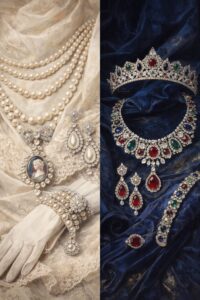
During daylight hours, women typically wore a simple necklace or chain, sometimes accompanied by a modest brooch or ring. These pieces were elegant but restrained, designed to complement rather than dominate daytime dress.
Evening wear, however, allowed for greater display. As candlelight softened the room, jewellery became more elaborate. Collet necklaces, gemstone rivière necklaces, dramatic earrings, and ornate brooches were brought out to sparkle in low light.
Popular Gemstones and Materials in Georgian Jewellery
Georgian jewellery made generous use of both precious gemstones and materials drawn directly from nature. Garnet, topaz, emerald, and ruby were among the most popular stones of the period, valued for their depth of colour rather than uniformity.
Coral, amber, ivory, pearls, turquoise, translucent agates, and carnelian appeared frequently in daytime jewellery.
Evening jewellery, however, told a different story.
When the sun set and candlelight took over, diamonds became dominant. Rose-cut and early old mine–cut diamonds were abundant in evening adornment, chosen for their ability to glow softly rather than flash sharply.
Motifs in Georgian Jewellery
Motifs in Georgian jewellery were rich, symbolic, and deeply influenced by the world beyond fashion.
- Nature Motifs
Nature provided constant inspiration, with flowers, crescents, ribbons, bows, leaves, feather plumes, and flowing sprays of foliage appearing frequently across rings, brooches, earrings, and necklaces.
- Georgian Enamel Jewellery
Enamelling played an important role in enhancing these motifs. Used to add colour, contrast, and depth, enamel allowed jewellers to highlight intricate metalwork and create vivid visual narratives.
- Classical Influence from Archaeological Discoveries
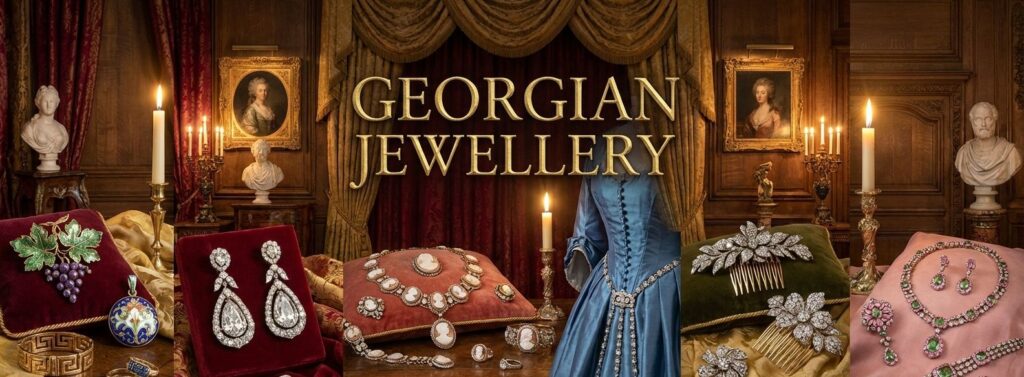
Major archaeological discoveries and political events also shaped Georgian design. Beginning in 1706 and continuing through 1814, the excavation of Pompeii captured the European imagination. By the 1760s, this fascination had translated directly into jewellery, with Classical Greek and Roman motifs, such as Greek keys, laurel wreaths, and grape leaves, becoming highly fashionable.
- Egyptian Revival Motifs
News of Napoleon’s Egyptian campaign (1798–1799) introduced exotic motifs into Georgian jewellery, including pyramids, papyrus leaves, and hieroglyphic-inspired forms.
Popular Types of Georgian Jewellery
Georgian jewellery was designed to be seen, layered, and admired. Certain forms became especially popular.
- Pendeloque Earrings
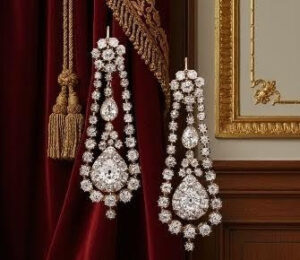
Pendeloque earrings were among the most recognisable Georgian styles. These earrings featured a pear-shaped or teardrop element suspended from a smaller upper section, allowing the piece to move gracefully with the wearer.
- Chandelier and Drop Earrings
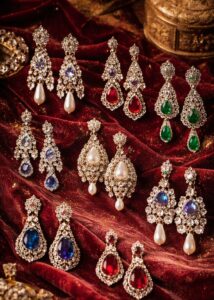
Chandelier earrings and long drop earrings were also highly fashionable. These dramatic designs consisted of multiple articulated sections, sometimes detachable, creating a cascading effect. Their length and movement made them ideal for evening wear.
- Cameos
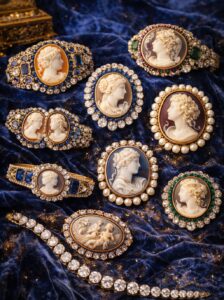
Cameos were widely used in Georgian jewellery and reflected the era’s admiration for classical art. Jewellers carved portraits and mythological scenes from coral, agate, shell, and occasionally lava. Cameos were set into brooches, rings, necklaces, and bracelets, often framed by ornate gold or silver mounts.
- Necklaces: Dog Collars and Chokers
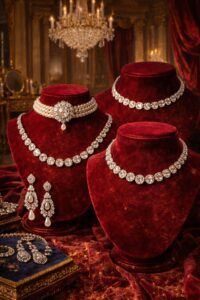
Short necklaces known as dog collars or chokers were popular, sitting high on the neck. Collet and rivière necklaces were often worn in this style, particularly in the evening, where their continuous sparkle framed the neckline.
- Rings
Georgian rings were bold and symbolic. Cluster rings, giardinetti (floral basket designs), and sentimental rings featuring inscriptions or hairwork were common.
- Chatelaines
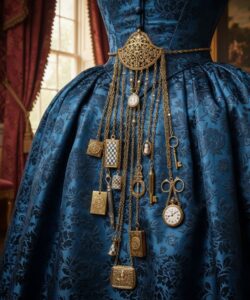
Before modern purses or pockets, chatelaines served both practical and decorative purposes. Worn at the waist and attached by hooks or pins, these ornamental chains held everyday items such as watches, scissors, writing tools, notebooks, keys, or eyeglasses.
- En Tremblant Jewellery
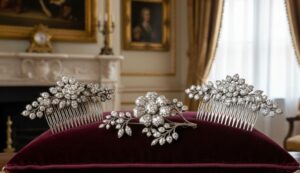
One of the most technically impressive Georgian innovations was the En Tremblant setting. In this design, elements of the jewellery were mounted on tiny springs or wires, allowing them to vibrate or “tremble” with even the slightest movement. Hair combs and brooches were particularly well-suited to En Tremblant designs.
- Parures
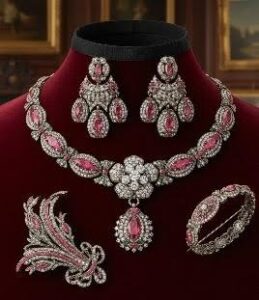
Parures were matching suites of jewellery designed to be worn together. These sets typically included combinations of necklaces, earrings, brooches, bracelets, and sometimes tiaras. Georgian parures often featured convertible elements, allowing pieces to be worn in multiple ways.
Also Read About Transformable Jewellery Here
Final Thoughts
Georgian jewellery captures a moment when luxury was unapologetic, craftsmanship was paramount, and jewellery served as both art and identity. It reflects a world in transition, holding onto tradition while embracing change.
To wear Georgian jewellery today is not just to wear something old. It is to carry history, ingenuity, and human hands across centuries. That enduring presence is what makes Georgian jewellery not only beautiful, but timeless.


About Post Author