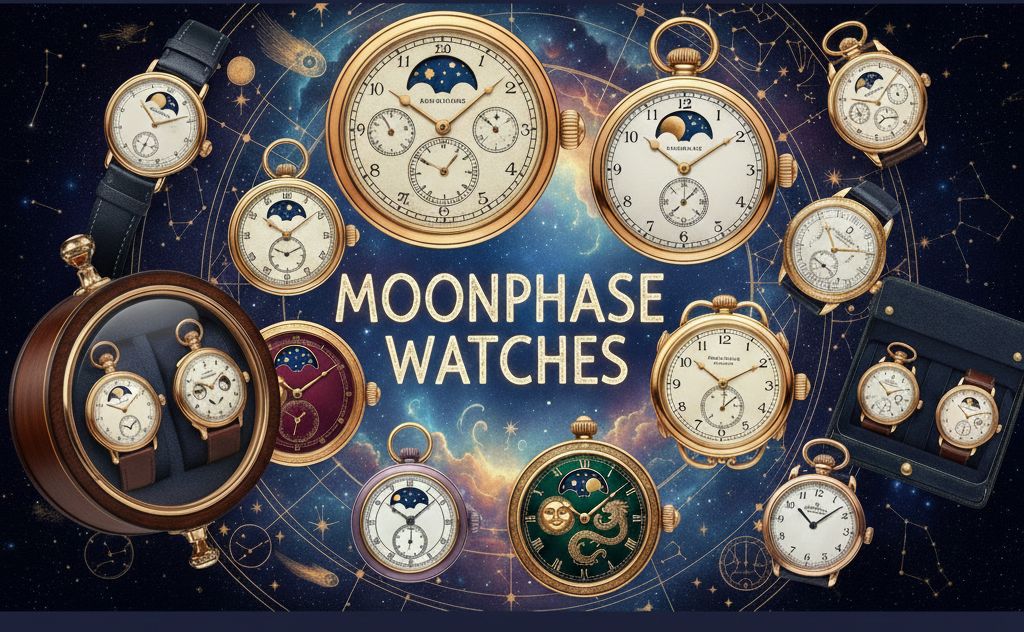
A Moon on the Dial: How Watchmakers Captured the Night Sky
Look back far enough into horological history, and you’ll find the ancient Indians, Egyptians, Greeks, and Romans devising ingenious methods for tracking the movements of the heavens. Humankind has always been fascinated by the cosmos. Long before wristwatches existed, our ancestors looked to the sky to make sense of time itself.
The sun helped them track days, seasons, and years. The Moon, with its steady and predictable cycle, became the natural way to measure months. This deep connection between astronomy and timekeeping is what eventually led to the creation of mechanical clocks and, centuries later, watches.
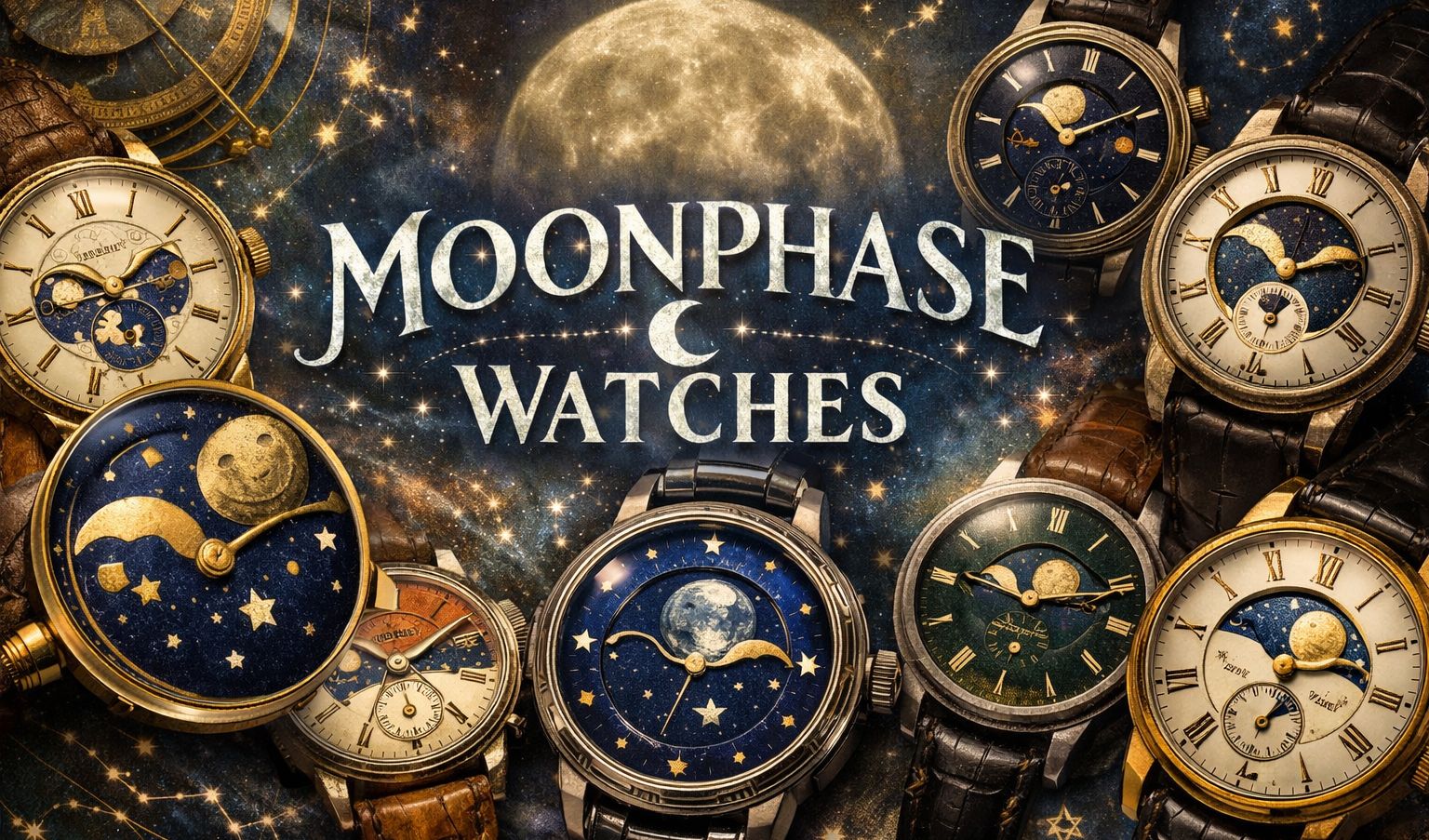
Among the many complications born from this celestial curiosity, one stands apart for its romance and artistry: the moonphase watch. While it serves little practical purpose in modern daily life, watches with a moon phase remain one of the most beloved complications in luxury watchmaking. Collectors prize it not for necessity, but for what it represents — tradition, craftsmanship, and a poetic link to the universe above.
In this guide, we explore the celestial magic brought to your wrist through the lunar phase watch.
Also Read: Top 10 Collectible Vintage Omega Watches
What Is a Moon Phase Watch?
https://www.youtube.com/watch?v=3Dba1jSoEAg
Video credit: The Ordinary Watch Guy
A moon phase watch displays the current phase of the Moon as seen from Earth, alongside standard timekeeping functions. The complication tracks the lunar cycle, which lasts approximately 29.5 days, from one full moon to the next.
Most moonphase displays appear as a small aperture on the watch dial, revealing a rotating disc decorated with one or two moons. As the disc advances, it visually represents the changing phases of the Moon.
The Four Main Moon Phases Displayed on Watches
- New Moon
- First Quarter
- Full Moon
- Last Quarter
Though simplified for mechanical execution, this display captures the rhythm of the lunar cycle with remarkable charm.
Origins: Celestial Timekeeping in Early Clocks
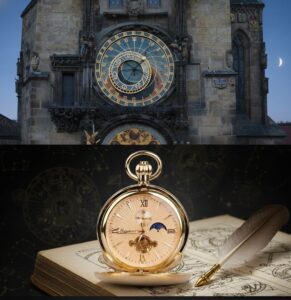
The concept of tracking the Moon’s phases is far older than wristwatches. Moonphase indicators first appeared in astronomical clocks during the 17th century, often installed in churches, town halls, and public squares.
These early clocks weren’t just decorative. They served an educational purpose, offering communities a visual understanding of celestial movements. For agrarian societies, knowing the lunar cycle was essential for planting, harvesting, and religious observances.
From these monumental clocks, the moonphase complication gradually made its way into pocket watches, especially during the 18th and 19th centuries. Pocket watches provided the perfect canvas for skilled watchmakers to miniaturise astronomical complications while showcasing mechanical mastery.
From Pocket Watches to Wristwatches
The transition from pocket watches to wristwatches in the early 20th century marked a turning point for moonphase complications. Shrinking such a delicate and precise mechanism to fit a wristwatch was no small feat.
One of the earliest and most influential uses of the moonphase complication in wristwatches is credited to Patek Philippe. The brand played a pivotal role in adapting astronomical complications to wristwatches, setting standards that still influence high-end watchmaking today.
Why Moonphase Watches Still Matter
In an age where smartphones can tell us everything instantly, moonphase watches are no longer about utility. Instead, they are about emotion, heritage, and storytelling.
A moonphase complication reminds the wearer that time is not just measured in seconds and minutes, but in natural cycles that have existed long before humanity itself. It connects modern life to ancient observation.
This is precisely why moonphase watches remain highly prized among serious collectors.
Modern Revival: Moonphase Watches Today
Today, moonphase complications have secured a lasting place in modern watch collections. They offer brands an opportunity to honour tradition while experimenting with design, materials, and artistic expression.
Modern manufacturing has also improved accuracy. While traditional moonphase mechanisms deviate by one day every 2.5 years, advanced versions can remain accurate for over a century without adjustment.
Luxury brands now treat the moonphase display as a miniature canvas, using hand-engraving, aventurine dials, enamel work, and realistic lunar textures to elevate the complication into wearable art.
Types of Moon Phase Watches
The world of moonphase watches is diverse, with styles to suit every taste.
- Complicated Moon Phase Watches
These watches combine the moonphase with other high-level complications such as tourbillons, perpetual calendars, or chronographs. They represent the pinnacle of watchmaking skill and are often found in haute horology collections.
- Dress Moon Phase Watches
Elegant and refined, dress moonphase watches pair beautifully with formal attire. Thin cases, clean dials, and subtle moon displays define this category.
- Retrograde Moon Phase Watches
Retrograde moonphase watches display the lunar cycle along an arc rather than a rotating disc. When the cycle completes, the indicator snaps back to the starting position, adding visual drama.
- Sports Moon Phase Watches
Though less common, some brands integrate moonphase complications into sports watches. These models balance robustness with elegance, offering a unique twist on traditionally dressy complications.
Best Moonphase Watches to Know
Evoking celestial beauty and poetic allure, moonphase watches stand as timeless symbols of precision craftsmanship. Here are some standout examples:
- Rolex Moonphase Models
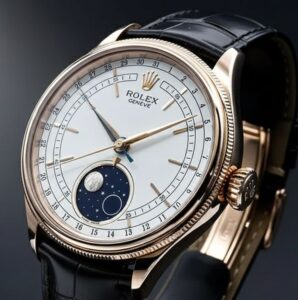
While Rolex rarely embraces moonphase complications, its historical references and rare models remain highly collectible and sought after.
- Omega Speedmaster Moonphase
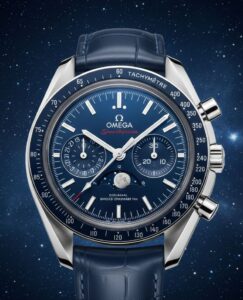
Omega Moonphase watches are known for their artistry. The Omega Speedmaster Moonphase blends space exploration heritage with lunar artistry. Its detailed moon disc, often featuring a photorealistic lunar surface, makes it one of the most recognisable modern moonphase watches
- Cartier Moon Phase Watches
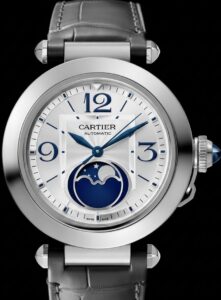
Cartier approaches the moonphase with elegance and restraint. Their designs prioritise aesthetics, often integrating the complication seamlessly into iconic case shapes.
- Patek Philippe Nautilus Moonphase
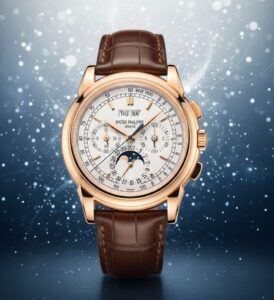
When paired with the Nautilus design language, the moonphase becomes a statement of understated luxury. These models combine sportiness with classical complication mastery.
Moonphase Watches and Collectibility
Moonphase watches often hold strong long-term value, especially when produced by respected manufacturers. Limited production numbers, intricate craftsmanship, and historical significance all contribute to their collectibility.
Collectors are drawn to moonphase watches because they tell a story. Each glance at the dial is a reminder of humanity’s age-old relationship with the sky.
Giftex: A World of Collectibles Auction
This February, Giftex brings the magic of luxury watches to your screen through its online auction platform. The World of Collectables auction will feature an entire category dedicated to luxury and vintage watches, including models with sought-after complications, such as moonphases.
For collectors and enthusiasts alike, this is a rare opportunity to acquire exceptional timepieces from the comfort of home. Don’t miss the chance to explore craftsmanship, heritage, and celestial beauty in one place.
The Magic of the Moonphase
The allure of a moonphase watch goes far beyond its visual charm. For collectors, it represents a piece of history and a celebration of watchmaking’s intimate relationship with astronomy.
It’s a complication that doesn’t shout for attention. Instead, it quietly rewards those who appreciate depth, precision, and storytelling. Whether found in a centuries-old pocket watch or a modern luxury wristwatch, the moonphase continues to fascinate.
In a world driven by speed and convenience, moonphase watches remind us to slow down and look up — a timeless intrigue that will never lose its glow.


About Post Author