Myth and Material: Creature Motifs in Antique and Vintage Objects
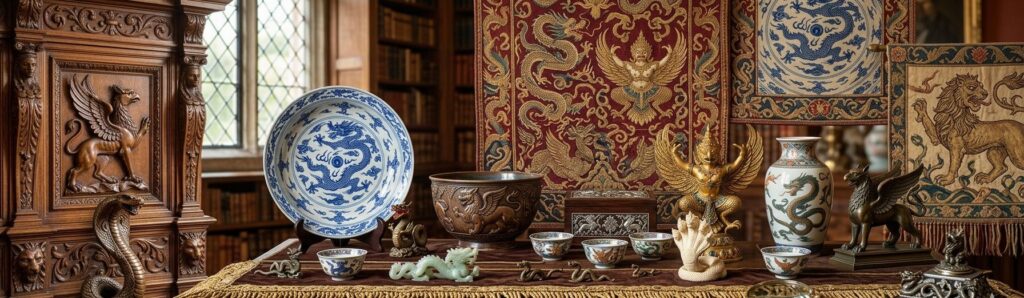
Antique furniture and other objects rarely speak in plain terms. A cabinet is not just a cabinet, and a porcelain vase is never only a vessel. Look closely, and you’ll often find creatures moving across their surfaces. Dragons coil along carved wood, phoenixes rise from painted glaze, and strange hybrid beasts repeat themselves in woven threads. These figures are not random decoration. They are stories, beliefs, and symbols worked into everyday life.
They appear on antique furniture meant to anchor a room, on porcelain that once travelled across continents, and in textiles that filled homes with colour and meaning. Each material treats them differently, but the intention is often the same. These motifs signal protection, status, transformation, or harmony. In this way, myth is not kept separate from daily life. It is built into it.
Join us as we explore antiques, examining how sculpture, furniture, and decorative wares incorporated classical myths into their decoration and design.
Also Read: The Meaning of Motifs in Decorative Arts
Ancient Beginnings
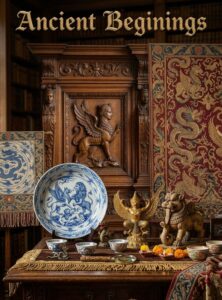
Across ancient civilizations, artisans started embedding mythical creatures into everyday objects.
In ancient Egypt, figures like the sphinx combined human intelligence with animal strength, acting as symbolic guardians.
In Greece and Rome, creatures such as Griffins and Centaurs appeared across decorative arts, reflecting ideas of heroism, conflict, and the balance between human and animal nature.
In India, myth has remained closely tied to daily life through folk and tribal traditions. Creatures like the Yali and Garuda are not just symbolic figures but active presences in art, architecture, and ritual objects. They represent protection, power, and spiritual connection.
- Antique Furniture: Form, Power, and Presence
In antique furniture, mythical creatures often appear as part of the structure itself. They are carved into wood, forming legs, armrests, panels, and edges.
Some of the most common creatures include:
- Dragons
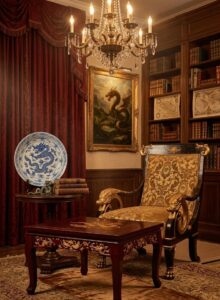
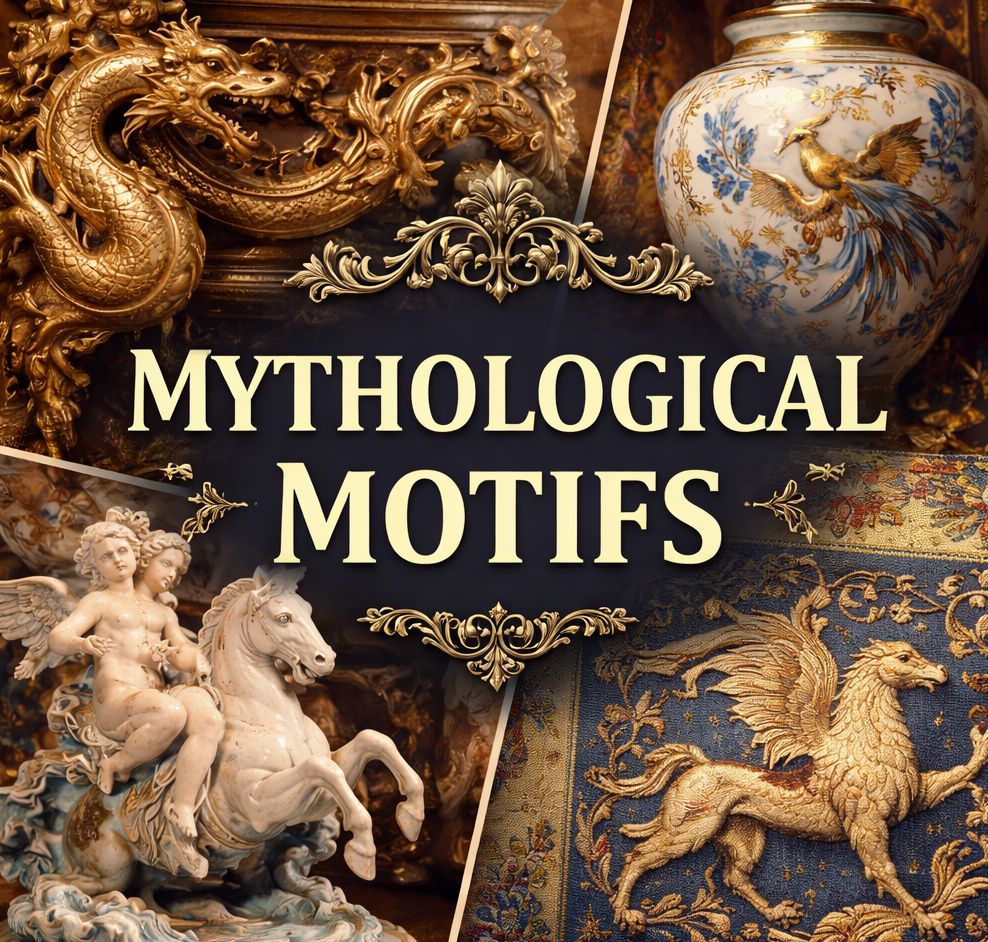
Often carved in flowing, elongated forms, dragons wrap around cabinet doors, bed frames, or table supports. Their bodies curve with the structure, creating a sense of movement. They are widely associated with power, protection, and control over natural forces.
- Griffins
With the body of a lion and the head and wings of an eagle, griffins are typically positioned at corners or entrances of furniture pieces. Their stance is alert, often seated or poised to strike. They are seen as guardians, representing vigilance and strength.
- Lions and Lion-like Beasts
These appear as carved feet, armrests, or supports. Their forms are heavy and grounded, with strong paws and defined musculature. They symbolize courage, stability, and protection.
- Ho-Ho Bird (Phoenix Form)
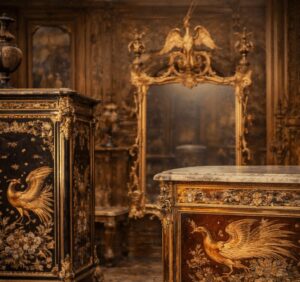
The Ho-Ho bird, often seen in East Asian furniture, is usually carved with flowing tail feathers, a crested head, and wings in motion. It represents harmony, renewal, and high virtue, and is sometimes associated with balance when paired with the dragon.
- Winged Creatures
Various winged forms, sometimes less clearly defined, appear in European and Asian furniture. Wings suggest elevation, transcendence, and a connection between earthly and divine realms.
Through these forms, furniture becomes more than functional. It carries a sense of authority and meaning, shaped by the creatures embedded within it.
- Porcelain and Painted Myths
Porcelain offers a very different surface for mythical creatures. Instead of being carved into structure, they are painted, detailed, and often more narrative in style.
Common creatures include:
- Phoenix/ Ho-Ho Bird
Usually shown with sweeping tail feathers and wings in motion, the phoenix is elegant and fluid in form. It represents rebirth, renewal, and harmony. Its form is elegant and balanced, with fine detailing in feathers and crest. Its presence often suggests balance and transformation.
- Dragons
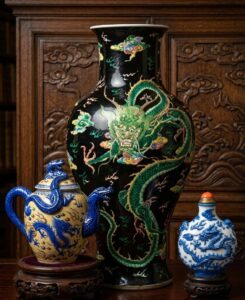
On porcelain, dragons are more detailed and expressive. Here, they represent not just power but also energy and movement within the natural world.
- Mythical Serpents
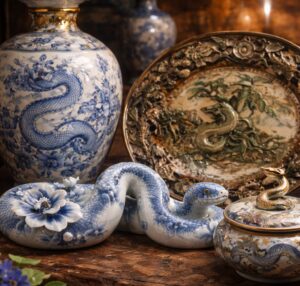
Closely related to dragons but often more simplified in form, mythical serpents appear as sinuous, coiling figures that move across the surface of porcelain. These serpents are associated with transformation, renewal, and the cyclical nature of life.
Porcelain allows for fine brushwork and colour variation. Blues, reds, and gold accents bring these creatures to life in a way that feels lighter and more fluid than carved forms. The storytelling becomes visual, almost like a scene unfolding across the surface.
- Sculptures and Figurines
Unlike furniture or porcelain, sculptures and figurines present mythical creatures as standalone forms. They are the focal point, designed to be viewed, displayed, and collected.
- Sphinx
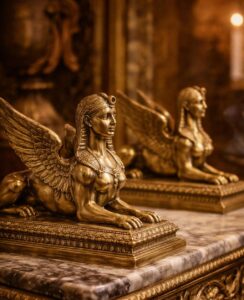
Typically shown reclining, with a human head and a lion’s body, the sphinx represents wisdom and guardianship. Its stillness gives it a watchful presence.
- Garuda
Depicted as a powerful bird-like being, often with outstretched wings, Garuda symbolizes strength, protection, and divine authority.
- Griffins
Griffins appear frequently as cast metal or carved stone figurines. They are shown seated or standing upright, often with wings raised or partially spread. As guardians of treasure and sacred spaces, they symbolize vigilance and protection.
- Dragons
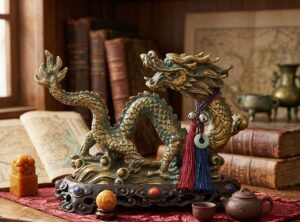
In Asian antiques, especially Chinese and Japanese pieces, dragon figurines are widely found in bronze, porcelain, and carved materials like jade or wood. They represent power, prosperity, and control over natural forces.
- Phoenix (or Fenghuang)
Often paired with dragons or shown alone, phoenix figurines are more delicate in form. They symbolize renewal, harmony, and balance, and are commonly found in porcelain or metal decorative pieces.
- Mythical Motifs in Textiles
In textiles, mythical creatures appear as repeated patterns rather than single figures. They are woven, embroidered, or printed into fabric, creating rhythm and continuity.
Common motifs include:
- Repeating Animal Forms
Dragons, birds, and hybrid creatures appear in sequences, forming continuous patterns. This repetition reinforces their symbolic role, often linked to protection or abundance.
- Stylized Creatures
Unlike the detailed forms seen in sculpture or porcelain, textile motifs are often simplified. Shapes are adapted to suit weaving or embroidery techniques, focusing on outline and movement.
- Yali
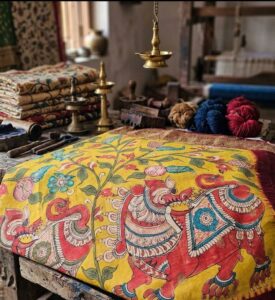
The Yali is a powerful mythical creature from South Indian temple architecture—combining the features of a lion, elephant, and horse—that serves as a significant, protective motif in both traditional textiles and antiques
Contemporary designers are reintroducing these motifs in handloom shawls and sarees to revive traditional artistry.
Why These Motifs Still Matter
Mythical creatures continue to hold appeal because they carry meaning beyond decoration. They connect objects to stories, beliefs, and cultural identity.
Even today, these motifs influence design, collecting, and interior aesthetics. People are drawn to them not just for their visual impact, but for the sense of history and symbolism they bring.
Enduring Symbolism
Today, antique and vintage pieces featuring mythical creatures remain powerful expressions of elegance, imagination, and cultural exchange.
What’s striking is how these creatures reappear across time and geography. A dragon in one culture may look very different in another, yet the underlying ideas of power, protection, or transformation remain closely linked.
Collecting these pieces is not just about owning something old or beautiful. It is about holding a fragment of that ongoing story.
Giftex: A World of Collectibles Auction
This March, Giftex unveils an extraordinary world of collectibles through its online auction. From antique treasures to carefully curated vintage collectibles, the event brings together pieces rich in history and character. Don’t miss the chance to discover something truly special.


About Post Author