Modern Indian Art: A Bold Story of Identity, Rebellion, and Reinvention
Step into any contemporary gallery in India, and you’ll feel it instantly. Colour, conflict, memory, identity. Modern Indian art doesn’t sit quietly on a wall. It speaks. It challenges. It remembers where it came from and refuses to be boxed in.
From colonial resistance to global recognition, modern Indian art is more than an aesthetic movement. It’s a story of a nation shaping its voice through canvas, sculpture, and now even digital media.
In this blog, we’ll explore what modern art really means, how modern Indian art evolved, and the artists who helped define its direction
Also Read: The Art of Abstraction
What Is Modern Art?
Modern art refers to artistic work produced roughly from the late 19th century to the mid-20th century. It broke away from traditional styles and focused on experimentation, abstraction, and new perspectives.
Instead of simply representing reality, modern artists began interpreting it. They explored emotions, politics, identity, and the subconscious
In India, this shift wasn’t just artistic. It was deeply political and cultural.
Modern Indian Art: Defying Colonial Perceptions and Nationalist Emergence
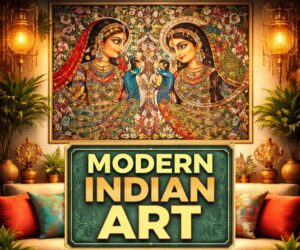
It goes without saying that traditional Indian art has evolved continuously over centuries, from ancient murals to intricate miniature paintings. But things changed dramatically in the 19th century.
British colonial rule imposed a narrow view of “fine art,” labelling European styles as superior. Indian artistic traditions were often dismissed as craft rather than high art.
Art schools were set up in cities like Bombay, Calcutta, and Madras. These institutions promoted Victorian academic realism, which often felt disconnected from Indian culture.
This led to a powerful response.
The Bengal School of Art, led by Abanindranath Tagore, emerged as a nationalist movement. It rejected Western realism and revived Indian traditions, drawing inspiration from Mughal and Rajput art.
This marked the beginning of modern Indian art as a conscious, political act.
Evolution of Modern Indian Art
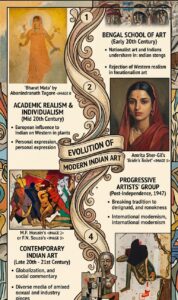
Modern Indian art didn’t appear overnight. It evolved through distinct phases shaped by history, global influence, and internal change.
- First Nationalist School: Kala Bhavana (1919)
Founded at Santiniketan, Kala Bhavana became a hub for artistic experimentation rooted in Indian philosophy and rural life. It encouraged artists to reconnect with indigenous traditions while remaining open to global ideas.
- Abstract Art and European Influence
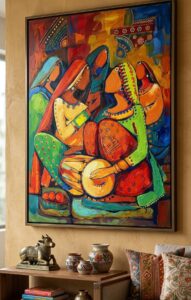
After World War I, Indian artists encountered modern European movements like Cubism and Expressionism. This exposure pushed them to experiment with abstraction, form, and colour in new ways.
- Gradual Shifting
Modern Indian art evolved through dynamic shifts over time. Artists moved between realism, abstraction, symbolism, and narrative styles.
- Nascent Stage in the 1930s
During the nationalist struggle, art became a voice of resistance. Artists expressed the emotional and political climate of a country striving for independence.
- Rise of Figurative Art
Figurative styles gained popularity as artists explored human conditions, social issues, and everyday life.
- The Progressive Artists’ Group
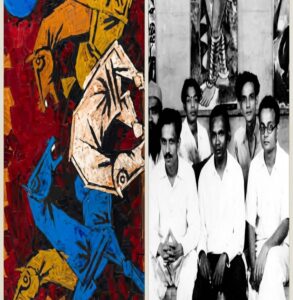
A major turning point came in 1947 with the formation of the Progressive Artists’ Group by F. N. Souza and S. H. Raza.
Their goal was clear. Create a modern Indian artistic language that rejected both colonial academic realism and the revivalist Bengal School.
This group changed everything. They brought Indian art onto the global stage.
- Transition in the 1980s
The 1980s saw a return to figurative art, but with a contemporary twist. Artists explored identity, politics, urbanization, and personal narratives.
- New Media Art in the 1990s
With globalization and technology, artists began experimenting with video, installations, and digital formats. This marked the beginning of contemporary Indian art as we know it today.
7 Best Contemporary Artists Known for Modern Indian Art
Here are some of the most influential Contemporary Indian artists who shaped and redefined modern Indian art:
- Raja Ravi Varma
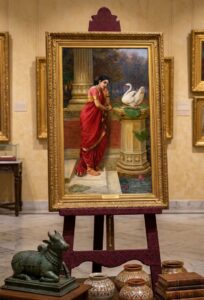
Often considered a bridge between traditional and modern Indian art, Raja Ravi Varma combined European realism with Indian subjects.
Famous works: Shakuntala, Damayanti and the Swan
He made mythological figures accessible and human, which helped popularize Indian art among the masses.
- Bharti Kher
Known for her use of bindis and mixed media, Bharti Kher explores identity, gender, and culture.
Her work often blends tradition with modern symbolism, making her one of the most important voices in contemporary Indian art.
- Jamini Roy
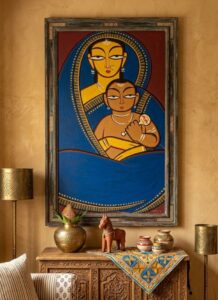
Jamini Roy rejected Western academic styles and embraced folk traditions, especially Kalighat paintings.
His bold lines and earthy colours created a uniquely Indian modern aesthetic.
- F. N. Souza
A founding member of the Progressive Artists’ Group, Souza’s work is raw, bold, and often controversial.
He tackled themes like religion, sexuality, and power with striking intensity.
- Krishen Khanna
Known for his narrative style, Krishen Khanna painted scenes of everyday life, partition, and social realities.
His work captures the emotional complexity of modern India.
- Amrita Sher-Gil
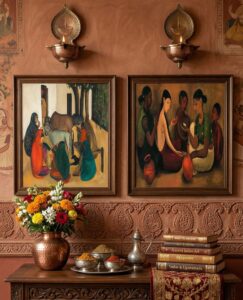
Often called India’s Frida Kahlo, Amrita Sher-Gil brought a deeply personal and emotional approach to Indian art.
Her works focused on rural life, women, and introspection.
Famous Works: Three Girls (1935), The Story Teller (1937), Brahmacharis (1937)
- Nandalal Bose
A key figure of the Bengal School, Nandalal Bose blended traditional Indian styles with modern ideas.
He also played a major role in shaping art education in India.
Modern Indian Art: Fusion of Global Influence and Nationalistic Roots
Modern Indian art was influenced by Western movements, but it never became a copy.
Instead, artists absorbed global ideas and reshaped them through an Indian lens. The result was something entirely unique.
Where Western modernism often focused on individual expression, Indian modern art carried layers of history, culture, and collective identity.
Early Modern Art in India
Early modern Indian artists faced a challenge.
How do you be modern without losing your roots?
Some chose revivalism. Others embraced abstraction. Many found a middle path.
This tension between tradition and modernity is what makes Indian art so compelling even today.
How to Decorate Your Space with Modern Indian Art
You don’t need to be a collector to bring modern Indian art into your home. Here are a few simple ways to start:
- Start with a Statement Piece
Choose one bold artwork for your living room. Abstract or figurative, it should reflect your personality.
- Mix Old and New
Pair contemporary pieces with traditional decor like wooden furniture or handwoven textiles.
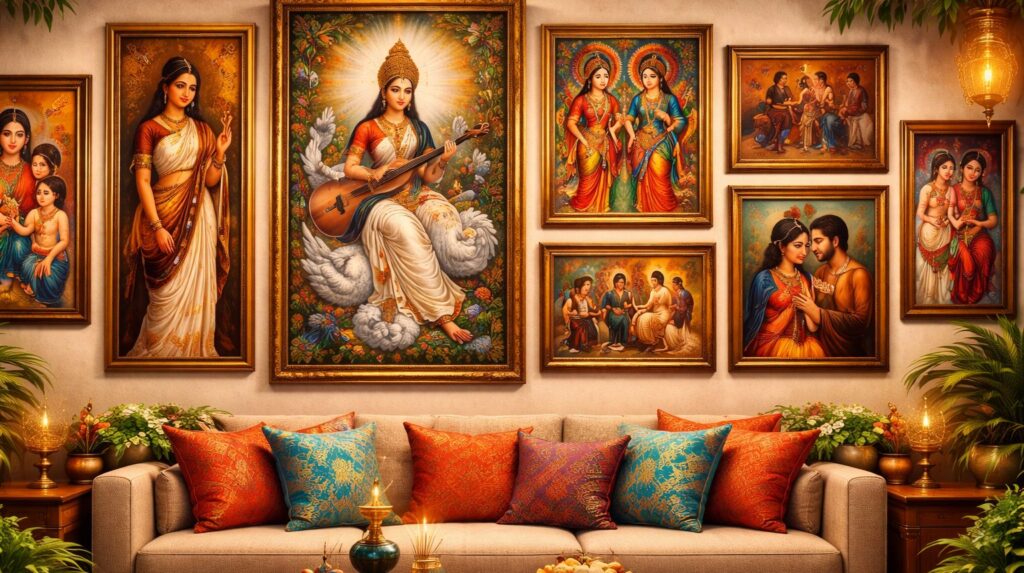
- Create a Gallery Wall
Combine prints from different artists. Keep a common colour theme for balance.
- Use Art in Unexpected Places
Think beyond walls. Use small sculptures or framed prints in hallways, kitchens, or even workspaces.
Final Thoughts
Modern Indian art is not just about style. It’s about voice.
From resisting colonial narratives to embracing global influence, it reflects India’s journey through change, identity, and self-expression.
The artists who shaped this movement didn’t just create art. They created a language that continues to evolve.
If you look closely, every brushstroke carries a story.
Giftex: Modern Indian Art Auction
This April, Giftex returns with a vibrant showcase of modern and contemporary Indian art. From striking masterpieces to iconic subjects and themes, each piece tells a story of Indian art and its evolution over time.
Don’t miss the chance to experience and own a part of this creative journey.


About Post Author