Edwardian Era Silver: Elegance, Innovation, and Timeless Allure
Silver has been an important material to humankind for millennia, prized by civilisations in every corner of the globe. From ancient trade routes to royal courts, silver has held a unique place in human history. It has been used as currency, crafted into jewellery, shaped into hollowware and flatware, and even fashioned into furniture and ceremonial objects.
Over time, silver objects have evolved to reflect changing tastes, technologies, and social values. Each era brought new designs, techniques, and purposes. While styles shifted dramatically across centuries, the allure of silver remained constant. Antique silver artefacts today are prized for their soft lustre, versatility, and association with refinement.
In this guide, we explore Edwardian silver, its defining characteristics and prominent Edwardian silver wares. This was a period marked by elegance, technical mastery, and artistic lightness. Silver from the Edwardian era is especially admired for its delicate character and graceful design, making it highly appealing to collectors today.
Also Read: The Allure of Rococo Silver
The Edwardian Era: A Brief Historical Context
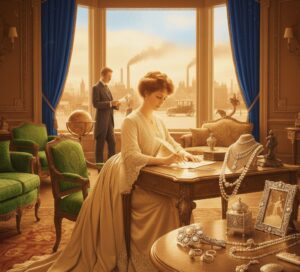
In 1901, Edward VII ascended the British throne, ushering in the Edwardian age. Though relatively short, lasting until the early 1910s, this era was a time of optimism, innovation, and social change. Advances in science, industry, and global communication shaped everyday life, while prosperity among the upper classes encouraged luxury and refinement.
Jewellery and silver manufacturing flourished during this period. Platinum emerged as a preferred metal for jewellery, valued for its strength and bright white colour, and it was often paired with silver to achieve refined results.
Edwardian silver represents a transition away from the heavy, ornate Victorian style toward something more delicate and ethereal.
What Is Edwardian Silver?
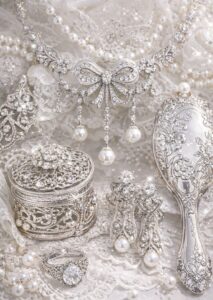
Edwardian silver, dating roughly from 1901 to the early 1910s, is known for its delicate, intricate, and light designs. Whether seen in jewellery or decorative objects, Edwardian silver emphasises elegance over excess.
Designs often featured flowing lines, floral motifs, bows, garlands, and classical elements. Many pieces embraced a “white-on-white” aesthetic, combining silver and platinum with diamonds and pearls. Techniques such as filigree, millegraining, and hand engraving created airy, lace-like forms that contrasted sharply with the heavier silverwork of the Victorian era.
Key Characteristics of Edwardian Silver
- Delicacy and Lightness
Edwardian silver is defined by its graceful proportions. Artisans moved away from dense, weighty designs and embraced fine frameworks that appeared almost weightless. This sense of lightness made pieces feel elegant and refined rather than imposing.
- Lace-Like Patterns and Filigree
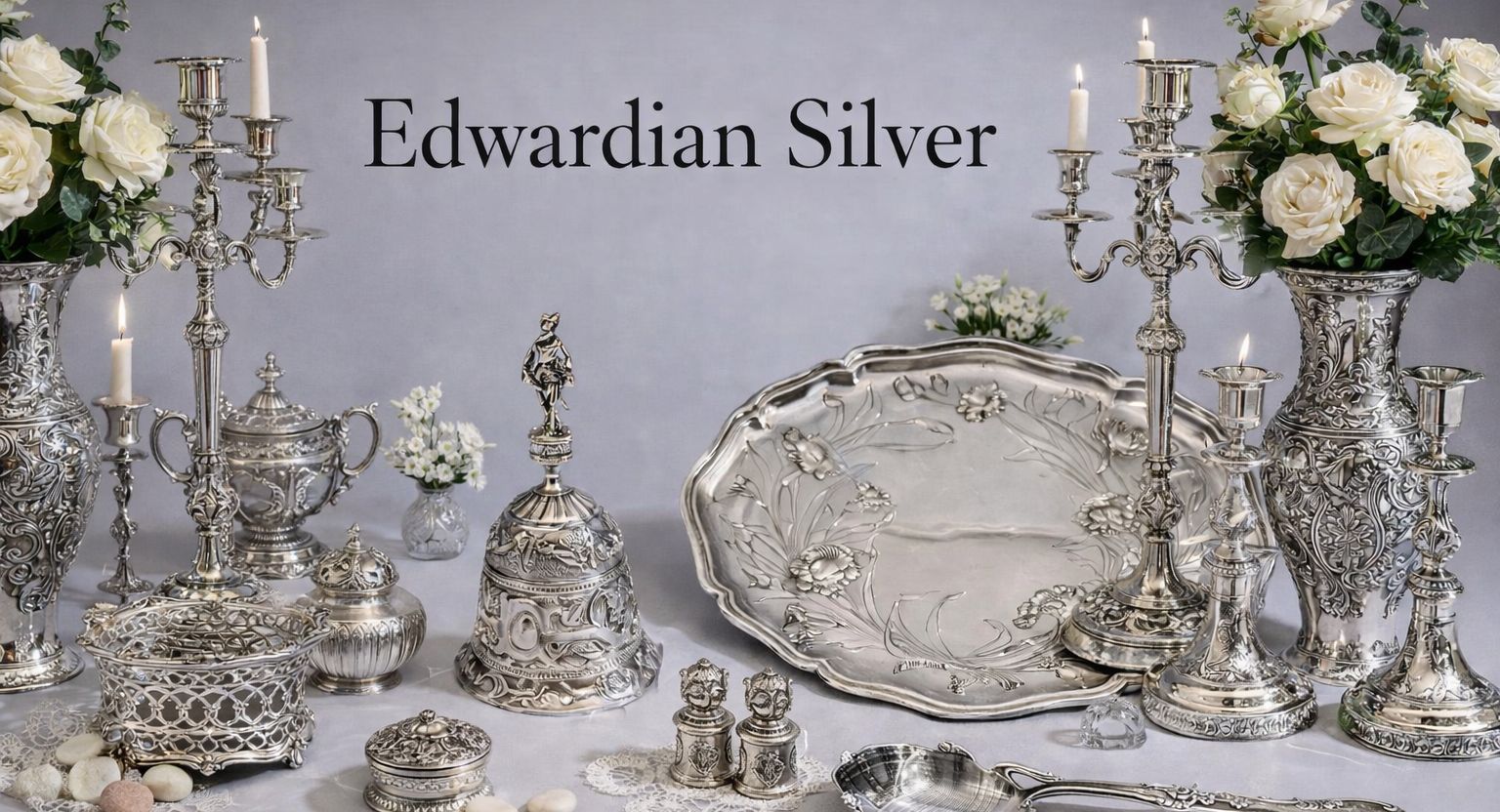
One of the most recognisable features of Edwardian silver is its intricate openwork. Fine silver wires were twisted and shaped into elaborate filigree patterns, creating fretwork that resembled lace. These designs allowed light to pass through, enhancing the brilliance of gemstones and polished surfaces.
- The “White-on-White” Aesthetic
Edwardian designers favoured pale, luminous materials. Platinum, newly popular at the time, was frequently paired with silver, diamonds, and pearls. This combination created a clean, sophisticated look where gemstones seemed to float within the metal.
- Motifs and Inspiration
Common motifs included flowers, leaves, garlands, laurel wreaths, bows, ribbons, and swags. These elements reflected both nature and classical design, reinforcing the era’s preference for femininity, elegance, and harmony.
- Technical Mastery
Edwardian silver showcases exceptional craftsmanship. Techniques such as hand-chasing, fine engraving, and detailed metalwork required great skill and patience.
- Millegraining
Millegraining involved adding tiny beads of metal along edges and settings. This softened outlines, enhanced sparkle, and made the metal appear almost invisible around stones. It became a hallmark of high-quality Edwardian jewellery.
- Popular Forms
Tiaras, long necklaces, elaborate brooches, decorative buckles, and hair ornaments were widely produced. Many designs were versatile, allowing pieces to be worn in multiple ways, reflecting both practicality and luxury.
Materials and Techniques
Platinum
Platinum was favoured for its strength and white colour, making it ideal for delicate settings. Its durability allowed artisans to create fine, secure frameworks that supported intricate designs.
Diamonds and Pearls
Diamonds and pearls were the stones of choice during the Edwardian era. They were often arranged in clusters or garlands to maximise light reflection and enhance the soft elegance of silver and platinum settings.
Silver
Sterling silver remained widely used for both jewellery and household items. It was sometimes combined with enamel or other metals, depending on the object’s purpose and design.
Popular Edwardian Silver Artefacts
Edwardian silver extended far beyond jewellery, reflecting the social rituals and lifestyles of the time.
- Jewellery
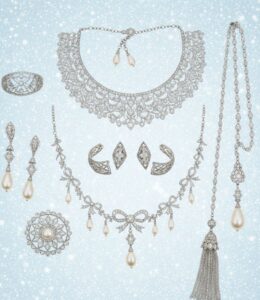
- Dog Collar Necklaces: Wide, close-fitting necklaces often set with diamonds and crafted in silver and platinum.
- Filigree and Garland Designs: Lace-like patterns featuring pearls and diamonds.
- Versatile Pieces: Brooches that doubled as pendants were especially popular.
- Tableware and Decorative Items
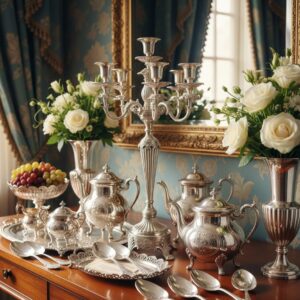
- Tea Sets: Elegant sets including teapots, creamers, sugar bowls, and trays.
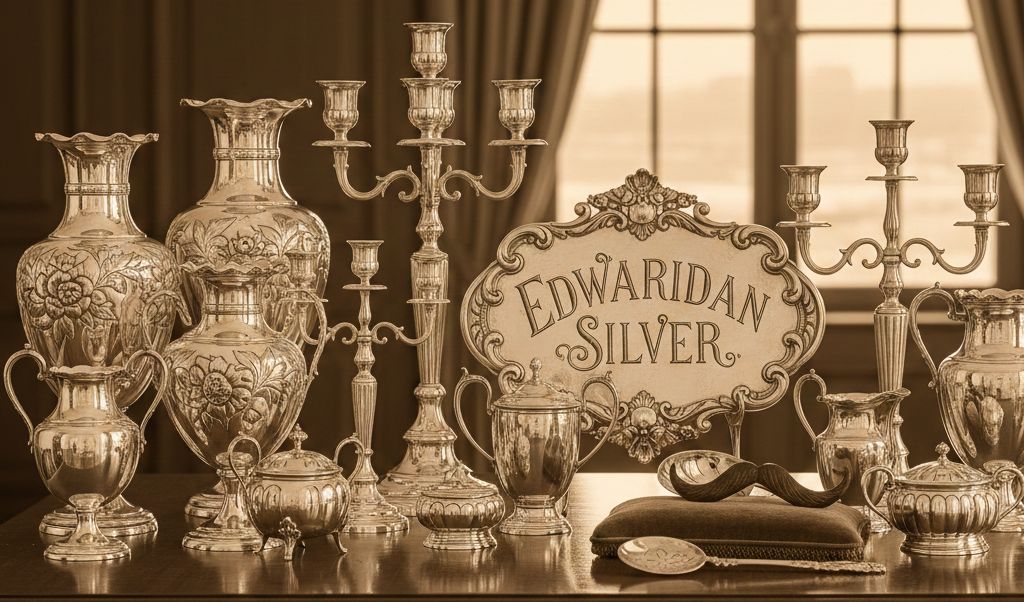
- Candelabras and Candlesticks: Multi-branched designs that served as decorative centrepieces.
- Vases and Bowls: Both functional and ornamental, often engraved with floral motifs.
- Calling Card Trays: Reflecting Edwardian social etiquette and formal visiting customs.
- Novelty and Functional Pieces
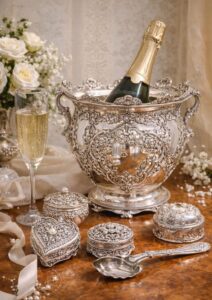
- Pill Boxes and Trinket Boxes: Small, ornate containers, sometimes heart-shaped or filigreed.
- Moustache Spoons: Designed with a guard to protect a gentleman’s moustache while dining.
- Champagne Coolers: Large, impressive silver centrepieces used for entertaining.
How to Identify Edwardian Silver
Identifying genuine Edwardian silver requires attention to detail, craftsmanship, and historical markers.
- Check the Hallmarks
Hallmarks are one of the most reliable ways to date antique silver. Edwardian silver typically carries British hallmarks from 1901 to the early 1910s
Look for:
- The lion passant, indicating sterling silver
- A town mark such as London, Birmingham, or Sheffield
- A date letter corresponding to the Edwardian period
- A maker’s mark, often from well-known silversmiths of the era
- Examine the Design and Style
Edwardian silver is refined and delicate. Compared to Victorian silver, it appears lighter and more fluid.
- Look for “White-on-White” Features
Many Edwardian silver pieces, especially jewellery, feature a pale, luminous palette. The use of platinum with silver, along with diamonds or pearls, creates a soft white-on-white effect.
- Assess Craftsmanship and Techniques
Edwardian silver showcases exceptional hand craftsmanship. Look closely for
- Fine hand engraving or chasing
- Intricate filigree made from thin silver wire
- Consider the Form and Function
Certain object types are strongly associated with the Edwardian era. Jewellery, such as dog collar necklaces, brooch pendants, and tiaras, is common. Household items, such as calling card trays, tea services, candelabras, and novelty pieces like moustache spoons, also point to Edwardian origins.
Acquiring Edwardian Silver Today
Auction houses remain one of the best places to acquire authentic Edwardian silver treasures. They offer access to carefully vetted pieces with historical value and craftsmanship that is difficult to replicate today.
Online auction platforms such as Giftex bring curated antique silver from across different eras to collectors worldwide. Through its dedicated ‘A World of Collectibles’ auctions, Giftex provides opportunities to discover rare Edwardian silver jewellery, tableware, and decorative objects from trusted sources.
The Enduring Charm of Edwardian Silver
Edwardian silver captures a moment in history defined by elegance, optimism, and exceptional craftsmanship. Its delicate designs, technical sophistication, and timeless beauty continue to resonate with collectors and enthusiasts today.
Whether admired for its jewellery, decorative objects, or historical significance, silver from the Edwardian era remains a testament to an age where refinement mattered and artistry reigned supreme. For those seeking both beauty and heritage, Edwardian silver offers a lasting connection to a truly graceful past.


About Post Author