How Vintage Pens Keep the Art of Handwriting Alive
In an era dominated by screens and keyboards, the humble pen often seems like a relic of the past. In an age of endless digital notifications and apps that carry our mail and messages, the simple act of putting pen to paper has become both a quiet rebellion and a source of calm. Beyond its practical utility, the act of putting pen to paper offers numerous benefits that are increasingly relevant in today’s fast-paced, technologically driven society.
It is in this digital age that the vintage pens have emerged as an elegant alternative. This is especially true for vintage fountain pens, which go far beyond their primary function, proving to be a powerful means to unleash imagination and personalise expression.
Today’s landscape reveals a fascinating paradox: whilst technology promises efficiency and speed, many discerning individuals are rediscovering the profound satisfaction of handwritten notes, carefully crafted letters, and the tactile ritual of the pen on paper.
They slow us down. They ask for intention. They remind us that writing is not only about efficiency but also about thought, memory, and human connection.
Also Read: What Makes Luxury Pens Collectible
Pen and Paper: More Than a Tool

In its literal sense, pen and paper describe the basic act of writing ink onto a surface. But this simple definition barely touches its deeper significance. Symbolically, pen and paper represent commitment. Once something is written by hand, it feels deliberate. It carries weight.
Unlike digital text, which can be endlessly revised or erased, handwritten words suggest presence. They reflect the writer’s state of mind, pace, and emotion. The pressure of the hand, the spacing between words, and even small imperfections all add meaning. A handwritten note often feels more personal because it is more human.
Signatures, letters, journals, sketches, and first drafts often begin away from screens. Writing by hand creates a physical record of thought, not just data.
The History and Evolution of the Pen
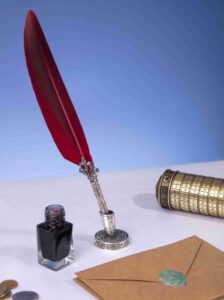
Humanity has always searched for ways to preserve ideas. From reed pens used in ancient civilisations to quills fashioned from feathers, each evolution reflected a need for greater control and permanence.
The journey from those early tools to today’s precision-engineered fountain pens is a story of craftsmanship and innovation. Early metal nibs replaced fragile quills. Ink formulas improved. Materials evolved from wood and hard rubber to celluloid, resin, and precious metals.
Fountain pens, in particular, marked a turning point. They allowed for smoother writing, consistent ink flow, and greater comfort. A pen could reflect its owner’s taste, profession, and values.
Vintage pens stand as reminders of this history. They carry the marks of an era when writing was central to daily life, when tools were built to last and often repaired rather than replaced.
The Benefits of Writing With a Pen

In recent years, many people have been turning back to handwriting, not out of nostalgia alone, but because of its cognitive and emotional benefits.
Writing with a pen engages the brain differently than typing. Typing often becomes automatic, relying mainly on muscle memory. Handwriting, by contrast, requires active coordination between thought and movement. Studies have shown that this process strengthens memory, comprehension, and learning.
Creativity also benefits. The tactile sensation of ink flowing onto paper creates a direct connection between mind and hand. Ideas often feel freer, less constrained by formatting or digital distractions.
There are psychological advantages as well. In an age of constant notifications and information overload, pen and paper offer focus. There is no screen to interrupt you, no alerts pulling attention away. Writing becomes a form of mindfulness, a pause in a noisy world.
The Allure of Vintage Pens
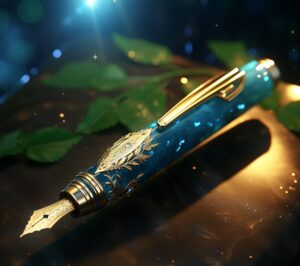
So why does writing with a pen, especially a vintage one, capture our interest in a digital age?
The answer lies in their unique appeal. Vintage pens carry stories. Each one has passed through different hands, different moments in time.
- Nostalgia and History: Vintage pens remind us of a slower, more deliberate pace of life. They reflect eras when correspondence mattered and handwriting was a primary means of expression.
- Unmatched Quality: Many vintage pens were designed to last generations. Gold nibs, solid construction, and careful engineering often make them feel superior to mass-produced modern alternatives.
- Unique Writing Experience: Flexible nibs, common in older pens, allow for natural variation in line width. This responsiveness gives writing character and personality.
- Aesthetics and Design: From marbled resins to intricate engravings, vintage pens are often viewed as functional art.
Fountain Pens and Creative Professions
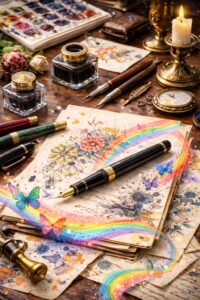
Fountain pens hold a special place among writers, artists, architects, and designers. In creative professions, tools are not just instruments; they influence the process itself.
A fountain pen encourages slower writing, which can lead to clearer thinking and stronger ideas. For sketching, drafting, or journaling, the fluidity of ink allows thoughts to unfold naturally.
Many creatives describe their pens as companions rather than accessories. Over time, a pen adapts to its user, shaping itself to their writing style and becoming deeply personal.
Choosing the Right Pen
Selecting a pen is a personal decision. There is no single “best” option, only what feels right for the individual.
- Fountain Pens: For Expressive Writing
Fountain pens offer unmatched line variation and smooth ink flow. They are ideal for journaling, letters, and creative work. While they require some maintenance, many users find the ritual rewarding.
- Rollerball and Ballpoint: Reliable Companions
Rollerball pens combine smooth writing with convenience, while ballpoints are durable and low-maintenance. They are practical choices for everyday use, especially for those transitioning from digital habits.
The key is comfort. A pen should sit well in the hand and invite use, not feel like an obligation.
The Enduring Value of Putting Pen to Paper
So, what are you waiting for? If you are already a collector, don’t let your vintage pens remain locked away. They were meant to be used, not hidden. Ink them. Write with them. Let them do what they were designed to do.
If you are new to the world of vintage pen collecting, start simple. Choose a pen that feels right. The next time you want to jot down a note or capture a thought, resist the urge to reach for your tablet. Pick up a pen instead. There is nothing quite like the quiet satisfaction of seeing your own handwriting take shape.
In a world driven by speed, handwriting offers presence. In a culture of shortcuts, it offers depth.
Giftex: A World of Collectibles at Auction
This February, Giftex brings its renowned collectibles auction to its online auction platform. Among the many antique and vintage treasures on offer, pen enthusiasts will find much to celebrate.
The auction features a curated selection of vintage and luxury pens, carefully chosen for collectors and writing enthusiasts alike. From historic designs to fine craftsmanship, this collection highlights the enduring appeal of writing instruments that stand the test of time.
Whether you are a seasoned collector or someone just beginning to explore the world of fine pens, this auction offers an opportunity to own a piece of writing history. In an age of digital convenience, these pens remind us that some traditions remain timeless.
Because even now, with all our technology, nothing truly compares to the simple act of putting pen to paper.


About Post Author