Masterpieces of the Palace: The Story of Persian Carpets in Royal Courts
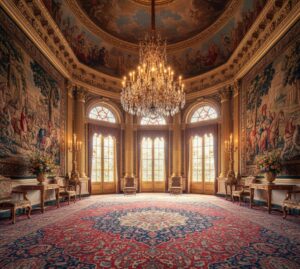
Imagine a Sultan presiding over his court in his throne room. A luxurious and antique rug covers the floor, adding an element of sophistication and displaying the Sultan’s prestige.
Now, imagine a Persian emperor signing a treaty with a neighbouring country, and a richly decorated Persian carpet serves as a visual proof of the King’s power. Or perhaps a Shah signing an agreement, with this act witnessed by an ornate Persian rug featuring traditional motifs.
This was the golden era of Persian carpets.
Throughout history, records indicate that court carpets were highly valued as symbols of status and wealth, laid out in the reception halls and audience chambers of palaces. They were even exchanged as diplomatic gifts – “ambassadors of cultural supremacy” – long before formal negotiations began.
Carpets have been woven for millennia, with the oldest known carpet, the Pazyryk carpet, unearthed in 1948 in Siberia’s Altai Mountains.
Amongst the various rugs and carpets, Persian rugs are one of the most well-known in the world. Known for their exquisite craftsmanship, rich colours and bold patterns, Persian carpets have long been a symbol of luxury, culture and history.
Here’s an in-depth look at the roles Persian carpets played at the Royal Court and the role of the Sultans and Emperors of Persia in turning carpet and rug weaving into a state-supported craft, and raising the art form to unmatched heights. The result was a legacy that still shapes global appreciation for handwoven carpets today.

Also Read: The Enduring Charm of Persian Rugs & Carpets
Carpets as Royal Symbols of Power
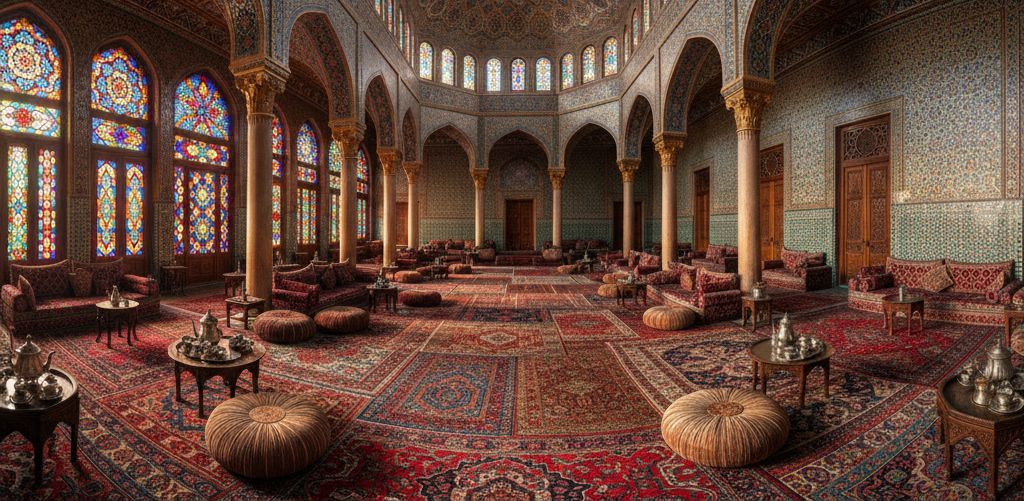
In the courts of the Safavid, Timurid, and earlier dynasties, a Persian carpet signalled far more than its intricate design. Every thread reflected the ruler’s strength. Carpets were placed in halls where ambassadors were received, where ceremonies took place, and where rulers met their advisors. The patterns, colours, and weaving quality spoke directly to guests before any words were exchanged.
Foreign envoys often described the sensation of stepping into a Persian palace layered with rich carpets. Floors glowed with deep reds, royal blues, and gold accents. Each carpet created a sense of harmony that impressed outsiders and affirmed the ruler’s control over a vast and skilled empire.
State Patronage and the Rise of Court Workshops
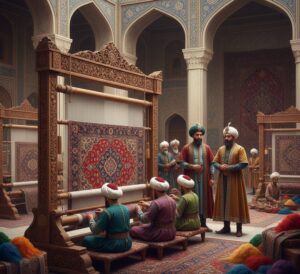
Persian rulers understood that supporting carpet weaving brought both cultural and economic strength. During the Safavid era, Shah Tahmasp and later Shah Abbas invested heavily in court-sponsored workshops. These royal ateliers gathered the best designers, dyers, and master weavers under one roof. The court decided patterns and themes, set standards of quality, and ensured that the carpets produced represented the highest level of Persian artistry.
Carpets as Diplomatic Gifts
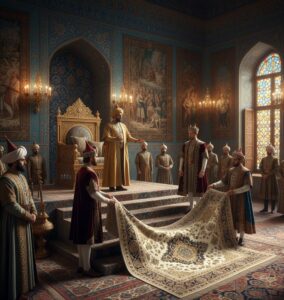
For Persian rulers, offering a royal carpet was not just an exchange of luxury goods. It was diplomacy expressed through craftsmanship. A single silk carpet, woven with gold or silver thread, could represent years of labour. When such a piece was gifted to a foreign king, it carried the weight of respect, intention, and cultural pride.
Carpets in Ceremonial and Religious Life
In royal courts, carpets marked the rhythm of life. They were part of coronations, royal births, weddings, and public appearances. Ceremonial spaces were laid with specific designs that symbolised harmony, divine order, or the ruler’s connection to heaven and earth.
Carpets also played a strong role in religious practice. Prayer rugs woven for Sultans and Emperors featured mihrab designs and careful symmetry. These carpets supported moments of reflection and served as personal symbols of devotion.
Artistic Innovation Guided by the Court
Weavers responded quickly when rulers showed interest in specific designs. If a Shah admired garden motifs, court workshops produced lush patterns with flowing water, cypress trees, and blooming flowers. If an Emperor favoured geometric balance, artisans created carpets with sharp lines and refined symmetry.
The court also welcomed influences from Chinese, Indian, and Ottoman art. These elements were reinterpreted through Persian aesthetics and transformed into something new.
Different Eras of Court Influenced Carpets in Persia
- The Origins of Persian Carpets
When the Persian Empire unified the region in 539 BC, it absorbed older weaving traditions from the ancient civilisations already living across what is now Iran. Many of these communities were nomadic, and their early carpets served both practical and decorative purposes. These first pieces set the foundation for the court-influenced designs that would follow.
- Cyrus the Great and Early Royal Patronage

Cyrus the Great, who ruled from 600 to 530 BC, elevated carpets from domestic craft to royal symbol. His palaces featured locally made carpets that showed wealth, authority, and refined taste.
- The Sassanid Dynasty and the “Spring of Khosrow”
Chinese accounts from the Sassanid era, which lasted from 224 to 641 CE, highlight the grandeur of royal carpets. After capturing the Sassanian capital of Ctesiphon, Emperor Heraclius reportedly returned with several treasures, including the famed “Spring of Khosrow.”
- Seljuk and Mongol Influence
In the 11th century, the Seljuks conquered Persia and reshaped weaving through new techniques. Seljuk women introduced the Turkish, or Ghiordes, knot. It produced strong, durable carpets and is still used today in areas such as Hamadan and Iranian Azerbaijan.
- The Safavid: Golden Age of Persian Carpet
Persian carpet weaving reached its peak during the reign of Shah Abbas, who ruled from 1587 to 1629. The Safavid court invested in workshops, trained master artisans, and encouraged innovation across all forms of art. Safavid carpets from this period show intricate curves, balanced compositions, and detailed natural or spiritual themes. Many were large-scale works created for palaces, mosques, and elite households. This era is now known as the Golden Age of Persian Weaving, a period when court patronage shaped designs that are still admired worldwide
Persian Carpets Today
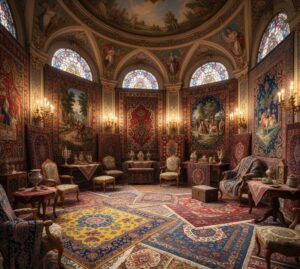
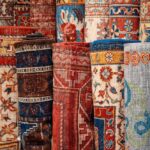
Persian carpets today are recognised by their place of origin, with major weaving centres in Hamadan, Shiraz, Mashhad, and the historic hub of Tabriz. Each region produces carpets with distinctive colours, patterns, and weaving techniques.
Historically, Persian carpets were not only used as floor coverings. They were also hung on walls, which protected them from wear and helped many antique pieces survive in exceptional condition. Owning an antique Persian carpet means owning a piece of history, preserved through craftsmanship that has endured for centuries.
Online auction houses like Giftex, with their famous ‘A World of Collectibles Auction’, continue to offer rare textiles and rugs. These auctions bring together unique treasures that allow collectors and decorators to find pieces that elevate any space with cultural depth and timeless beauty.
Persian Carpets as Historical Records
Beyond their beauty, carpets tell the story of the periods in which they were woven. The choices of colour, pattern, and material reflect political stability, trade availability, and cultural values. Floral carpets from the reign of Shah Abbas speak of a period of artistic confidence. Silk carpets with Chinese clouds or dragons reflect active trade and cultural exchange. Abstract or geometric carpets show shifts in style that aligned with changing court tastes.
Historians often use carpets to understand palace culture because they preserve details that other artefacts cannot. While buildings fall and texts fade, well-kept carpets can survive for centuries with their colours still strong.


About Post Author