Pashmina Shawls Explained: History, Types & Craftsmanship
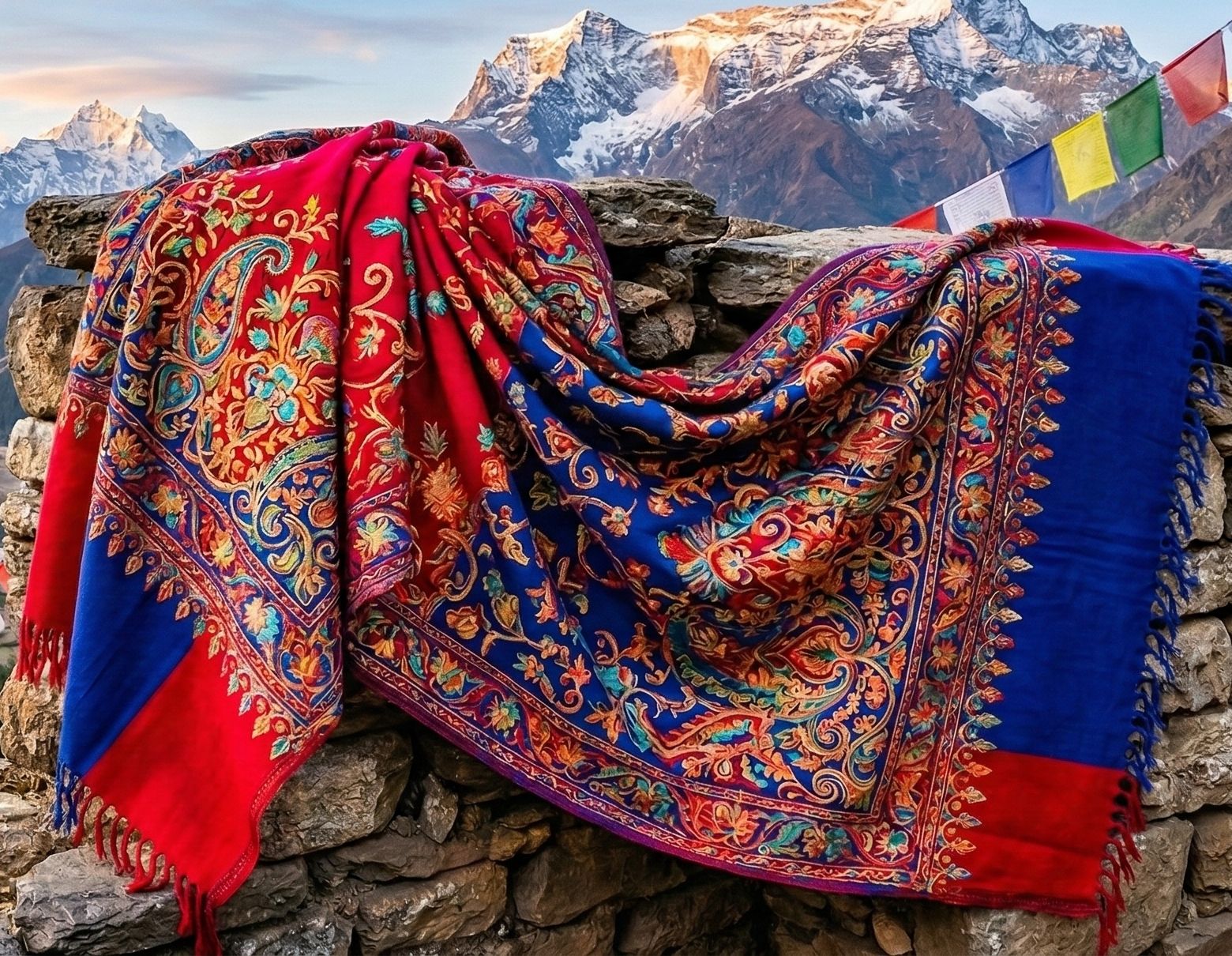
Gushing water, green meadows, and snow-capped mountains. This is the beauty of Kashmir, often called a paradise on earth. The valley is filled with breathtaking landscapes and peaceful valleys. It is also home to many traditional crafts that have been admired for centuries. Among the various attractions it offers, one thing that is known worldwide is the Kashmiri shawl.
One of the most beautiful and prized Kashmiri woolen shawls is the Pashmina, famous for its softness and warmth.
When people think of luxury textiles, nothing compares to the softness, warmth and elegance of a Pure Kashmiri Pashmina shawl.
For generations, this shawl has been admired across the world. It has been worn by royalty. It has also been treasured by collectors and fashion lovers. In addition, Pashmina shawls for women are widely chosen as luxury gifts, as they instantly elevate the gifting experience.
In this blog, we are going to explore the fascinating history of Pashmina and the different types of Pashmina shawls.
Explore the Various Types of Vintage Shawls
What Is a Pashmina Shawl?
A Pashmina shawl is a luxurious wool shawl made from fine Pashmina wool. This wool is obtained from the undercoat of the Changthangi goat. These goats are found in the high-altitude regions of Ladakh in the Himalayas.
Types of Weaves in Pashmina Shawls
The beauty of a Pashmina shawl is not defined only by the wool. The weaving technique also plays an important role.
Below are some of the most common types of weaves used in Kashmiri Pashmina shawls.
-
Plain Weave
The plain weave is considered the most basic and widely used weaving technique. In this method, a simple over-and-under pattern is followed during weaving.
Because of this structure, a smooth and even texture is created. The weave remains lightweight and soft.
-
Twill Weave
The twill weave is recognized by its diagonal lines or ridges on the fabric. These diagonal patterns are created during the weaving process.
As a result, the fabric becomes slightly thicker and stronger.
-
Diamond Weave (Chasm-i-Bulbul)
The diamond weave, also known as Chasm-i-Bulbul, is admired for its decorative appearance. In this weave, small diamond-shaped patterns are formed across the fabric.
-
Herringbone Weave
The herringbone weave is easily recognized by its distinctive V-shaped pattern.
-
Kani Weave
The Kani weave is regarded as one of the most intricate weaving techniques used in Kashmiri shawls.
In this process, small wooden sticks known as kanis are used instead of traditional weaving shuttles. Coloured threads are wrapped around these sticks. Then, detailed patterns are woven directly into the fabric.
Types of Pashmina Shawls
Different types of Pashmina shawls are produced in Kashmir. Each type is distinguished by its weaving style, embroidery, and design.
-
Classic Pure Pashmina Shawl
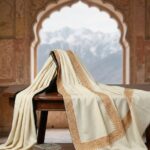
The classic pure Pashmina shawl is regarded as the most traditional variety. Hand-woven using age-old techniques passed down through generations, these shawls often feature intricate paisley patterns, floral motifs, and delicate embroidery.
-
Jamawar Pashmina Shawls
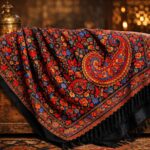
Jamawar Pashmina shawls are prized for their elaborate designs and rich history. Originating from the Mughal era, Jamawar refers to a type of intricate weaving technique used to create intricate patterns and motifs on fabric.
-
Kani Pashmina Shawl
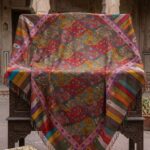
The Kani Pashmina shawl is considered one of the most artistic forms of Kashmiri shawls.
In this technique, the patterns are woven directly into the fabric rather than embroidered later. Because the technique is complex, great patience and skill are required. However, the final result is stunning.
-
Embroidered Pashmina shawl
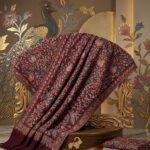
Embroidered Pashmina shawls add a touch of elegance and sophistication to any ensemble. These shawls are embellished with delicate hand embroidery, featuring intricate patterns, motifs, and embellishments.
-
Sozni Pashmina Shawl
The Sozni Pashmina shawl is admired for its delicate needle embroidery. This technique is regarded as one of the finest forms of Kashmiri embroidery.
Very thin threads are used during the process. The embroidery is carefully done on both sides of the shawl. Therefore, the design appears almost identical from either side.
Usually, elegant floral vines and paisley motifs are embroidered. Because the work is extremely detailed, high levels of craftsmanship are required.
-
Ombre Pashmina Shawl
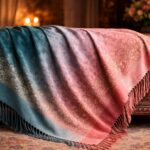
Ombre Pashmina shawls are a modern twist on the classic Pashmina, featuring gradient colours that fade seamlessly from light to dark. This is achieved by dipping the shawl into the dye and moving it up and down to deepen certain areas while keeping others lighter.
-
Printed Pashmina Shawl
Printed Pashmina shawls are a timeless trend, adding grace and style with their bold and elegant designs. From extraordinary animal prints such as leopard patterns to floral designs, printed Pashminas always look elegant.
-
Kalamkari Pashmina Shawl
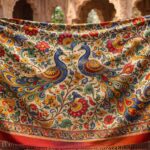
Kalamkari Pashmina shawls are nothing short of a magnificent painting. The word Kalamkari is composed of two words: ‘Kalam’, meaning ‘Pen’, and ‘Kari’, meaning ‘work’. Hence, Kalamkari is an artwork that uses bold brushstrokes to paint magical motifs over Pashmina shawls.
-
Reversible Pashmina Shawl
If there is magic in weaving, it is evident here in this type of Pashmina shawl. A reversible or Do Rukha (meaning two faced) shawl is woven in such a fashion that the front side is different in colour or shade from the back side.
-
Lace Pashmina
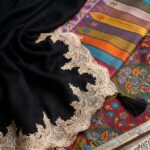
A Lace Pashmina is a luxurious, handcrafted accessory that combines the supreme warmth and softness of authentic Kashmiri Pashmina (cashmere) with the delicate, intricate beauty of hand-applied lace, typically French Chantilly lace.
How to Identify a Genuine Pashmina Shawl
Because of their high value, many imitation products are sold in the market. Therefore, it is important to recognize an authentic Pashmina shawl.
- First, the texture should be examined. Genuine Pashmina is extremely soft and smooth. However, it should not appear overly shiny.
- Second, the weaving pattern should be observed closely. Slight irregularities may be noticed in handwoven shawls.
- Third, warmth should be tested. Even though the shawl is very lightweight, excellent insulation should be provided.
- Finally, the price should also be considered. Authentic Kashmiri Pashmina shawls are usually more expensive because of the detailed production process.
Frequently Asked Questions About Pashmina Shawls
What is a Pashmina shawl?
A Pashmina shawl is a luxurious wool shawl made from the soft undercoat of the Changthangi goat found in the Himalayan region.
Why are Kashmiri Pashmina shawls so expensive?
Kashmiri Pashmina shawls are expensive because they are made from rare, fine wool and are often hand-spun and handwoven.
How can a genuine Pashmina shawl be identified?
A genuine Pashmina shawl feels extremely soft and lightweight while still providing warmth. It is usually handwoven, and slight irregularities in the weave may be noticed.
What are the main types of Pashmina shawls?
Some popular types include pure Pashmina shawls, embroidered Pashmina shawls, Kani Pashmina shawls, Sozni embroidered shawls, and printed Pashmina shawls.
Why Pashmina Shawls Remain Timeless
Pashmina shawls have remained popular for centuries. The Kashmiri Pashmina shawl is far more than a winter accessory. It is a piece of art created through patience and skill. Their elegance has not faded over time.
This is mainly because unmatched softness and warmth are offered. At the same time, exceptional craftsmanship is displayed in every piece.
Today, Pashmina shawls are worn by people across the world. Fashion designers frequently include them in luxury collections. For anyone who appreciates luxury textiles, the pure Kashmiri Pashmina shawl remains a timeless treasure.
Giftex: A World of Collectibles Auction
This March, be a part of the exciting Collectibles Auction with Giftex. A unique collection of antique treasures and vintage collectibles will be showcased for collectors and enthusiasts.
Rare finds will be presented, from exquisite silver pieces to elegant shawls and magnificent handcrafted carpets. Each item carries history, craftsmanship, and timeless beauty.


About Post Author