Refined & Radiant: The Timeless Elegance of Edwardian Furniture
Imagine stepping into a room where sunlight spills across polished wood floors, lace curtains drift in a soft breeze, and every chair, cabinet, and table feels both elegant and welcoming. The space isn’t crowded. It breathes. The lines are graceful, the colours gentle, and the mood quietly confident. You’ve just walked into the Edwardian era.
Edwardian era furniture captures a moment in history when design shifted from the heavy, ornate feel of the Victorian age to something lighter and more relaxed.
In this guide, we’ll explore the history of Edwardian furniture, the main types you’ll find, its key characteristics, and how to style it in a modern home.
Also Read: Victorian Furniture: Elegance Redefined
What is Edwardian Furniture?
Edwardian furniture refers to the furniture fashioned during the reign of King Edward VII (1901-1911). When Queen Victoria’s son Edward became king in 1901, he ushered in a fresh new furniture-making era.
Edwardian furniture tends to be more free-spirited, rejecting the restraint of the previous Victorian period as a result of Edward VII’s love of fashion and the arts. That’s because furniture makers during the Edwardian era sought to bring back designs from previous periods while incorporating new elements. Edwardian design lightened everything. Rooms became brighter. Furniture was more delicate. Decoration was still present, but it was more restrained and refined. Edwardian antiques continue to be a popular choice even today due to the beautiful designs and craftsmanship showcased within this period.
Key Characteristics of Edwardian Era Furniture
When confronted with a piece of Edwardian furniture, check for a few specific telltale characteristics.
- Lighter and Exotic Woods
While Victorian furniture was made of dark mahogany and walnut, Edwardian pieces often used:
- Satinwood
- Maple
- Mahogany with lighter finishes
- Painted wood (especially in white or cream)
The overall look is softer and brighter, making rooms feel more open.
- Light Colour Palette
In response to the darker furniture of the Victorian period, Edwardian craftsmen created pieces using lighter-coloured materials, leading to a brighter and airier effect.
- Graceful, Slimmer Lines
Edwardian furniture typically features:
- Slender legs
- Tapered or cabriole legs
- Elegant curves
- Delicate proportions
- Influences from Earlier Periods
Edwardian design borrowed heavily from 18th-century styles, including:
- Georgian
- Sheraton
- Louis XVI
This revival influence brought symmetry, inlay work, and classical detailing back into fashion.
- Subtle Ornamentation
Decoration didn’t disappear, but it became more restrained. You’ll often see:
- Inlaid marquetry
- Fine carvings
- Floral motifs
- Ribbon and garland details
The decoration enhances the piece rather than overwhelming it.
- Inlays & Motifs
Delicate marquetry in floral or geometric patterns is common.
Popular Types of Edwardian Furniture
If you’re collecting or decorating in this style, here are the main furniture categories to know.
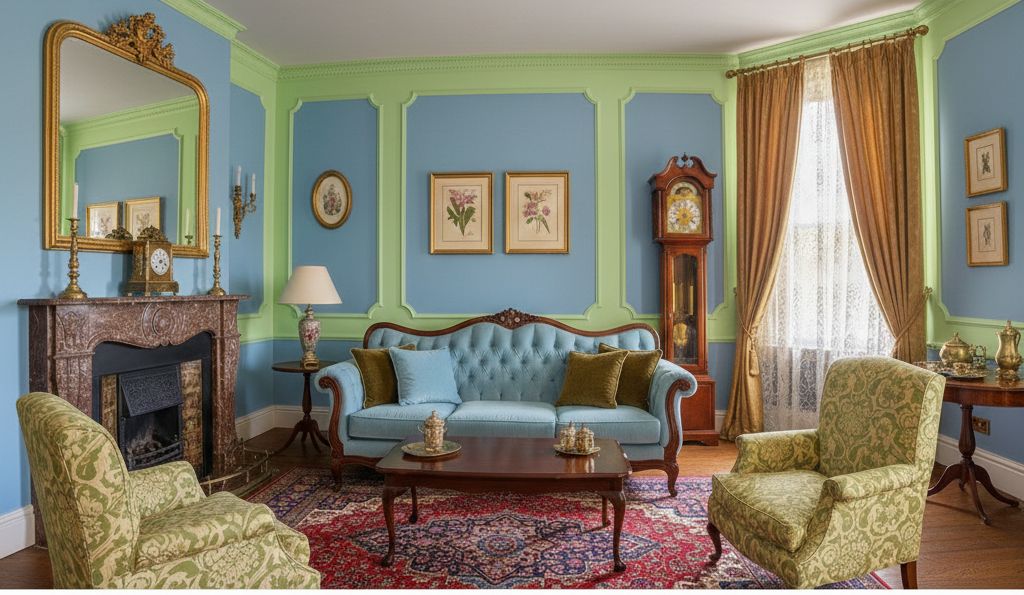
- Edwardian Sofas and Settees
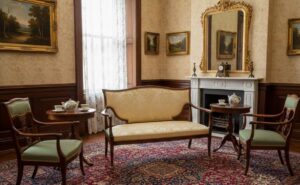
These often feature:
- Curved arms
- Carved wooden frames
- Upholstery in floral or striped fabrics
- Light, elegant legs
They’re less heavy than Victorian sofas and feel more conversational.
- Armchairs and Occasional Chair
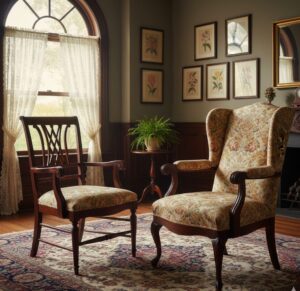
Edwardian armchairs were designed for comfort and socialising. Look for:
- Wingback styles
- Tub chairs
- Slender wooden frames with upholstered seats
Occasional chairs were common in drawing rooms and bedrooms.
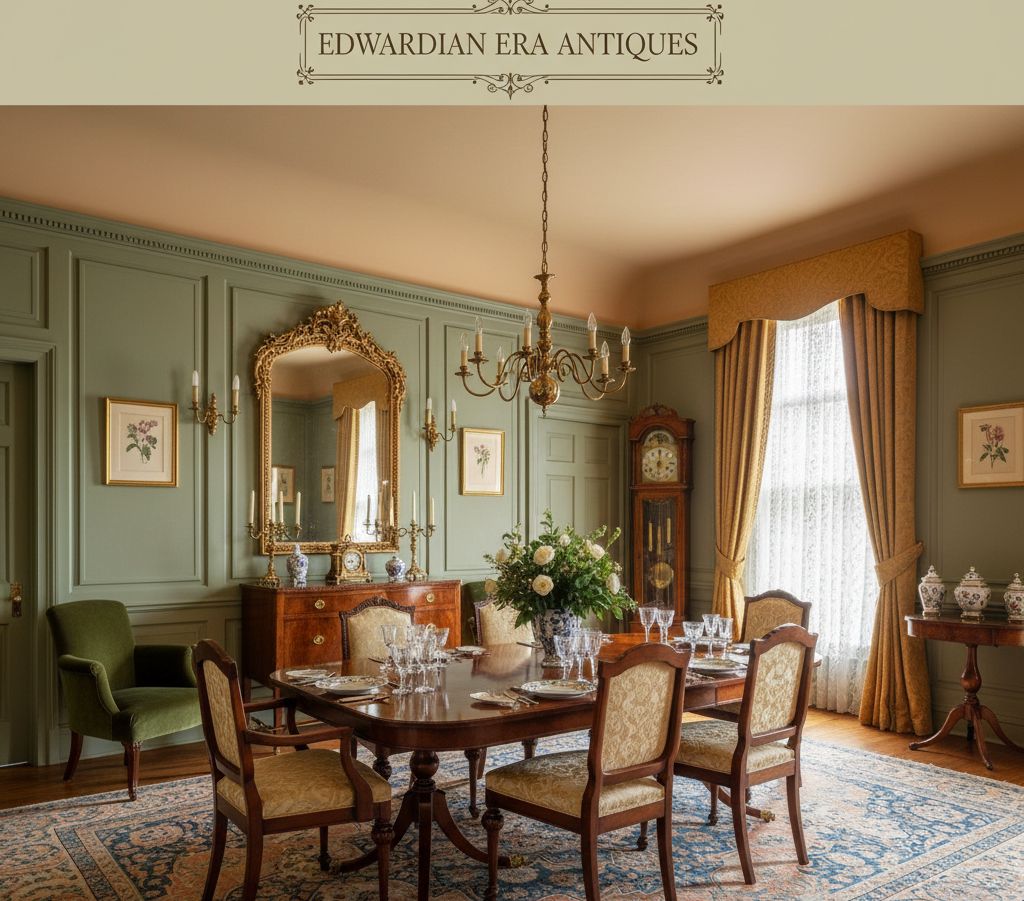
- Dining Tables and Chairs
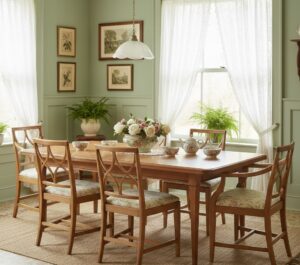
Dining tables often had:
- Polished mahogany tops
- Turned or tapered legs
- Extension leaves
Dining chairs usually featured shield or oval backs inspired by 18th-century designs.
- Display Cabinets and Sideboards
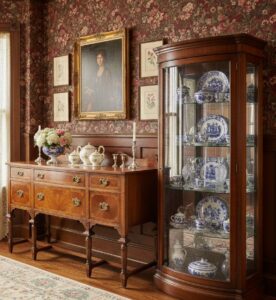
Glass-fronted cabinets were popular for showcasing fine china and collectibles. Sideboards often included:
- Inlay details
- Brass handles
- Carved legs
- Symmetrical design
These pieces balanced beauty with storage.
- Writing Desks and Bureau
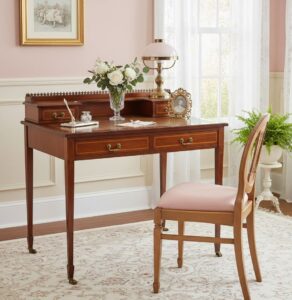
Edwardian desks often reflect Sheraton or Hepplewhite influences:
- Slim proportions
- Tapered legs
- Leather writing surfaces
- Fine inlay work
They feel elegant without being imposing.
- Bedroom Furniture
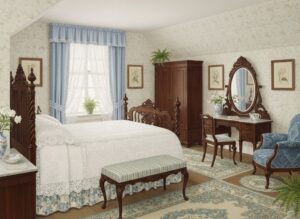
Common pieces include:
- Dressing tables with oval mirrors
- Wardrobes with panelled doors
- Bed frames in painted wood or satinwood
Bedrooms during the Edwardian period were bright and feminine, often decorated in soft pastels.
Edwardian Colour Palette and Materials
Furniture didn’t exist in isolation. It worked with the room’s overall design.
Popular Colours
- Soft pastels (pale pink, blue, mint green)
- Cream and ivory
- Light floral patterns
- Gentle gold accents
Walls were often painted lighter than in Victorian homes, and wallpaper patterns became more delicate.
Fabrics
- Floral chintz
- Damask
- Silk blends
- Lace accents
The goal was elegance without heaviness.
How to Care for Edwardian Era Furniture
Edwardian furniture is elegant and delicate, so proper care helps preserve its beauty and value for years to come.
- Dust regularly and gently
Use a soft, dry, lint-free cloth to remove dust weekly. For carved details, use a soft brush to reach small crevices without scratching the surface.
- Protect from sunlight and heat
Keep furniture away from direct sunlight, radiators, and fireplaces. Too much heat or light can fade finishes and cause wood to crack or warp.
- Polish in moderation
Apply a good-quality wax polish only a few times a year. Use it sparingly and buff gently to maintain the natural shine without buildup.
- Handle and repair with care
Always lift furniture instead of dragging it. If you notice loose joints or veneer damage, consult a professional restorer rather than attempting quick fixes.
How to Style Edwardian Furniture in a Modern Home
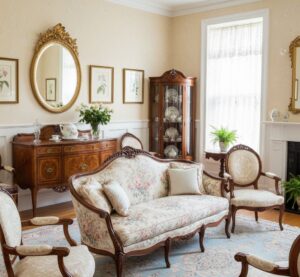
The beauty of Edwardian interior design is its unique blend of elegance, simplicity, and functionality, which can be easily incorporated into modern homes.
- Start with One Statement Piece
Choose a key piece such as:
- An Edwardian sideboard
- A satinwood dressing table
- A carved armchair
Let it anchor the room. Surround it with simpler, neutral pieces to keep the space balanced.
- Keep the Room Light and Airy
Edwardian design thrives in bright spaces. Use:
- Sheer curtains
- Neutral wall colours
- Natural light
Avoid dark, heavy drapery that pulls the room back into Victorian territory.
- Mix Old and New
Pair Edwardian furniture with modern elements:
- A contemporary sofa with an antique coffee table
- A sleek light fixture above a traditional dining table
- Minimalist artwork above a carved sideboard
This contrast keeps the space fresh and avoids a period-drama look.
- Use Floral and Pattern Carefully
Edwardian interiors love florals, but moderation is key. Try:
- Floral cushions
- A patterned armchair
- Subtle wallpaper on one feature wall
- Balance patterns with plain fabrics.
- Choose Elegant Accessories
Finish the look with:
- Brass or crystal lamps
- Ornate mirrors
- Porcelain vases
- Framed botanical prints
Keep surfaces uncluttered. Edwardian rooms were decorative but not chaotic.
- Focus on Symmetry
Edwardian interiors often embraced balance and order. Arrange furniture in pairs where possible, such as two armchairs flanking a fireplace or matching table lamps on either side of a sideboard. Symmetry creates a calm, composed atmosphere.
- Highlight Architectural Details
Edwardian homes often featured high ceilings, decorative cornices, fireplaces, and large windows. Even in modern spaces, you can echo this look by emphasising architectural features. Use tall mirrors to enhance ceiling height, install simple moulding for added character, or position furniture to draw attention to windows and natural light.
Is Edwardian Furniture a Good Investment?
Edwardian furniture remains popular today, and good-quality or unusual pieces are especially sought after. This is because:
- Blends easily with modern interiors
- Offers craftsmanship without overwhelming detail
- Reflects a transitional design era
- Holds value in the antique market
- Well-preserved pieces in satinwood or with fine inlay work are especially sought after.
Final Thoughts
Edwardian era furniture captures a quiet kind of luxury. It doesn’t shout. It doesn’t overwhelm. Instead, it invites you to sit, read, talk, and live comfortably in a space that feels thoughtful and refined.
Its slim silhouettes, delicate inlays, and lighter finishes make it one of the easiest antique styles to incorporate into modern homes. Whether you add a single Edwardian armchair or design an entire room around the aesthetic, you’ll create a space that feels graceful, timeless, and welcoming.
Giftex: A World of Collectibles Auction
This March, Giftex brings back its renowned A World of Collectibles Auction. From exquisite antique décor pieces to exceptional vintage collectibles, the Giftex online auction is your one-stop destination for discovering rare and remarkable treasures.


About Post Author