The Art of Placement: How to Hang Wall Art the Right Way
Who doesn’t like a beautiful wall covered in beautiful paintings? A well-placed artwork can instantly transform a wall and your home by injecting colour and personality.
In a previous blog, we discussed choosing artwork, how to pick the perfect art for your rooms, and how artwork can shape the mood of a space. Once you’ve found the right pieces, the next big question always comes up:
Where should the art go, and how to hang art correctly?
Choosing the right artwork is only one part of the task. The most significant task is to find the ideal artwork placement that maximises the best effect in your living space.
How do you decide what goes where? For a gallery wall, how can you make sure your artworks work together? These are the question that plagues the mind.
In this art placement guide, we will answer all your questions about how to arrange your art.
Also Read: Guide to Choosing Artworks
How to Hang Wall Art: Start With the Wall
Before choosing an arrangement, take a moment to look at the wall itself. Wall size, ceiling height, nearby furniture, and natural light all influence what works best.
As a general rule:
- Art should relate to the scale of the wall.
- It should visually connect to nearby furniture.
- The centre of the artwork or arrangement usually looks best at eye level, around 57 to 60 inches from the floor.
Once you’ve considered the wall, you can choose one of the following placement styles.
Popular Wall Art Placement Styles
1.One Small, Medium, or Large Piece
A single artwork can be incredibly powerful when used correctly. The key is choosing the right size for the wall.
- Small pieces work well on narrow walls, between windows, or in cosy corners.
- Medium pieces suit most standard walls and work beautifully above consoles, desks, or sideboards.
- Large pieces are ideal for feature walls, behind sofas, or in dining rooms where you want a strong visual anchor.
- Gallery Wall
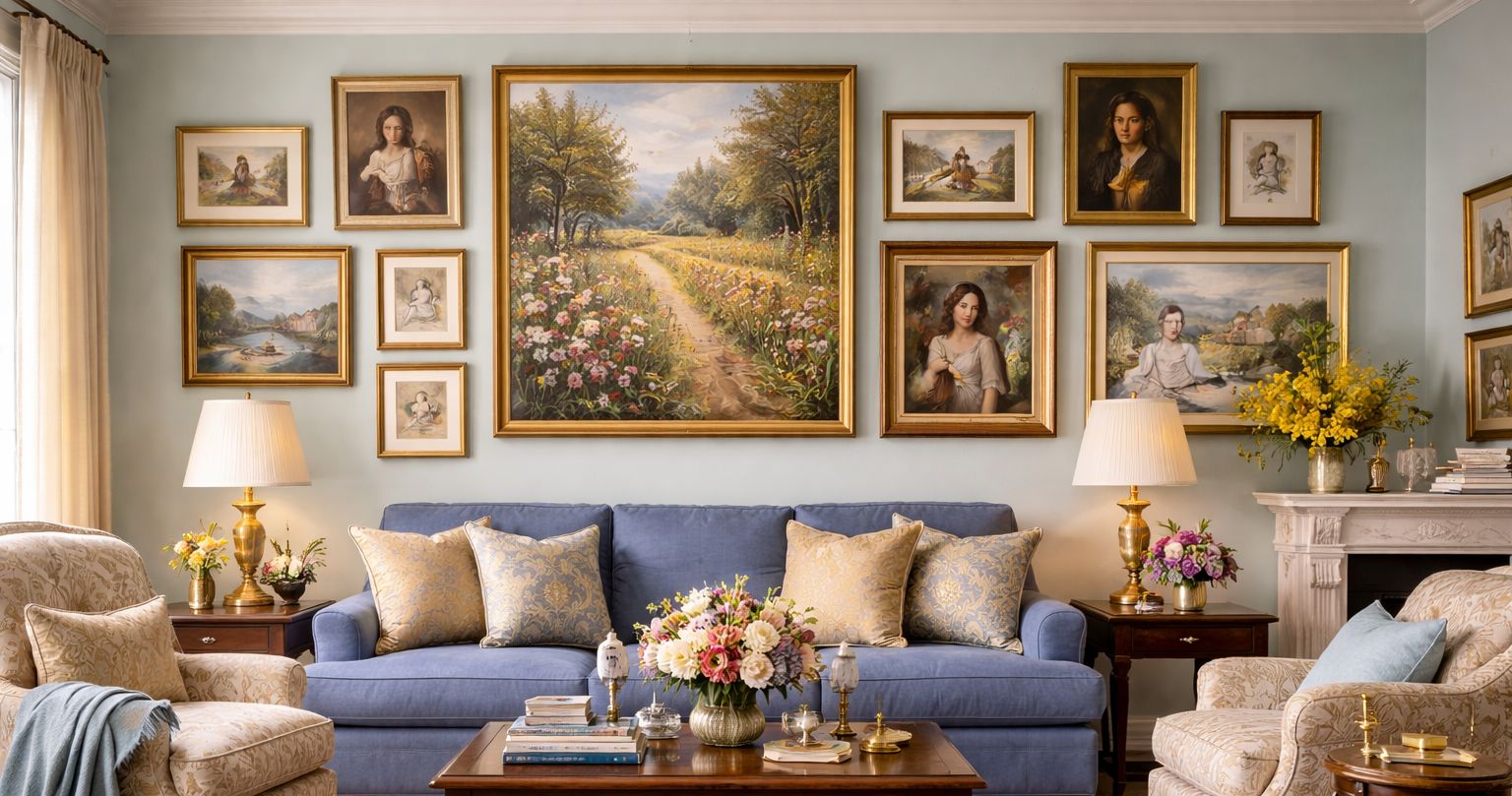
A gallery wall allows you to bring multiple artworks together in one composition. This option is expressive, personal, and flexible, but it benefits from planning.
Gallery walls work especially well in places like the living room, hallways, home offices, etc.
To create a gallery wall:
- To create a dynamic look, use a mix of vertical and horizontal orientations and varying sizes.
- Lay all your pieces on the floor to visualise the arrangement before making any holes in the wall.
- Start with your largest or “anchor” piece, which will be the focal point, and build the rest of the collection around it.
- Move items around until the composition feels balanced, ensuring an even distribution of colours and sizes
- Grid Arrangement
A grid layout creates a clean, structured look. Artworks are aligned evenly in rows and columns, with consistent spacing.
This arrangement works best when:
- Frames are the same size
- Artworks share a similar style or colour palette
- You want a calm, organised feel
- Diptych or Triptych
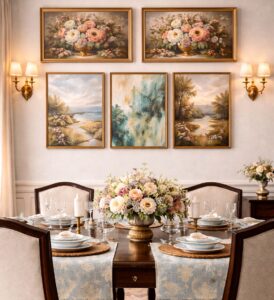
A diptych is two related artworks hung side by side. A triptych uses three pieces.
These arrangements work well above:
- Sofas
- Beds
- Dining tables
Keep spacing consistent and treat the group as one unified artwork. The pieces should feel connected through subject, colour, or style.
- Using a Mirror as Art
Mirrors aren’t just practical. They function as artwork, too.
Mirrors work beautifully in entryways, dining rooms, and bedrooms, especially when mixed with artwork in a gallery-style arrangement.
- Stacked Pieces
Stacked art involves hanging two or more pieces vertically, one above the other.
This approach works well:
- On tall walls
- Between windows
- In narrow spaces where horizontal layouts won’t fit
Ensure the spacing is even and the pieces appear visually connected.
- Something Sculptural
Wall-mounted sculptures, ceramic pieces, or textile art add depth and texture.
Sculptural elements are great when:
- A room feels flat or overly framed
- You want to add interest without another print or painting
- You’re mixing materials like wood, metal, or fabric
These pieces can stand alone or be combined with framed artwork for contrast.
Wall Art Arrangements According to Rooms
- Living Room
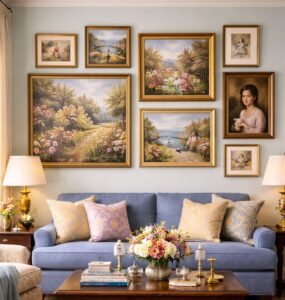
The living room often calls for larger arrangements.
- Above the sofa: one large piece, a triptych, or a balanced gallery wall
- Feature walls: bold artwork or sculptural elements
- Shelves: lean smaller framed pieces for a relaxed look
Make sure artwork connects visually to seating and furniture.
- Bedroom
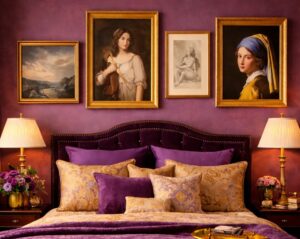
In bedrooms, art should support a calm, personal atmosphere.
- Above the bed: one wide piece or a diptych
- Side walls: smaller, intimate artworks
- Avoid hanging art too high or too crowded
Soft colours and meaningful imagery work well here.
- Dining Room

Dining rooms can handle stronger visual statements.
- Large-scale artwork
- Grid layouts add structure
- Artwork here should feel social and inviting.
- Hallways and Staircases
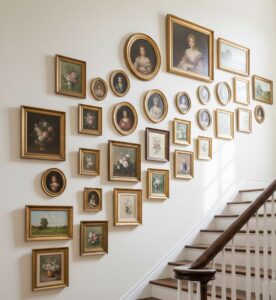
These spaces are perfect for gallery walls.
- Follow the slope of the stairs
- Keep spacing consistent
- Use smaller pieces that encourage closer viewing
Hallways are ideal for personal collections and storytelling through art.
- Home Office
Art in a workspace should inspire without distracting.
- Choose pieces that motivate or calm you
- Grid layouts work well for focus
- Keep placement within your main line of sight
Rules for Arranging Art Successfully
While personal taste always matters, balanced arrangements tend to share a few key characteristics.
- Dimensional Consistency
Artworks don’t need to be identical, but they should relate in size and visual weight.
For example:
- Avoid pairing a tiny frame next to a very large one without something to bridge the gap.
- When mixing sizes, step them up or down gradually.
- Formal Coherence
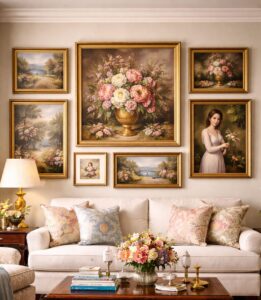
Formal coherence means the pieces feel like they belong together.
This can come from:
- Similar frames
- A shared colour palette
- A common artistic style or theme
You can mix different types of art, but there should be at least one unifying element tying everything together.
- Linear Arrangement
Many successful arrangements:
- Align along a central axis
- Share a common top, bottom, or centre line
- Follow the shape of the wall or furniture below
Invisible structure keeps things visually calm, even when the artwork itself is expressive.
- Mix and Match Your Artworks Thoughtfully
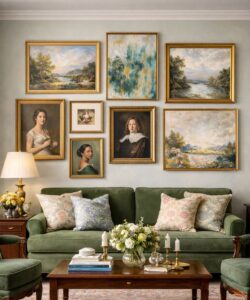
Hanging a single painting is usually straightforward. Creating a gallery wall is where things get more complex. When combining multiple artworks, start by identifying a unifying idea.
In principle, you can combine artworks based on:
Theme or Style
- Landscapes
- Abstract works
- Portraits
- Botanical or nature themes
Type
- Photography
- Illustrations
- Paintings
- Prints and drawings
Dominant Colour
Colour is one of the easiest ways to unify different artworks.
Look for:
- Repeating tones
- A shared neutral base
- One accent colour that appears across multiple pieces
Final Thoughts
Artwork placement isn’t about strict rules. It’s about balance, intention, and connection to the space you live in.
Take your time. Lay things out. Step back and look. Adjust when something feels off.
When art is placed thoughtfully, it doesn’t just decorate a room. It completes it.


About Post Author