The Beauty of Antique Porcelain: A Guide to Antique Porcelain Types
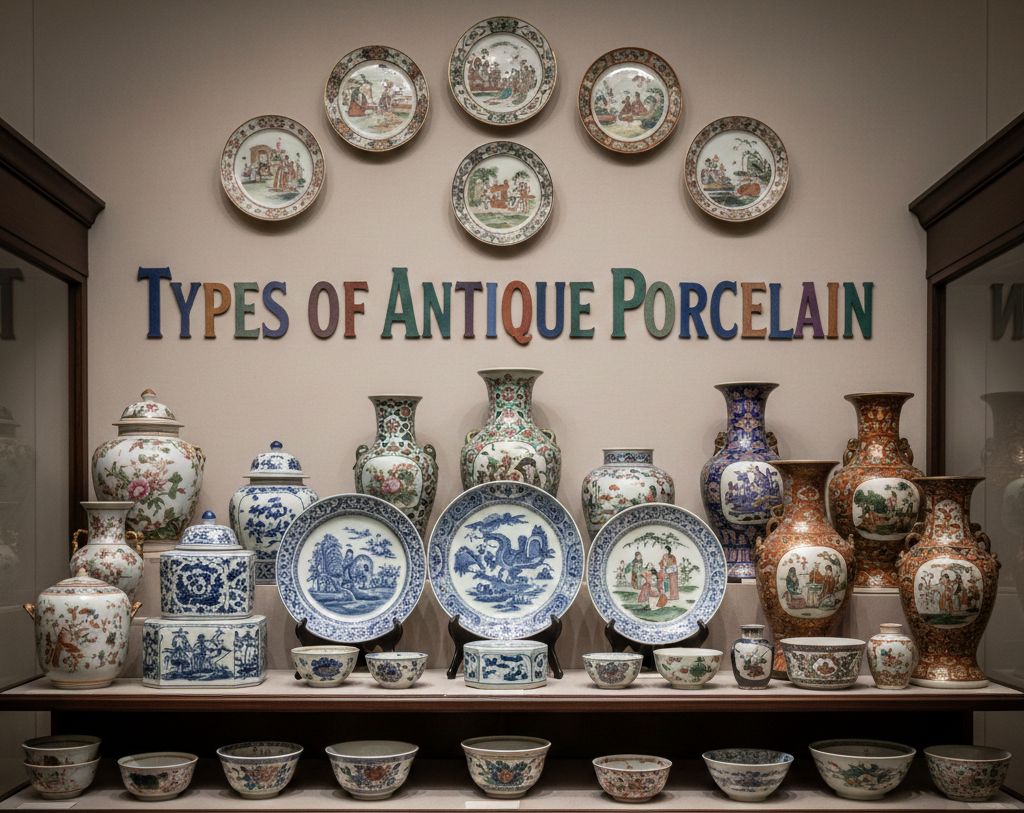
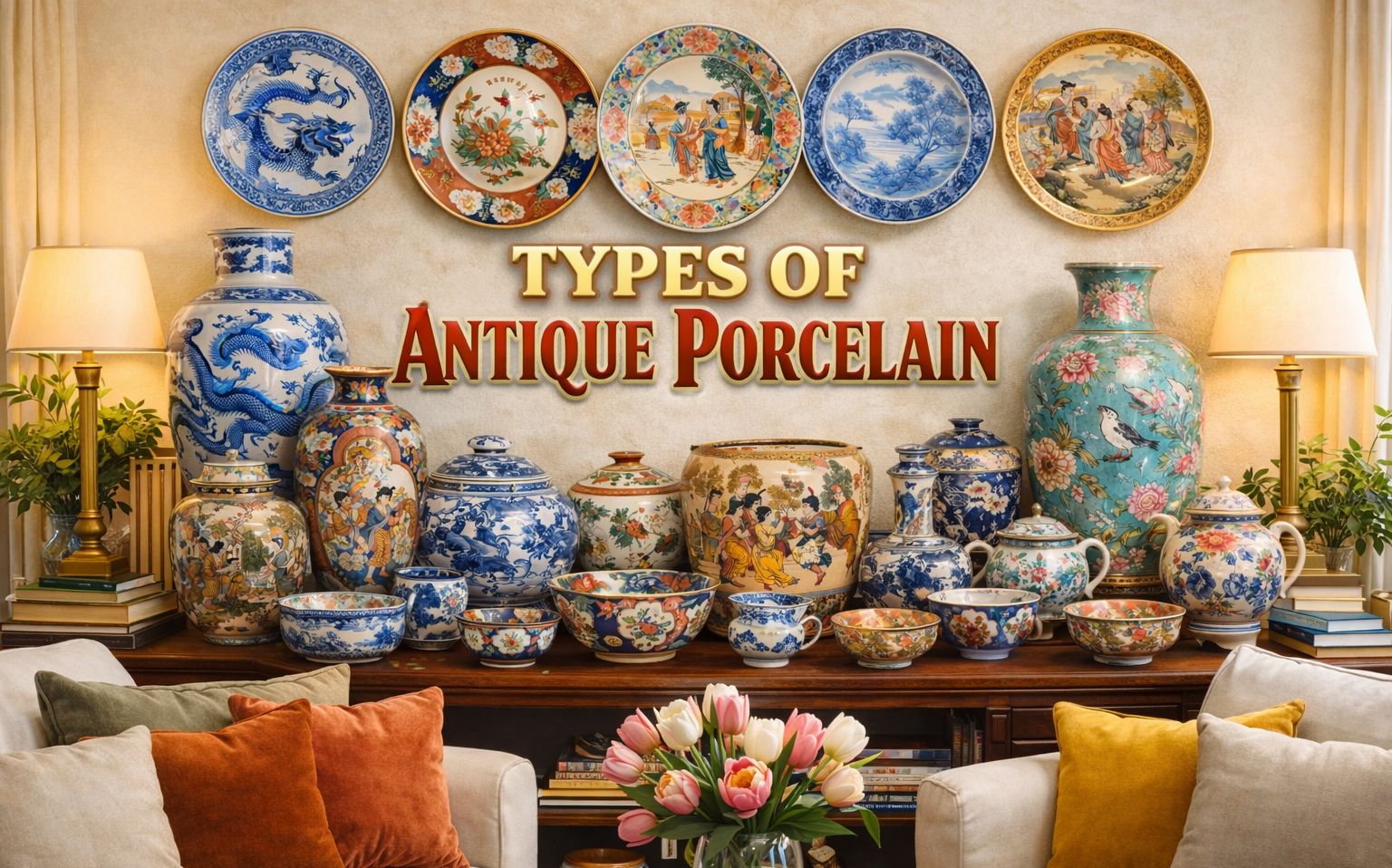
Imagine walking into a room and spotting an array of antique porcelain wares woven thoughtfully into the decor. An antique Chinese porcelain bowl filled with colourful fruit rests on the dining table. Nearby, an antique Japanese porcelain vase holds delicate flowers. Whatever the décor trends, incorporating antique porcelain into it will bring charm and elegance to any living space. Antique porcelain has fascinated collectors for centuries. From richly decorated Imari porcelain to the refined elegance of Meissen porcelain, every piece tells a story of craftsmanship, trade, and cultural exchange. These objects travelled across continents, passed through royal courts and private collections, and continue to captivate admirers today. Whether you are a beginner collector, an antique dealer, or simply curious about historic ceramics, understanding the various types of antique porcelain helps you recognise value, quality, and authenticity.
What Is Antique Porcelain?
The term antique can be confusing, especially when applied to porcelain, a material that has been produced continuously for centuries and is still made today. So, what truly qualifies as antique porcelain?
In porcelain, as with many other decorative arts, an item is generally considered an antique if it is over 100 years old. This guideline helps collectors and buyers distinguish genuine antiques from later reproductions or vintage pieces.
Types of Antique Porcelain: Materials, Crafting, and Regional Styles
Porcelain is admired not only for its beauty but also for the skill and innovation involved in its creation. Over centuries, potters refined materials, firing techniques, and decorative methods, resulting in distinct porcelain types.
A. Antique Porcelain Types by Material and Crafting Process
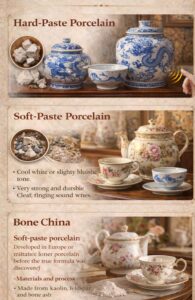
- Hard-Paste Porcelain
Hard-paste porcelain is the earliest and purest form of true porcelain. It was first perfected in China and later replicated in Europe in the early 18th century.
Materials and process
- Made from kaolin clay and feldspar
- Fired at extremely high temperatures
- Results in a hard, dense, and slightly translucent body
Appearance and characteristics
- Cool white or slightly bluish tone
- Very strong and durable
- Clear, ringing sound when gently tapped
- Soft-Paste Porcelain
Soft-paste porcelain was developed in Europe as an attempt to imitate Chinese porcelain before the true formula was discovered.
Materials and process
- Made from clay mixed with glass, chalk, or other minerals
- Fired at lower temperatures than hard-paste porcelain
- Softer body that is more delicate
Appearance and characteristics
- Creamy or warm white tone
- Slightly thicker glaze
- Less translucent than hard-paste porcelain
- Bone China
Bone China porcelain, developed in England in the late 18th century, is named for its unique composition, including animal bones ground into a powder, which is known as bone ash.
Materials and process
- Made from kaolin, feldspar, and bone ash
- Fired at controlled temperatures to achieve strength and translucency
Appearance and characteristics
- Bright white colour
- Exceptional translucency
- Lightweight yet very strong
- Porcelain Types by Regional Variety
Beyond materials and techniques, porcelain styles are strongly influenced by geography, culture, and trade. Each region developed its own decorative language and forms.
B. Chinese Antique Porcelain
I. Ming Dynasty Porcelain
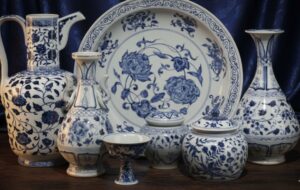
Ming porcelain is among the most famous and valuable antique ceramics in the world. It is known for its high-quality clay, balanced forms, and elegant decoration.
Appearance and decoration
- Most famous for blue and white porcelain
- Painted with cobalt blue under a clear glaze
- Designs include dragons, phoenixes, lotus flowers, scrolling vines, waves, and court scenes
II. Qing Dynasty Porcelain
Qing porcelain expanded decorative techniques and colour palettes, making it more visually varied than Ming porcelain.
III. Kangxi Period Porcelain
- Crisp blue and white designs
- Thin porcelain body
- Highly detailed landscapes, figures, and floral patterns
Famille Verte Porcelain
- Dominated by green enamel with yellow, aubergine, and iron red
- Often features birds, flowers, scholars, and mythological scenes
Famille Rose Porcelain
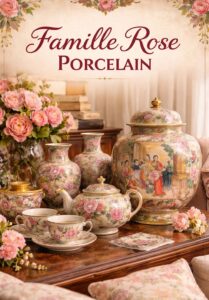
- Softer pastel colours, especially pink
- More delicate shading and painterly detail
- Commonly seen on plates, vases, and tea ware
- Antique Japanese Porcelain
Japanese porcelain is known for its balance between bold decoration and refined composition.
- Imari Porcelain
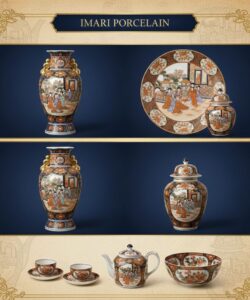
Imari porcelain is one of the most recognisable types of antique Japanese porcelain.
Appearance and decoration
- Rich cobalt blue underglaze
- Overglaze iron red and heavy gold decoration
- Dense, symmetrical patterns covering most of the surface
Read More About Imari Porcelain Here.
2. Kakiemon Porcelain
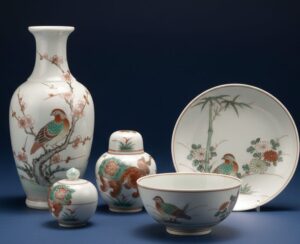
Kakiemon porcelain is more restrained and refined compared to Imari.
Appearance and decoration
- Milky white porcelain body
- Minimalist compositions with lots of open space
- Delicate motifs such as quails, bamboo, prunus blossoms, and mythical animals
III. Kutani Ware
Kutani porcelain is known for its bold use of colour and expressive decoration, setting it apart from more restrained Japanese porcelain styles.
Appearance and decoration
- Thick, glossy enamels
- Strong use of red, green, yellow, blue, and gold
- Designs are often outlined in black
IV. Satsuma Porcelain
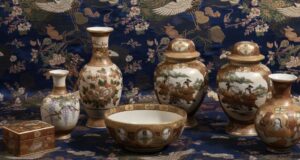
Satsuma porcelain is one of the most recognisable Japanese ceramics, particularly popular with Western collectors.
Appearance and decoration
- Cream-coloured or ivory-toned body
- Fine crackle glaze
- Detailed hand-painted decoration
- Heavy use of gold
- European Antique Porcelain Types
European porcelain developed later but quickly became associated with luxury, royalty, and fine art.
- Meissen Porcelain (Germany)
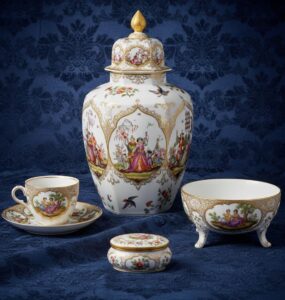
Meissen porcelain is the first true hard-paste porcelain made in Europe.
Appearance and decoration
- Bright white porcelain body
- Highly detailed hand-painted decoration
- Floral sprays, courting couples, pastoral scenes, and figurines
Read More About Meissen Porcelain
2. Sèvres Porcelain (France)
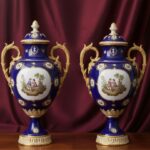
Sèvres porcelain represents French court taste and elegance.
Appearance and decoration
- Rich background colours such as deep blue, turquoise, apple green, and pink
- Heavy use of gilding
- Central painted panels featuring mythological scenes, cherubs, or landscapes
- Often highly polished and refined
- English Antique Porcelain
English porcelain factories focused on both decorative and practical wares.
Early English makers focused on soft-paste and bone china, creating distinct styles from the mid-18th century onward.
Worcester Porcelain
Known for blue and white designs inspired by Chinese porcelain, as well as fine enamel decoration
- Blue and white designs inspired by Chinese porcelain
- Delicate floral decoration and naturalistic painting
Chelsea Porcelain
- Early English soft-paste porcelain, often richly decorated and rare.
- Early soft-paste porcelain
- Rich colours, gold detailing, and figurines
Spode Porcelain
Famous for developing bone china, which remains popular today for its strength and translucency.
- Known for developing bone china
- Lighter, stronger porcelain body
- Elegant tableware designs
- Other Notable Antique Porcelain Types
Delftware (Netherlands)
While technically tin-glazed earthenware rather than true porcelain, Delftware is often collected alongside antique porcelain. Its blue and white designs imitate Chinese styles and played a major role in European ceramic history.
Capodimonte Porcelain (Italy)
Capodimonte porcelain is known for sculptural detail and figurines. Early examples are rare and valuable, while later pieces are more decorative but still collectible.
How to Identify Antique Porcelain
When examining antique porcelain, collectors look for several key factors:
- Markings or factory stamps on the base
- Signs of hand painting, such as slight variations in brushwork
- Wear consistent with age, especially on the foot rim
- Quality of glaze, often softer and less uniform than modern pieces
- Condition matters, but minor flaws are common and often acceptable in genuine antiques.
Final Thoughts
From the bold colours of Imari porcelain to the refined elegance of Meissen and the historic prestige of Ming dynasty porcelain, antique porcelain offers endless variety and fascination. Understanding the different types helps collectors make informed choices and appreciate the artistry behind each piece.
Whether you collect for passion or profit, antique porcelain remains one of the most enduring and rewarding areas of the antiques world.


About Post Author