The Golden Touch: The Enduring Romance of Gilt Porcelain
Gold has a way of holding attention. It glints even in soft light. It turns an ordinary surface into something precious. When gold meets porcelain, it creates an art form that feels both ancient and modern simultaneously. Gilded porcelain does not whisper. It glows. It tells stories shaped by artists who knew how to balance colour, detail, and shine.
From antique gilded pottery to gilded ceramics, the art of fusing gold with these decorative pieces creates a stunning object that carries the undeniable weight of history and the unmistakable sheen of luxury.
Timeless Allure of Porcelain
The timeless allure of porcelain arises from its remarkable blend of historical depth, exceptional craftsmanship, and symbolic richness. Originating in ancient China during the Tang Dynasty, porcelain—often called “white gold”—was once a closely guarded secret, prized for its purity, translucence, and strength. For centuries, Chinese porcelain captivated the world, with pieces travelling along trade routes as both luxury commodities and diplomatic gifts.
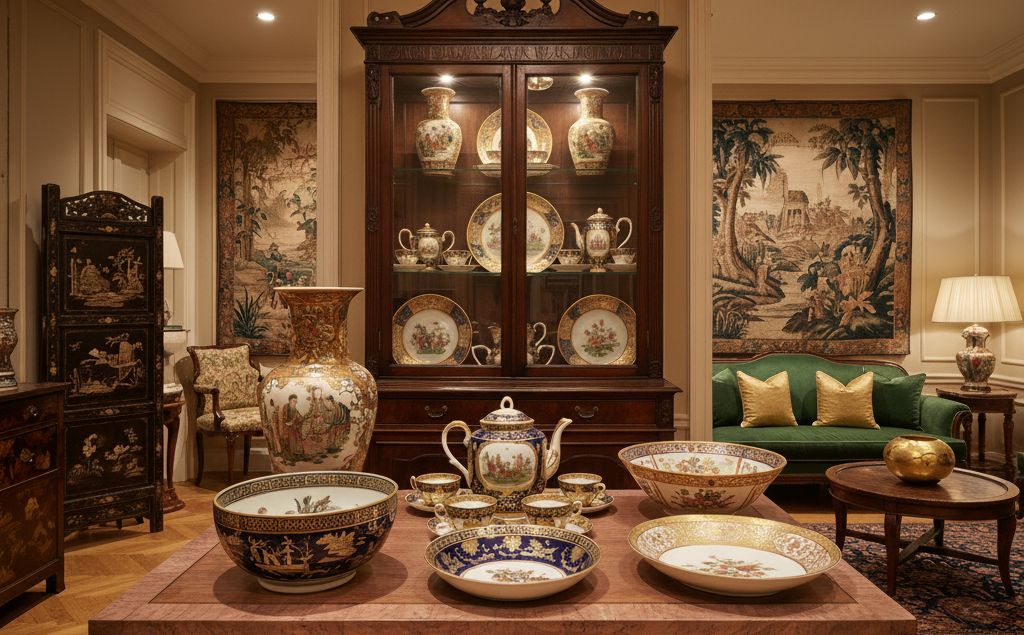
Today, antique Chinese porcelain continues to command admiration. Many pieces are treated not merely as tableware but as fine art—displayed on stands, set within luxurious cabinets, or even framed in gold and silver.
The Magic of Gilded Porcelain
Gilded porcelain carries a presence that is hard to ignore. Gold applied to a ceramic surface can transform a vase, plate, jar, or figurine into a statement piece. It does not matter if the item is small or large. Gilding elevates it.
What is Gilding
Gilding was the final stage in decorating certain porcelain decorative arts. Miraculously, these fragile objects that had already survived multiple firings not only endured each subsequent layer of gold being added but also shone brighter.
A Golden History: The Art and Evolution of Gilt Ceramics
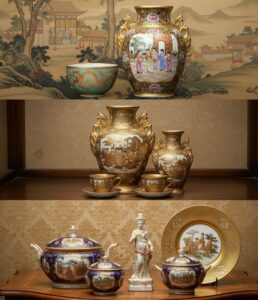
The technique of gilding—applying an extremely thin coating of gold to a solid surface—is ancient, tracing its roots back millennia.
- The Asian Origins: Pioneers of Porcelain
Porcelain itself, known in the West as “white gold,” was a secret closely guarded by Chinese artisans for centuries. The use of gold leaf or powdered gold as a decorative element followed, adding a layer of sublime luxury to the already highly prized ceramic.
In Japan, gilding became an important part of styles like Kutani, Kyo-yaki, and later Satsuma. Raised gold, thick outlining, and detailed overglaze painting created rich surfaces full of movement and texture.
Also Read: Satsuma Pottery Symbolism
The European Obsession: Replicating the Riches
When Chinese porcelain first arrived in Europe, it caused a sensation. Gilding reached new heights during the Rococo and Baroque periods.
Sèvres Porcelain (France): Renowned for its unparalleled soft-paste porcelain, Sèvres elevated gilding to a supreme art form. Their pieces are famous for their rich, saturated ground colours contrasted by elaborately patterned, meticulously chased gold borders and vignettes.
Also Read: Allure of Meissen Porcelain
The Craftsmanship Behind Gilding
Gilding porcelain is not simple. It requires skill, patience, and precision. Gold must be applied in thin layers or fine lines without smudging or breaking. There are several traditional gilding methods:
- Gold Leaf Gilding
Sheets of pure gold are pressed onto adhesive on the porcelain surface. The result is bright and reflective.
- Liquid Gold Application
A fine liquid containing gold particles is painted with a brush. After firing, it becomes a soft, warm gold finish.
- Raised Gold Work
Artists create thick, textured gold lines that stand slightly above the surface.
- Gold Powder Accents
Used for subtle highlights or shading, gold powder adds depth to floral motifs or scenic paintings.
Every method requires a steady hand and understanding of how gold behaves in the kiln. This is why antique gilded porcelain has such special value. It reflects expertise that is becoming rare today.
Motifs That Shine in Gold
Antique gilded porcelain often features motifs that pair naturally with shine.
- Floral Designs
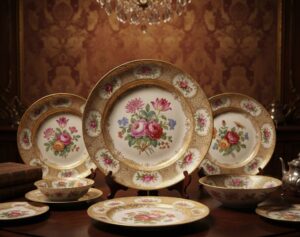
Roses, chrysanthemum, lotus, peonies, tulips, and plum blossoms all glow beautifully under gold outlines.
- Royal Borders
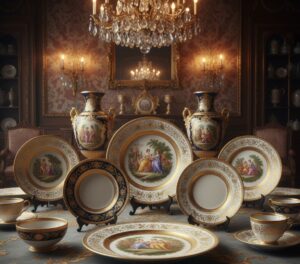
Scrolls, vines, geometric frames, and intricate repeats look elegant when accented with gold. These borders often appear on plates and vases.
- Mythical Scenes
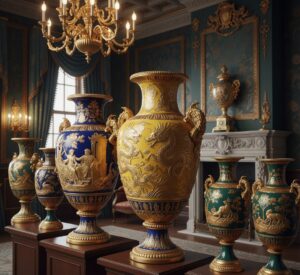
Gods, goddesses, dragons, phoenixes, and symbolic animals often carry gold touches that make the imagery richer.
- Landscape and Court Life
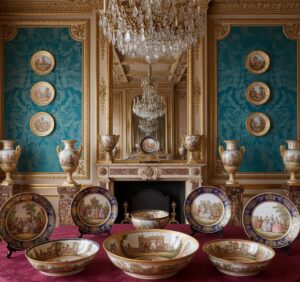
Delicate scenes of gardens, palaces, and festival life gain depth with gold details.
- Cultural Symbols
Gold enhances motifs like family crests, sacred icons, or symbolic emblems.
https://www.youtube.com/watch?v=Oa4FwfJ9i5I
Video credit: Justins Makery
Why Gilded Pieces Still Draw Modern Collectors
Even in a world full of minimalist design, gilded porcelain holds its place. Here is why:
- Luxurious Without Being Overwhelming
A touch of gold adds richness that feels tasteful rather than loud.
- Modern and Classic Interiors
Gilded pottery stands out in a neutral room and complements vintage decor.
- A Link to History
Every piece carries stories of the hands that shaped and painted it.
- Increases in Value
Antique gilded porcelain often retains high market demand due to the skill required to produce it.
One standout example of gilt porcelain at its finest is an elegant Empire-style coffee set that was sold at a past Giftex auction.
The set included ten cups with matching saucers, a coffee pot, a milk jug, and a sugar bowl, each piece enriched with fine gilding.
Giftex: A World of Collectibles Auction
Online auction houses have made it easier than ever for collectors to discover meaningful gilded pieces. One notable platform is Giftex. Known for its curated collection of porcelain treasures, Giftex brings together pieces that appeal to both new collectors and seasoned connoisseurs.
Incorporating Gilt Ceramics into Modern Décor
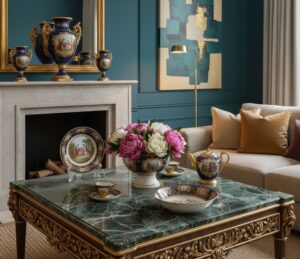
These antiques are remarkably versatile. They need not be confined to a dusty cabinet.
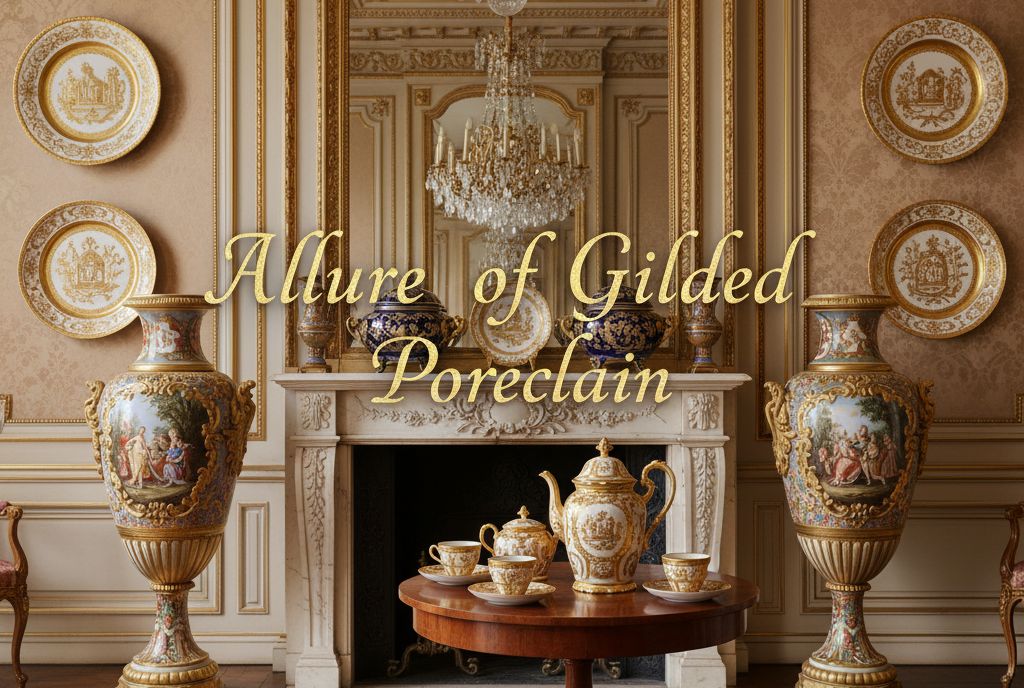
- Statement Pieces: A large gilded porcelain antique vase from the 19th century can serve as an anchor piece on a contemporary mantel or console table.
- Layered Textures: Mix the smooth, luminous surface of a gilt teacup or dish with rougher, organic textures like linen, raw wood, or stone to create visual interest.
- Colour Harmony: Use the rich ground colours—often deep blues, greens, or burgundy reds—of Sèvres or Meissen pieces to pull an accent colour into your room’s palette.
- Collecting in Sets: Even a single, exquisitely detailed gilt ceramics plate or cup can be framed and displayed as a piece of miniature fine art.
Gilded Porcelain: A Glimpse of True Value
Gilded antique porcelain pieces offer far more than just a sparkle. They are tangible links to the past, holding the stories of empires, trade routes, and extraordinary artistic rivalries. They stand as a quiet rebellion against the ephemeral nature of modern goods, embodying permanence and quality.
To own a piece of gilded porcelain antique is to possess a fragment of history, brilliantly illuminated by a flash of gold that truly time cannot dull.


About Post Author