
The Timeless Art of Bookplates and How to Collect Them
A rare book is more than just a bundle of pages or parchment. It is a window into the culture and history of bygone eras, offering us a glimpse into the lives of people who lived before us. A book is a tool for freedom, for enlightenment, and, of course, for enjoyment. Bibliophiles, as book lovers are called, and rare book collectors are always on the lookout for a literary treasury to add to their shelves.
One such niche interest in the world of rare books is the specialised domain of bookplate collecting.
Antique bookplate collecting is experiencing an unexpected comeback, capturing the attention of collectors, artists, and book lovers alike. With their ornate details, symbolic motifs, and literary connections, bookplates serve as both historical artefacts and miniature works of art. They tell stories not just about books, but about ownership, identity, and personal taste.
In this article, we explore the history of bookplates, their artistic and cultural significance, and how you can begin your own journey into bookplate collecting.
Also Read: Illustrated Wonders: Rare Books With Illustrations
What Is a Bookplate?
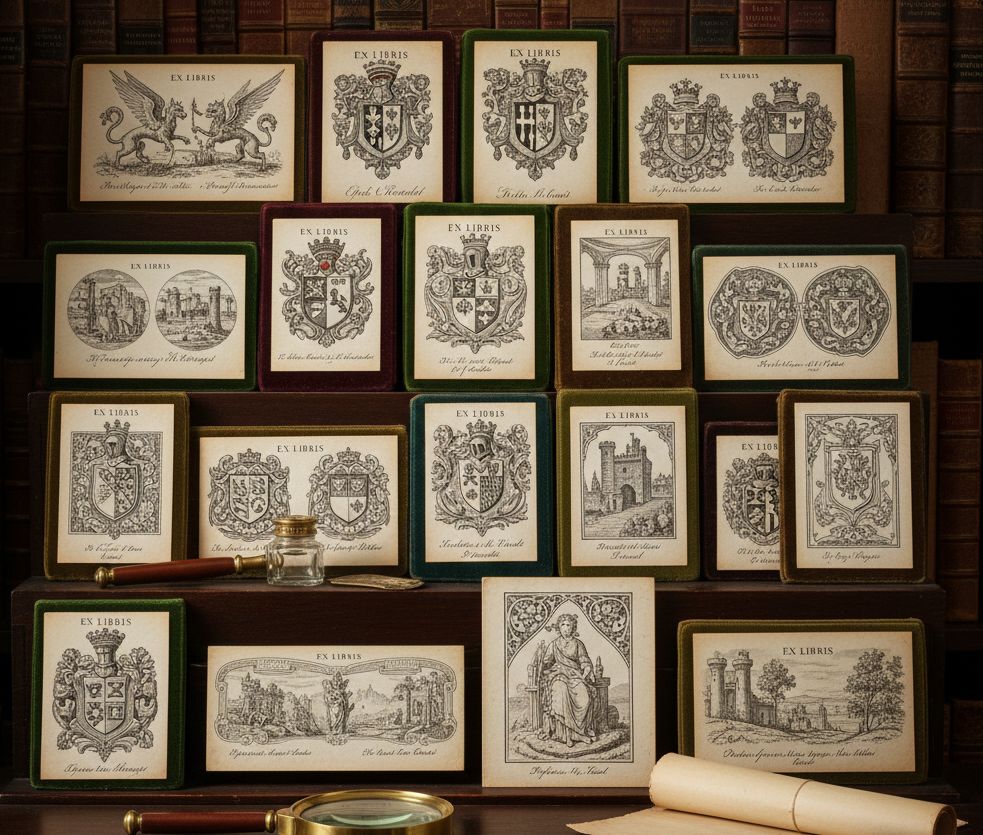
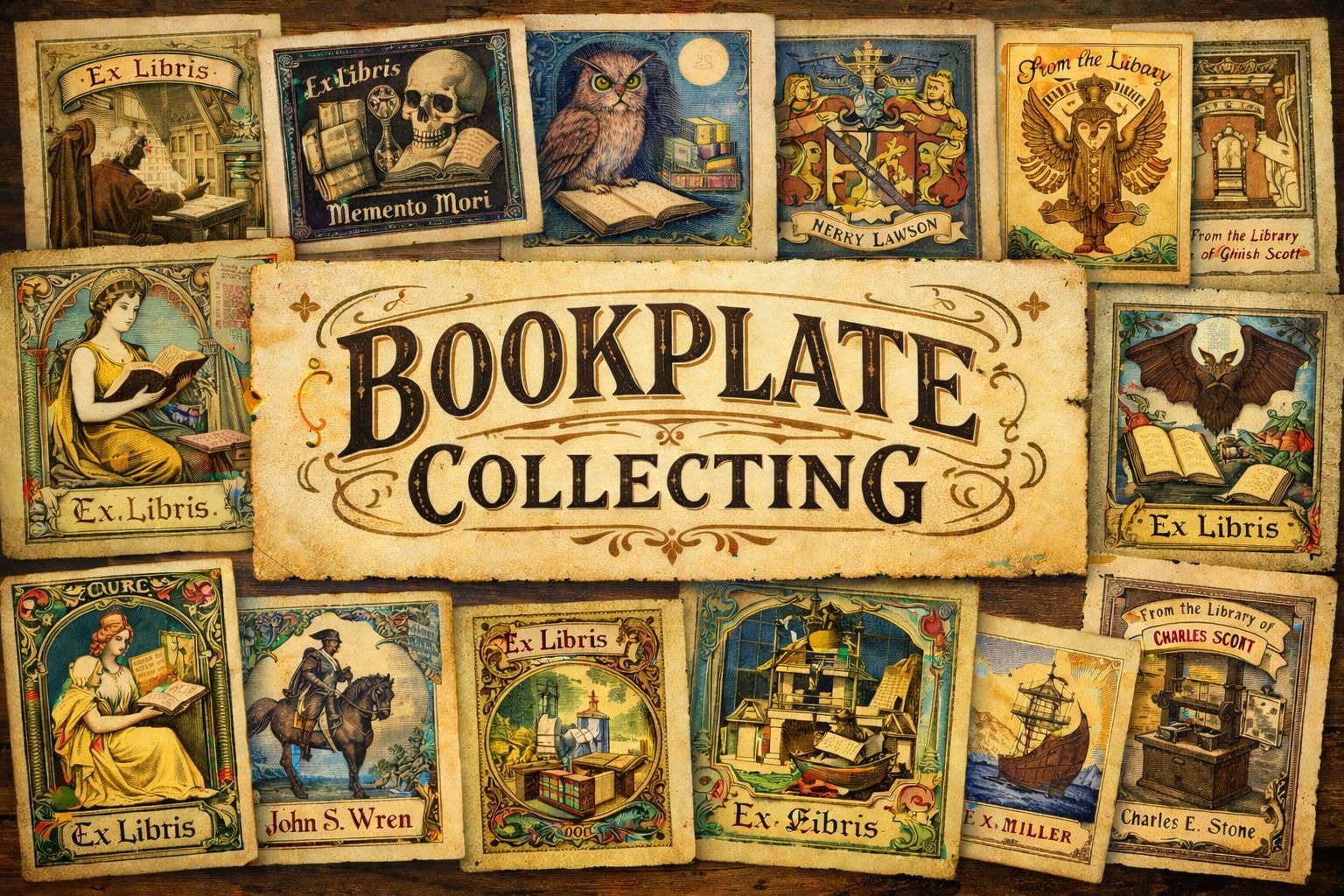
A bookplate (or ‘ex libris’ – Latin for ‘from the library of’) is a name label, often illustrated, that’s affixed to the inside front cover of a book to denote who the owner is. Traditionally placed on the inside front cover, bookplates often include the owner’s name along with decorative elements such as coats of arms, allegorical figures, animals, or literary references. Bookplates are an invaluable source of information when tracing the provenance of books in special collections
Before the modern concept of copyright and ISBNs, books were valuable and scarce. Bookplates acted as a mark of possession, a gentle warning to borrowers, and sometimes a declaration of social standing. Over time, these simple ownership marks evolved into an art form in their own right.
Today, bookplates are collected not just as accessories to books, but as standalone pieces of history.
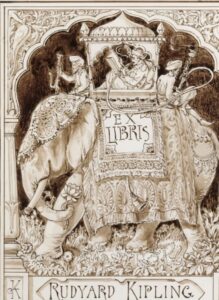
Few Examples Of Bookplates



A Brief History of Bookplates
The modern bookplate has been around since the invention of the printing press in the 15th century. However, the earliest origin of bookplates dates back to Egypt, 1353BC.
Some of the earliest known bookplates originated in Germany and featured heraldic designs belonging to monasteries or noble families.
In the 17th Century, the popularity of bookplates increased dramatically, and the trend spread throughout Europe in the following years.
By the 18th and 19th centuries, bookplate design flourished across Europe and Britain. Advances in engraving techniques allowed artists to create highly detailed images using copperplate engraving, woodcuts, and later lithography. Prominent artists were commissioned to design personalised bookplates, turning them into symbols of intellect, wealth, and taste.
Although interest in antique bookplate collecting waned in the 20th century, it has seen a renewed attention in recent years, especially among rare book collectors and design enthusiasts.
Why Bookplate Collecting Is Making a Comeback
The revival of bookplate collecting is part of a broader appreciation for slow, tactile, and meaningful collecting. In a digital world, bookplates offer something physical and personal.
There are several reasons for this renewed interest:
- Artistic value: Many antique bookplates feature intricate engravings and thoughtful symbolism that rival larger artworks.
- Historical insight: Bookplates reveal information about past owners, from aristocrats to scholars and writers.
- Personal connection: Each bookplate carries a story, making them deeply human objects.
For bibliophiles, bookplates feel like a natural extension of their love for books itself.
Types of Bookplates
Bookplate collecting can be as broad or as focused as you choose. Some collectors pursue a general collection, while others specialise in a niche. Common categories include:
- Armorial Bookplates

Many early bookplates are categorised as armorial, depicting the arms or crest of the owners, often without even a name, since it was assumed that they would be known by the arms alone.
- Bookpile Bookplates
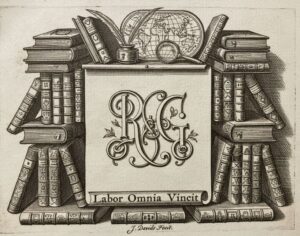
A “bookpile” bookplate is a historical style of bookplate design that was popular in the late 17th and early 18th centuries. The design typically features an artistic illustration of a stack or pile of books, often incorporating the owner’s name or initials within the illustration or on a banner below the pile.
- Pictorial Bookplate

Another popular style, which continued into the 19th century, was the pictorial or landscape design. This design replaced arms and armouries with a more romantic style, frequently depicting monuments or other scenic views.
- Literary Bookplates

Bookplates created for authors, poets, or scholars sometimes reference their works or intellectual pursuits.
- Artist-Designed Bookplates
Some collectors focus on plates designed by notable engravers or illustrators, valuing the artistic hand behind the work.
How to Start Bookplate Collecting
Starting a bookplate collection does not require a vast budget or specialised training. What matters most is curiosity and care.
- Learn Before You Buy
Spend time studying bookplate styles, engraving techniques, and historical periods. Auction catalogues, museum collections, and specialist books are valuable resources.
- Decide Your Focus
You may choose to collect by era, country, theme, artist, or subject matter. A focused collection often feels more rewarding and coherent.
- Buy from Reputable Sources
Antiquarian bookshops, print dealers, estate sales, and online auctions are good places to find authentic bookplates. Always ask about provenance and condition.
- Condition Matters
Look for bookplates that are clean, intact, and free from excessive damage. Light age marks are expected, but tears and heavy stains reduce value.
Understanding Value in Bookplate Collecting
The value of a bookplate depends on several factors:
- Rarity and age
- Artist or engraver
- Historical significance of the owner
- Design quality and craftsmanship
- Condition and completeness
While some rare bookplates command high prices, many excellent examples remain affordable, making this a welcoming field for beginners.
Bookplates as Cultural History
What makes bookplate collecting truly special is its ability to connect us with individual lives from the past. A bookplate might reveal a scholar’s obsession with astronomy, a landowner’s pride in lineage, or a reader’s quiet love of poetry.
In this sense, bookplates sit at the intersection of art history, social history, and literary culture. They remind us that books have always been personal objects, shaped by the hands and minds that owned them.
Historical Design Elements in Modern Interiors

Classic bookplate features such as Latin inscriptions, ornate borders, heraldic symbols, and layered symbolic imagery are being reinterpreted for modern spaces. When framed or reproduced as prints, these designs bring a sense of history without overwhelming the room. The appeal lies in contrast. The precision and restraint of antique bookplate art pair surprisingly well with modern interiors, offering warmth and character where contemporary spaces can sometimes feel sparse. A single framed bookplate can carry more visual interest than larger decorative pieces, simply because it invites closer attention.
The Enduring Appeal of Bookplate Collecting
Bookplate collecting is not about accumulation for its own sake. It is about attention. Attention to detail, to stories, and to the intimate relationship between a reader and a book.
For bibliophiles and rare book collectors, bookplates offer a way to deepen that relationship.
In rediscovering bookplates, we rediscover a quieter, more personal side of book history—one that still has much to say today.


About Post Author