Threads of Kashmir: A Guide to Embroidery on Shawls
Soft to the touch and effortlessly graceful to wear, Kashmiri shawls have long been admired as symbols of refinement, warmth, and artistry. More than just winter accessories, these shawls carry centuries of culture in their folds. Each stitch, motif, and thread tells a story shaped by time, geography, and the skilled hands that crafted them.
Ever wondered what embroidery style adorns your shawl or stole? Kashmiri embroidery comes in many forms, defined by the thickness of the thread, the fabric used, and the technique employed. From whisper-fine needlework on pashmina to bold, festive patterns on wool, every style has its own personality and purpose.
In this guide, we take a closer look at Kashmiri embroidery shawls and explore the different types of shawl embroidery that bring them to life. From Aari embroidery to the lush florals of Gulabdar embroidery, here’s what makes each one unique.
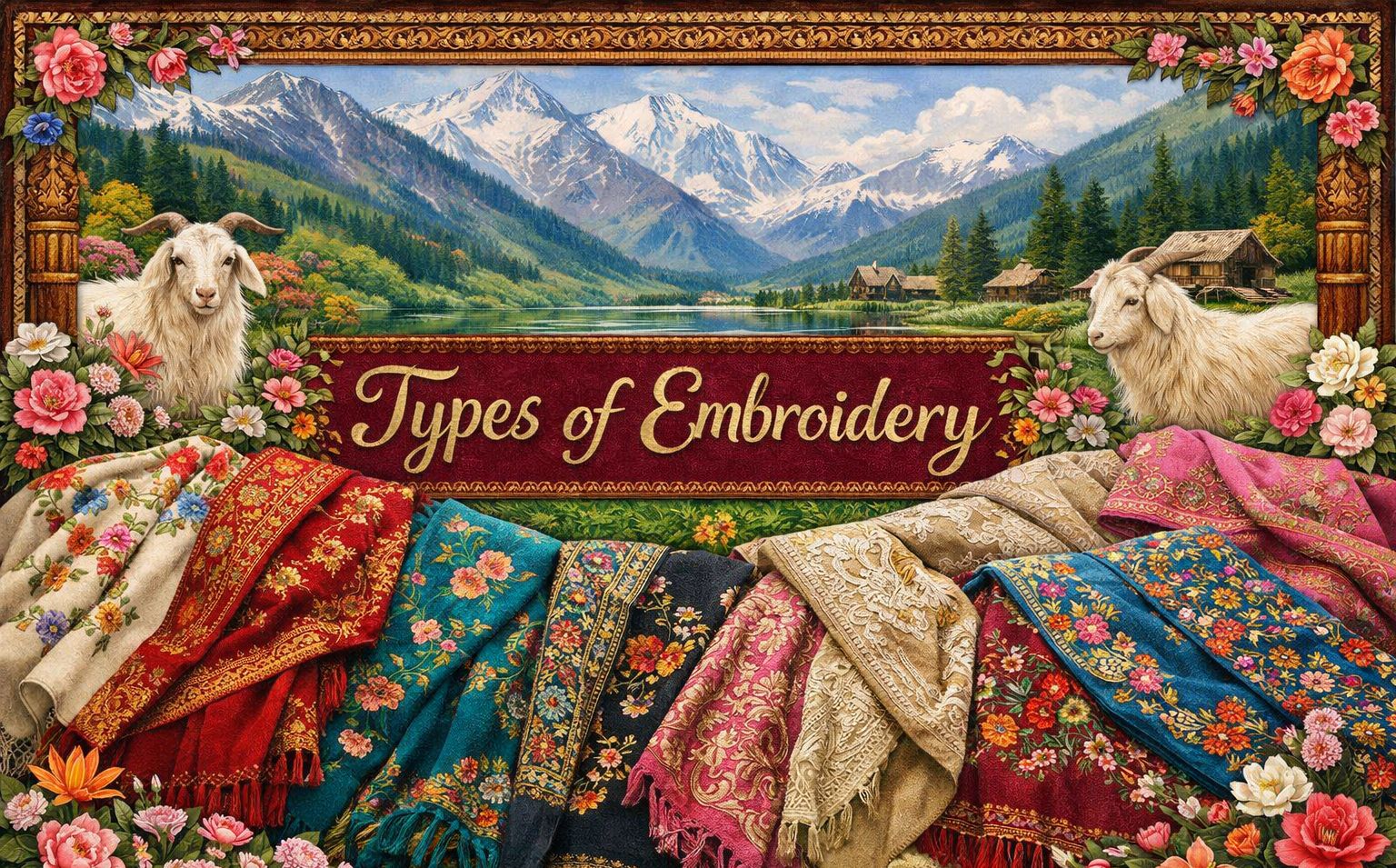
A Brief History of Kashmiri Embroidery Shawls
The history of Kashmiri shawls is believed to stretch as far back as the 3rd century BC. In their earliest form, shawls were purely functional garments, designed to protect against Kashmir’s severe winter.
The craft began to flourish during the 14th and 15th centuries under Sultan Zain-ul-Abidin.
The Mughal Era and Royal Patronage (16th–18th Century)
Kashmiri shawls reached new heights under Mughal patronage. Emperors such as Akbar were devoted admirers and helped popularise shawls across the subcontinent.
The Rise of Embroidery
Originally, intricate designs were created through complex tapestry weaving, especially kani weaving. However, during the 19th century, embroidered shawls gained popularity. Embroidery allowed faster production and lower costs, making it easier to meet growing global demand.
Also Read: Top 10 Types of Indian Shawls
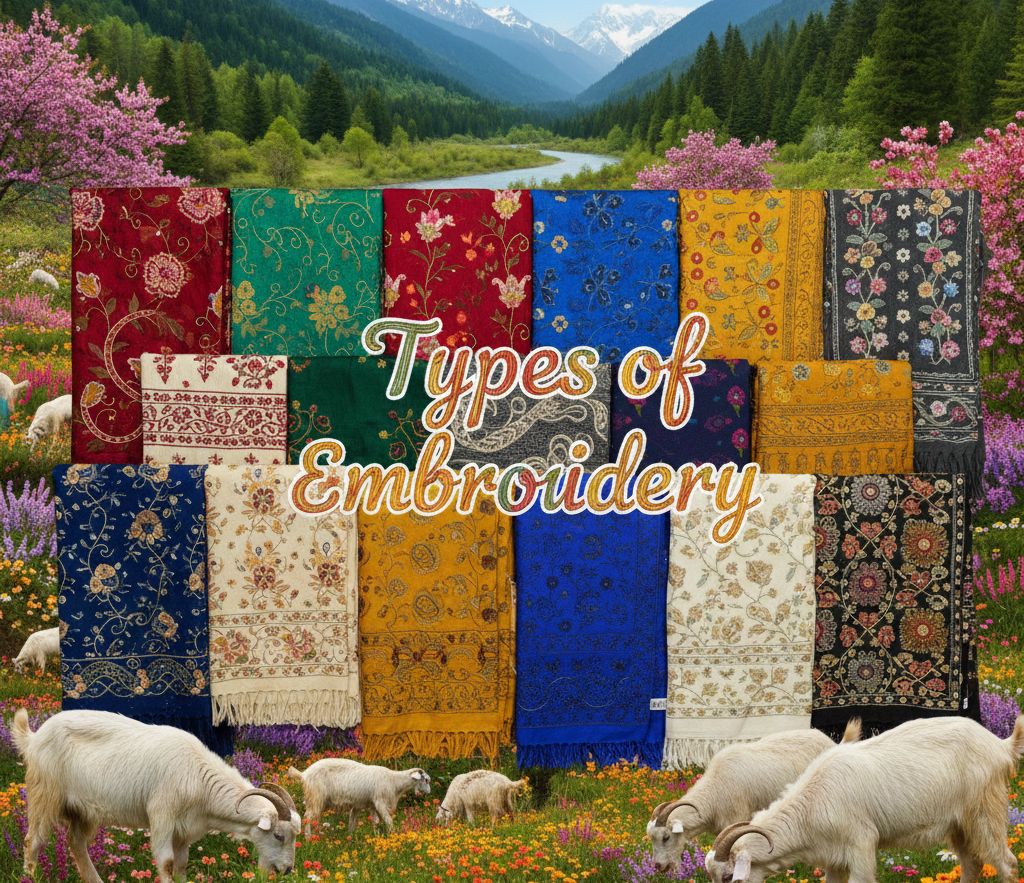
Types of Kashmiri Embroidery Shawls
Kashmiri shawls are celebrated for their exquisite hand embroidery, which appears in a wide range of styles. From understated elegance to elaborate grandeur, each embroidery technique serves a different aesthetic and purpose.
- Sozni Embroidery: The Soul of Kashmir
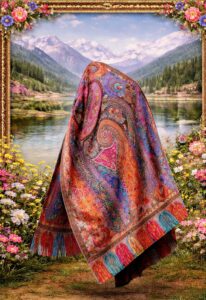
Pashmina is hand-woven and extremely delicate. It can tear if handled roughly, which makes Sozni embroidery the most suitable technique for these fine shawls.
Sozni, also known as Sozan Kaari, is executed using fine silk or wool threads on pashmina or other soft wool shawls. The embroidery is light, precise, and refined.
Designs
Sozni embroidery typically features intricate floral and paisley motifs, often stitched in a single colour or subtle contrasting shades.
How It Is Made
Once the shawl is woven, a naqash (designer) outlines the pattern using block printing. These designs are usually traditional and heavily inspired by Persian paisleys and Mughal florals.
Features
- Done with silk or cotton threads
- Elegant motifs, including paisleys, florals, and vines
- Often reversible (do-rukha), with equal finesse on both sides
- Aari Embroidery: Festive Flourish
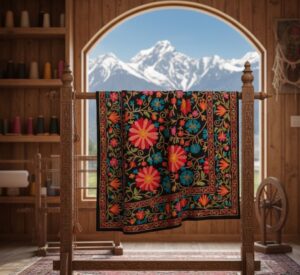
Aari embroidery is one of the most commonly seen styles today. It uses a hooked needle to create chain-stitch patterns and involves relatively thicker thread work.
Designs
- Floral motifs such as flowers, leaves, and vines
- Animals like peacocks, elephants, and birds
- Paisleys shaped like droplets
- Geometric patterns and grids
Features
- Bright, festive designs
- Rich texture with slightly raised motifs
- Popular in both traditional and contemporary pieces
- Faster to make and more affordable, yet entirely handmade
- Needlework Embroidery
Needlework embroidery is a broad term covering multiple stitching techniques used on Kashmiri shawls. These include chain stitch, satin stitch, herringbone stitch, and more.
Designs
Floral, paisley, and geometric patterns dominate, often combined within a single shawl.
Features
- Versatile and adaptable
- Can range from delicate to bold
- Suitable for both pashmina and wool shawls
- Papier Mâché Embroidery: Bold and Beautiful
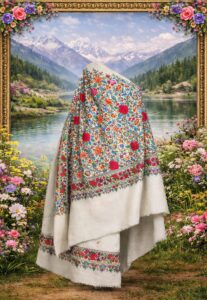
Papier mâché embroidery can be described as a bolder cousin of Sozni. It uses brightly coloured satin threads, with motifs outlined in black to create a striking, raised effect. Once the motif is completed, it is often outlined again to enhance its prominence.
Traditionally, papier mâché pashmina shawls are worn by brides when they leave their maternal homes.
The term papier-mâché, meaning “chewed paper,” gained popularity in the 19th century. Originally, strips were cut into shapes and stitched onto cloth, later enhanced with threads, beads, and sequins.
Features
- Bright, contrasting colours
- Strong outlines and raised appearance
- Dramatic and celebratory look
- Often used for bridal wear
- Tilla Embroidery: Metallic Majesty
Once reserved for royalty, Tilla embroidery brings opulence through the use of metallic threads. In Tilla Dozi, gold or silver-dipped threads are delicately tied to the fabric using a needle, forming intricate designs.
Mughal rulers popularised Tilla embroidery, using it not only on garments but also on court furnishings. Earlier, pure gold and silver threads were used, though modern versions often use metallic zari.
Designs
Floral borders, paisleys, and symmetrical patterns.
Features
- Used for bridal and festive shawls
- Often paired with deep, regal colours
- Heavy, intricate, and celebratory
- Aabdar Embroidery: The Dewdrop Effect
Rare and refined, Aabdar embroidery takes its name from a word meaning sparkling or dew-kissed.
Designs
The designs in Aabdar embroidery are minimal and refined. Motifs are usually small and evenly spaced, creating a gentle shimmer across the surface of the shawl. Common designs include tiny floral sprigs, scattered buds, fine paisleys, and abstract dot patterns
Features
- Subtle white or pearl-toned embroidery
- Often on pastel or ivory shawls
- Extremely fine stitching resembling water droplets
- Ethereal, elegant, and time-consuming
- Kalamkari Embellished Shawls
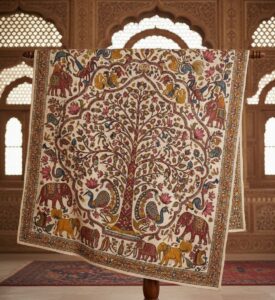
Kalamkari itself is not embroidery but a hand-painting or block-printing technique. In Kashmiri shawls, these painted motifs are often enhanced with Sozni embroidery.
Designs
Inspired by nature, mythology, animals, flowers, vines, and historical narratives.
Features
- Hand-painted or printed base
- Embroidery used to highlight motifs
- Rich storytelling through design
- Gulabdar Embroidery: Florals in Bloom
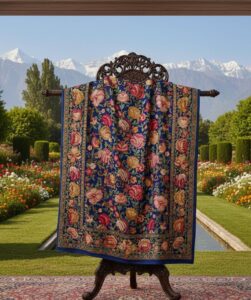
Inspired by Kashmir’s gardens and Mughal aesthetics, Gulabdar embroidery celebrates florals, especially roses.
Features
- Lush, colourful floral patterns
- Often full-bodied or heavily bordered
- Expressive, warm, and heritage-rich
- Phulkari Embroidery
Though not native to Kashmir, Phulkari embroidery from Punjab has found its place on various shawls and stoles and has become a collectible treasure.
Technique
Phulkari uses darning stitches to create vibrant floral and geometric designs.
Features
- Bold colours and patterns
- Celebratory and lively
- Often adapted onto wool shawls
- Kani Technique: Woven Elegance
Kani is not embroidery in the traditional sense but an intricate weaving technique. Motifs are woven directly into the fabric using small wooden sticks called kanis.
https://www.youtube.com/watch?v=c4hFAvMoUrg
Video Credit: ANI News
Features
- Extremely detailed patterns
- Time-consuming and labour-intensive
- Highly prized and collectible
Also Read: Timeless Tradition of Kani Shawls
Giftex: A World of Collectible Shawls
Giftex, through its renowned World of Collectibles auctions, brings together curated textiles, antique and vintage shawls, carpets, and rugs. Whether you are drawn to vibrant Kalamkari pieces or the delicate elegance of Sozni embroidery, Giftex offers a platform to discover rare and authentic treasures. Stay tuned for upcoming auction updates.
Threads That Tell Stories
Each embroidery style on a Kashmiri shawl is far more than surface decoration. It is a living expression of history, shaped by centuries of skill, influence, and quiet dedication. These stitches are not invented overnight. They are learned slowly, often from parent to child, master to apprentice, passed on through observation, practice, and patience.
To wear a Kashmiri embroidery shawl is to carry this heritage with you. It is warmth, yes, but also memory and meaning. Every fold holds hours of human effort; every motif carries intention. Softly draped over the shoulders, these shawls remind us that true luxury lies not in excess, but in craftsmanship, time, and stories patiently told, one stitch at a time.


About Post Author