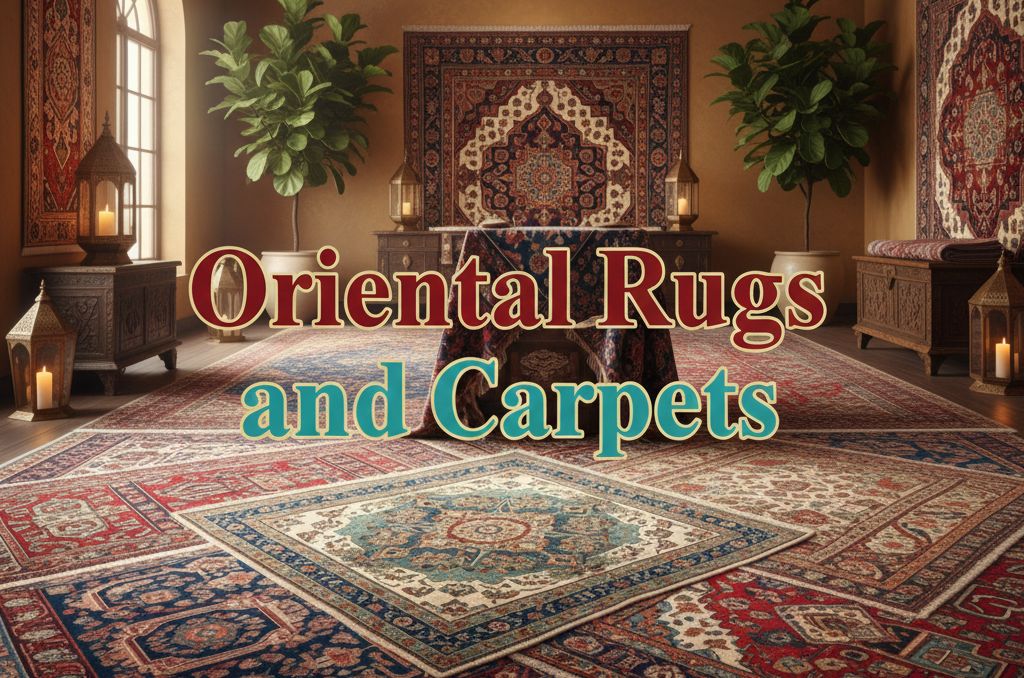
Timeless Threads: The Story of Oriental Rugs and Carpets
“The more things change, the more they stay the same.”
Few crafts prove this saying as clearly as Oriental rugs and carpets.
From ancient nomadic tribes to modern living rooms, the basic techniques used to create Oriental rugs have remained largely unchanged. Early artisans worked with the same core elements still used today: the warp, the weft, the pile, and carefully tied knots that determine density, durability, and beauty. These methods were passed down from generation to generation, preserving not just a skill, but a way of seeing the world.
Have you ever stopped to admire an antique Oriental rug and wondered about its past? Who wove it? Why were those colours chosen? What stories unfolded before it ever reached your home? Like everything around us, rugs have a history. The weavers, the artists, and even the kings and nobles who once commissioned them are all reflected in the patterns beneath our feet.
To admire an Oriental rug is to admire its history — the lives lived before us.
For centuries, Oriental rugs have graced royal palaces, sacred temples, and family homes. Once reserved for nobility and religious spaces, these woven works of art have gradually become part of everyday life. With an ancient heritage that proves both their practicality and aesthetic value, it’s no surprise that fine carpets remain one of the most enduring investments in interior décor.
In this guide, we’ll explore the history of Oriental rugs and carpets, examine major regional styles and designs, look at antique Oriental rugs, and understand why these timeless textiles continue to endure.
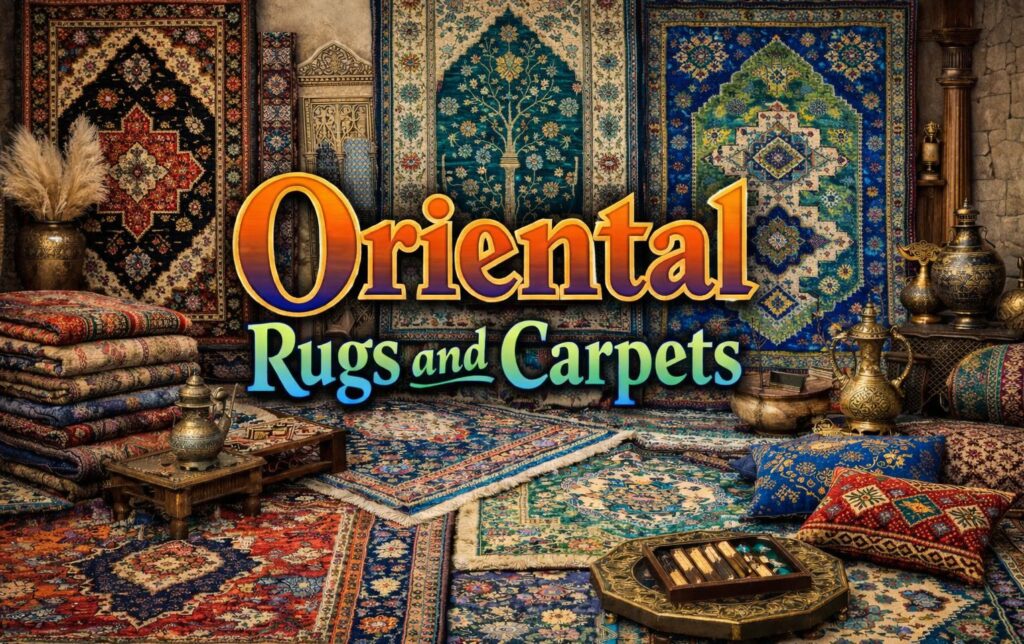
Also Read: The Language of Colours in Antique Carpets
The History of Oriental Rugs and Carpets
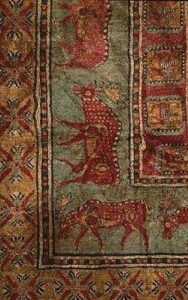
Pazyryk Carpet
The origins of Oriental rugs stretch back several thousand years. One of the most important discoveries in carpet history occurred in 1949 in the frozen Pazyryk Valley of the Altai Mountains in Siberia. Russian archaeologists uncovered the tomb of a Scythian chieftain who died around 300 BCE. Preserved in ice was a remarkably detailed, hand-knotted wool carpet.
This artefact, now known as the Pazyryk carpet, is considered the oldest surviving knotted carpet in the world. Today, it is displayed at the Hermitage Museum in St. Petersburg. Its sophisticated design and tight knotting prove that carpet weaving was already a highly developed art more than 2,500 years ago.
The Pazyryk carpet reminds us that rug weaving has been part of human civilisation for thousands of years — not as a passing trend, but as a lasting expression of culture and craftsmanship.
Ancient Beginnings: Where Oriental Rugs Were Born
The story of Oriental rugs begins across Persia (modern-day Iran), Anatolia, Central Asia, the Caucasus, and parts of China and India. These regions became the heartlands of rug weaving, each developing its own materials, techniques, and visual language.
Early weavers used wool, silk, and cotton, dyed with pigments drawn from plants, roots, insects, and minerals. Designs were never random. Floral motifs symbolised life and renewal. Borders offered spiritual protection. Geometric patterns expressed balance, order, and continuity.
Importantly, Oriental rugs did not begin as luxury items. They were necessities. Nomadic tribes used them for warmth, insulation, bedding, storage, and even shelter walls. Over time, as techniques improved and designs grew more complex, rugs evolved into symbols of wealth, status, and refined taste.
Oriental Rugs in Legend and Early History
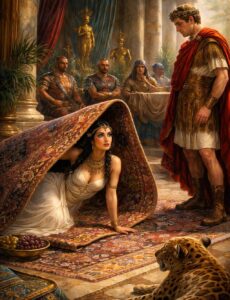
Cleopatra Hiding in a Rug
Ancient writers recognised the value of these textiles long before modern collectors did. Greek historian Herodotus and poet Homer both referenced the beauty and prestige of Persian rugs as early as 500 BCE.
Legend even claims that Cleopatra had herself rolled into a Persian rug to surprise Julius Caesar — a story that, true or not, highlights the cultural significance these carpets held in the ancient world.
What Are Oriental Rugs?
So, what are Oriental rugs and carpets? How do you identify one? What are the characteristics of Oriental rugs? Read on to find out!
Oriental rugs are traditionally handmade textiles created using skilled, labour-intensive techniques passed down through generations.
Key characteristics include:
- Hand craftsmanship: Most are hand-knotted or flat-woven, with knot density determining quality and longevity.
- Natural materials: Wool, silk, cotton, or blends chosen for durability and texture.
- Symbolic designs: Patterns often reveal the region, tribe, or workshop where the rug was made.
- Versatility: Used as floor coverings, wall hangings, prayer rugs, saddle bags, and ceremonial textiles.
Each rug serves as both a functional object and a cultural document.
Types of Oriental Rugs
Oriental rugs can be classified based on the region where they originated.
- Persian (Iranian) Rugs
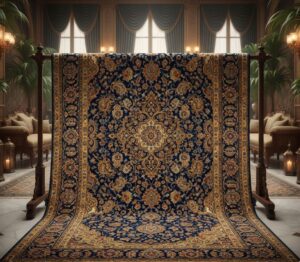
Persian Rug
Persian rugs are among the most famous in the world. Known for intricate floral patterns, central medallions, and balanced compositions, notable styles include Tabriz, Kashan, Isfahan, Hamadan, and Kerman. These rugs often feature high knot density and refined colour palettes.
Also Read: The Magic of Persian Carpets
- Turkish (Anatolian) Rugs
Turkish rugs are recognised for bold geometric designs and strong, saturated colours. Regions like Oushak, Konya, and Bergama produced rugs with large motifs and symmetrical knots that emphasise durability.
- Caucasian Rugs
Caucasian rugs are highly graphic and tribal in nature. Designs from regions such as Kazak, Shirvan, and Karabakh feature sharp geometry, vivid colours, and symbolic motifs rooted in village traditions.
Central Asian Rugs
Rugs from Turkmenistan and Afghanistan, including Bokhara and Baluchi rugs, are known for repeating motifs, deep reds, and compact designs. These rugs often reflect nomadic lifestyles.
- Chinese and Indian Rugs
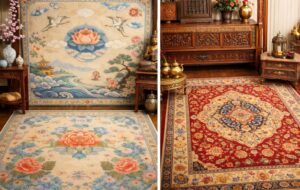
Chinese rugs feature flowing designs, symbolic imagery, and softer colour palettes influenced by Buddhist philosophy. Indian rugs, often inspired by Persian designs, are known for fine materials and elaborate detailing.
The Journey to the West: A Global Love Affair
As trade expanded along the Silk Road, Oriental rugs travelled far beyond their places of origin. By the 15th and 16th centuries, they appeared in European castles and churches, often depicted in Renaissance paintings as symbols of wealth and sophistication.
Initially used as wall hangings and table coverings, Oriental carpets were rare and costly. Only merchants, nobility, and religious institutions could afford them. Over time, European tastes were shaped by Eastern craftsmanship, transforming rugs into markers of social and economic status.
Crusaders, diplomats, and traders played a key role in introducing these textiles to Western Europe, where demand continued to grow.
Woven Stories: Symbols, Motifs, and Meaning
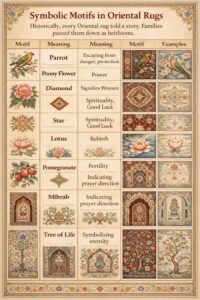
Historically, every Oriental rug told a story. Families passed them down as heirlooms.
Common motifs included:
- Parrot: Escaping from danger, protection
- Peony Flower: Power
- Diamond: Signifies Women
- Star: Spirituality, Good Luck
- Lotus: Rebirth
- Pomegranate: Fertility
- Mihrabs: Indicating prayer direction
- Tees of Life: Symbolising eternity, Direct Path from Earth to Heaven
These rugs were more than decoration. They were cultural expressions woven thread by thread.
From Heirlooms to Everyday Luxury
Today, Oriental rugs continue to bridge the past and present. In modern interiors, they soften minimalist spaces, add warmth to contemporary homes, and provide contrast beneath clean architectural lines.
Whether layered over hardwood floors or anchoring a dining room, these rugs bring depth, texture, and character that mass-produced alternatives cannot replicate.
Giftex: A World of Collectibles Auction
At Giftex online auction platform, we curate a refined collection of textile treasures. From antique and vintage carpets and rugs, to shawls and tapestries, each piece is selected for its craftsmanship, history, and enduring beauty.
Collectors and enthusiasts alike can explore authentic works that carry generations of artistry within their fibres.
Conclusion: Why Oriental Rugs Endure
The history of Oriental rugs and carpets demonstrates the enduring power of art to transcend borders and bring cultures together. From their origins in the East, through the Silk Road, and into Western homes, these textiles stand as living witnesses to shared human history.
Every rug we admire or preserve continues a legacy — woven from skill, patience, and belief. In a world that constantly changes, Oriental rugs remind us that true beauty, when cared for, lasts forever.


About Post Author