Unveiling Parure: The Poetry of Matching Jewellery Sets
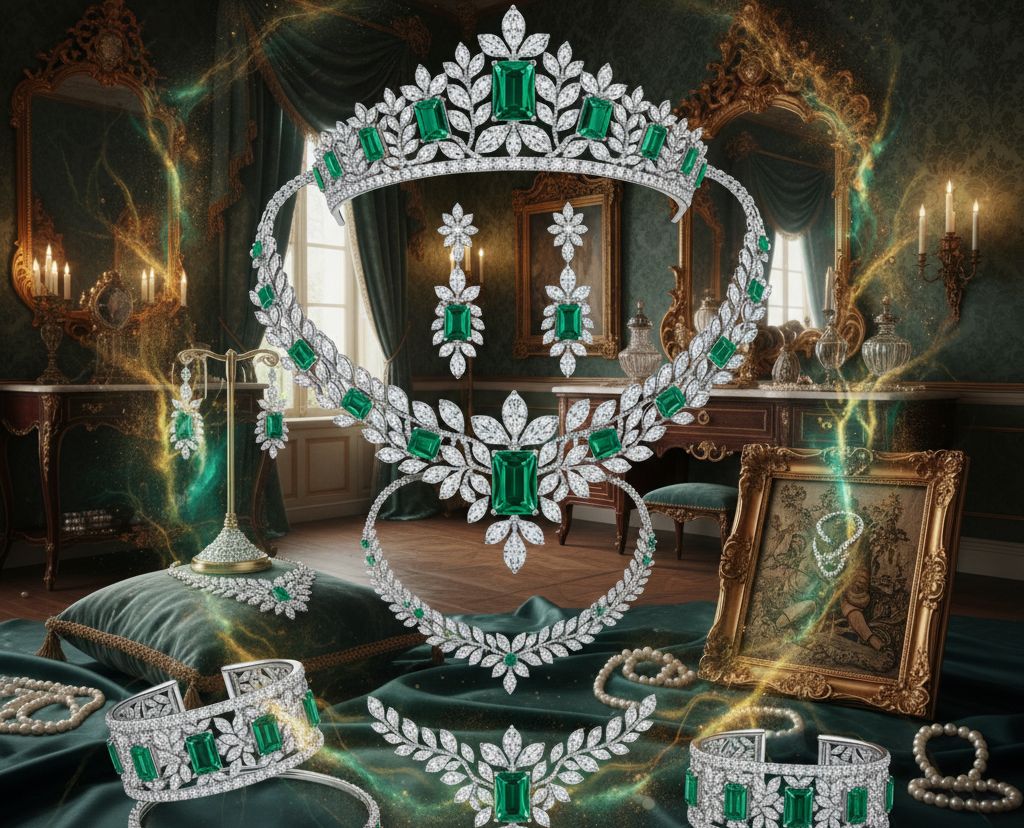
Imagine opening a jewellery case to find a matching set of luxury jewellery that can be worn as a single piece or multiple pieces, depending on the occasion. That is the magic of a matching jewellery set, or as it is called, ‘Parure’.
Originating from the French word for “set,” a parure represents a complete set of matching jewellery pieces designed to be worn together.
Parures and suites are composed of jewellery items designed to be worn together, usually with design and colour schemes consistent throughout. Rare and often inventive parures dating back to the Napoleonic era are coveted among today’s antique jewellery collectors.
Knowing how to match jewellery with outfits can transform a good look into a great one. In 2026, it’s all about personal expression balanced with timeless elegance.
This guide will help you master the art of accessorising with jewellery sets, from weddings to casual outings. We will also provide you with a description of what parure sets are, including the types you can own.
Looking for exquisite jewellery sets or fine jewellery pieces? Then, Giftex: A World of Collectibles Auction is the place to be this February. Now, let’s take a closer look at what makes parure sets so special and how you can style them effortlessly.

Also Read: Timeless Elegance of Ruby Jewellery
What Are Parure Sets?
Parure sets and matched jewellery ensembles are coordinated collections of jewellery designed to be worn together for a harmonious, often formal look.
The Historical Significance of the Parure
The parure has its roots in the courts of 17th and 18th-century Europe.
Royal Origins: Parures became popular among the European aristocracy in the late 17th century. Napoleon Bonaparte notoriously gifted elaborate gem suites to his wives, Joséphine and Marie-Louise.
- Transformable Jewellery: Historically, these sets were designed to be transformable. A necklace might be disassembled into bracelets, or a brooch might be used as a pendant, allowing for varied, versatile wear.
- Victorian and Modern Eras: During the Victorian era, parures incorporated mourning materials or romantic materials like seed pearls. Today, they continue to be popular for bridal wear and formal events.
Also Read: Allure of Transformable Jewellery
Common Components of a Parure
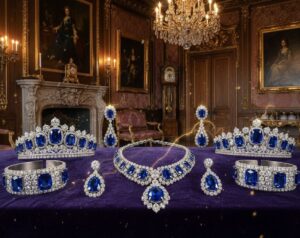
A classic parure typically consists of several key jewellery pieces:
- Necklace: The centrepiece, often featuring a prominent, elaborate design.
- Earrings: Designed to match the necklace, offering balance and symmetry.
- Bracelet(s): Often a pair of matching bracelets.
- Brooch/Corsage Ornament: A versatile piece that can be worn on a bodice, hair, or as a pendant.
- Tiara/Diadem: Included in the most elaborate sets for, or worn by, royalty.
Types of Parure Sets
Here are the main types of parure sets available today:
- Full Parure
Originating in 17th-century Europe, a full parure consists of three or more matching pieces, such as a necklace, earrings, bracelet, and often a brooch or tiara.
- Demi-Parure
A demi-parure is a smaller set, usually consisting of a necklace and earrings, or earrings and a bracelet. It offers coordination without feeling too heavy.
- Bridal Parure
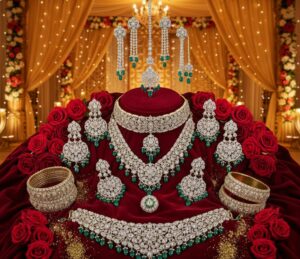
Designed specifically for brides, these sets often include intricate detailing, pearls, diamonds, or traditional gemstones.
- Contemporary Fashion Parure
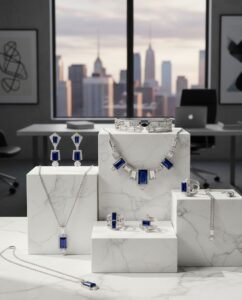
These sets focus on modern design. They may feature minimalist shapes, geometric patterns, or mixed materials.
- Heritage or Traditional Parure
These sets reflect cultural craftsmanship. They may include temple jewellery, Kundan sets, or antique gold designs, depending on the region.
Essential Rules for Coordinating Jewellery Sets
So, you have a parure or a jewellery suite. The pieces are beautifully matched. The question is: how do you wear them in a way that feels balanced, intentional, and stylish?
- Apply the 2:1:1 Rule for Balanced Accessories
The 2:1:1 rule is a simple way to avoid over-accessorising.
- Two Minimal Pieces: Start with two subtle items to keep things simple.
- One Statement Piece: Choose one statement piece that would stand out.
- One Other Accessory: Complete the look with one more accessory, depending on the outfit and the occasion.
This rule works especially well with full parures.
- Match the Outfit
Your jewellery should complement your outfit, not compete with it.
If your outfit is heavily embroidered, embellished, or detailed, choose a jewellery set that enhances it without adding visual chaos. For example, if your dress has intricate neckline work, skip an oversized necklace and wear statement earrings instead.
- Consider the Neckline

Neckline matters more than most people realise. It directly affects how your necklace sits and how balanced your upper half looks.
- Deep V-neck: Works beautifully with pendant necklaces or layered designs that follow the V shape.
- High neckline: Skip the necklace. Choose statement earrings instead.
- Strapless styles: Allow room for bold necklaces and chandelier earrings.
- Boat neck or wide necklines: Pair well with shorter necklaces or collar-style pieces.
- Choose Jewellery Based on the Dress Style
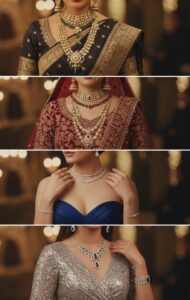
Different outfits call for different styling approaches.
- Sarees: Traditional or heritage parures work beautifully. If the saree has heavy zari or embroidery, choose a structured necklace and balanced earrings.
- Lehengas: Bridal parures are ideal. Focus on coordinating with the blouse neckline.
- Western gowns: Sleek, modern sets or minimalist parures look elegant.
- Cocktail dresses: Go for contemporary fashion parures. Keep the look sharp and refined.
- Think About Lighting
Lighting changes how jewellery looks.
Crystal, diamond, and high-polish finishes reflect light beautifully in evening settings.
Matte gold, brushed finishes, and subtle gemstone accents work better for daytime events.
- Styling Jewellery Sets for Formal Events
Formal dinners, galas, and corporate functions require a refined approach.
Stick to clean lines and balanced combinations. Demi-parures are often perfect for these settings.
- Accessorising for Casual Outings
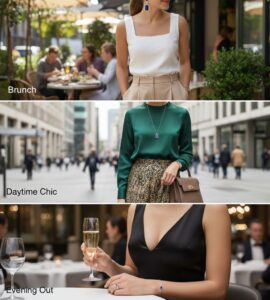
Jewellery sets are not only for grand occasions. With the right approach, you can wear them casually.
Break the set apart:
- Wear just the earrings for brunch.
- Pair the necklace with a basic blouse.
- Add a subtle bracelet to a relaxed outfit.
- Coordinate Metal Tones Carefully
Mixing metals can look stylish, but it has to be intentional.
If your jewellery set is gold, try to keep other accessories like belts, clutch chains, or shoe hardware in the same tone family.
- Create a Balanced Look
A simple formula can guide you every time:
- Start with your outfit.
- Decide the focal point.
- Choose jewellery that supports that focal point.
- Do Not Over-Accessorise Beyond the Set
If you are wearing a coordinated parure, avoid adding too many extra pieces outside the set.
Stacking multiple bangles, oversized cocktail rings, or layered chains on top of a complete suite can disrupt the harmony.
Final Thoughts
Coordinating a jewellery set is not about wearing everything at once. It is about knowing when to highlight, when to soften, and when to simplify.
Whether you are styling a full parure for a wedding or wearing a delicate suite for a casual outing, the goal remains the same: harmony. When each piece supports the other, your look feels effortless, elegant, and complete.
Giftex A World of Collectibles Auction
This February, Giftex presents its exclusive World of Collectibles Auction and is bringing together a carefully curated selection of rare and remarkable pieces. Among the many highlights, the fine and luxury jewellery collection is set to stand out, featuring exceptional craftsmanship and timeless design. Do not miss the chance to be part of this highly anticipated event.


About Post Author