Vintage Dress Watches: A History of Elegance on the Wrist
Dress watches have always represented the pinnacle of refinement in watchmaking.
Luxury vintage dress watches not only serve as a testament to exquisite craftsmanship but also stand as a solid investment choice in the dynamic world of luxury collectibles.
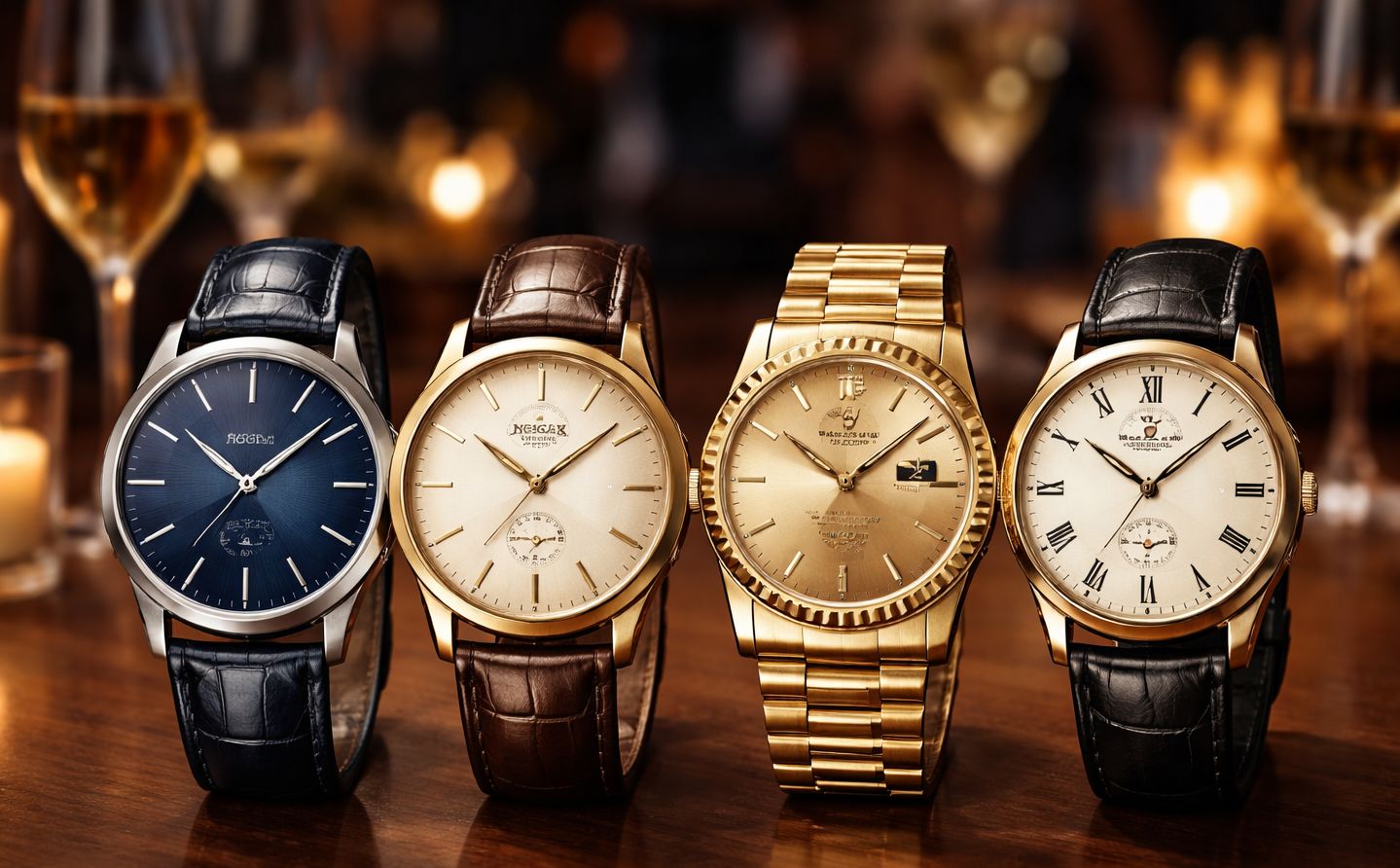
For much of the 20th century, a wristwatch was not a statement piece but a quiet companion to formal dress. Long before oversized cases and technical features dominated the market, the vintage watch was defined by proportion, discretion, and craftsmanship. Among these, dress watches occupied a special place. These men’s dress watches were designed to complement tailored clothing, slip easily under a cuff, and signal taste rather than status.
Today, interest in dress watch collecting has grown as collectors reassess what elegance means in a modern context. Smaller cases, simple dials, and thin mechanical movements now feel intentional rather than outdated. Understanding the evolution of dress watches helps explain why these restrained designs continue to resonate, even as contemporary trends shift toward boldness.
From Swiss luxury watches to Japanese makers, the category was never limited to Europe alone. Brands such as Seiko dress watch models from the mid-20th century demonstrate how global the language of refinement became. Whether crafted in gold or steel, these timepieces shaped expectations of what men’s dress watches should be: functional, elegant, and enduring.
This article explores how vintage dress watches evolved, what defines them, and which brands helped establish their lasting appeal.
What Is A Dress Watch?
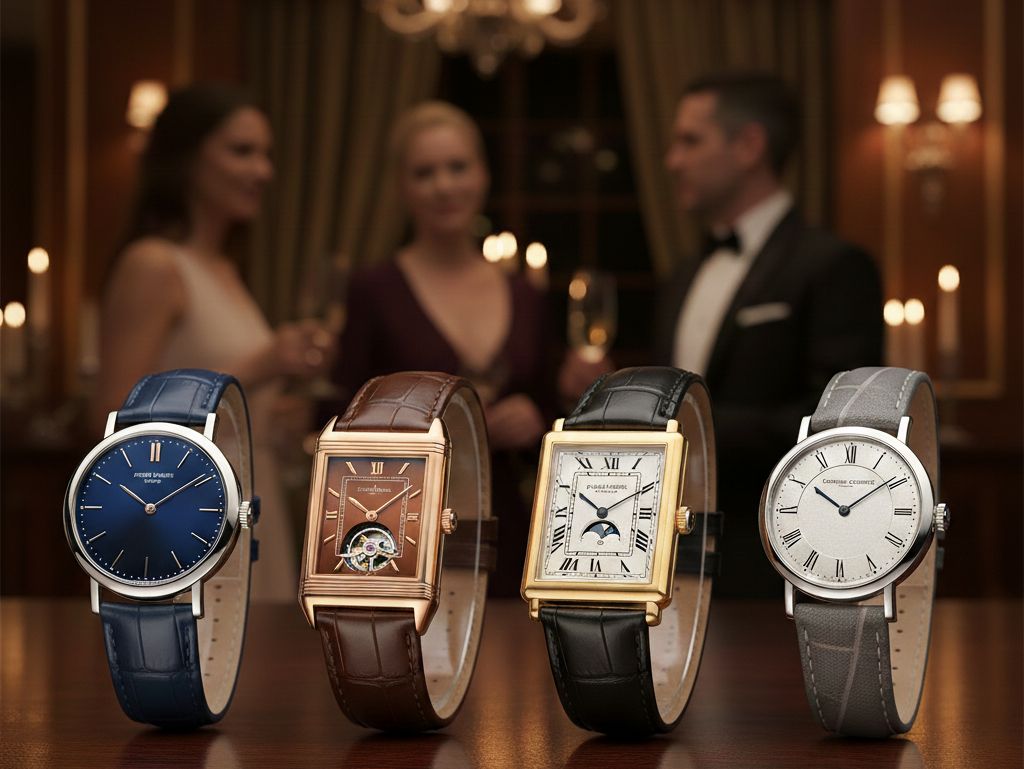
Dress watches are essentially timepieces designed for formal occasions. Their hallmark is elegance; they often feature a simple, classic design with a clean dial, devoid of the complex functionalities seen in sports or tactical watches.
The Evolution of Dress Watches
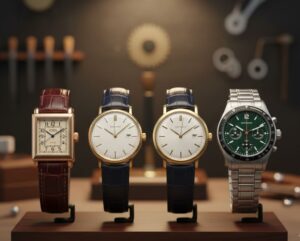
From the understated elegance of the 1930s to the bold experimentation of the 1970s, dress watches evolved in step with broader cultural, technological, and aesthetic shifts.
- From Pocket Watches to the Wrist: The 1930s
The dress watch evolved directly from the pocket watch. Early wristwatches of the 1910s and 1920s borrowed heavily from pocket watch aesthetics, including small case sizes, thin profiles, and emphasis on legibility and refinement.
Watchmakers began designing cases and movements specifically for the wrist, resulting in more balanced proportions and improved wearability. Cases were typically modest, often in precious metals, and dials favoured symmetry, applied markers, and elegant hands. The goal was discretion rather than display.
- Functionality and Restraint: The 1940s
During World War II, practicality influenced nearly every aspect of design, including dress watches. Although utilitarian needs shaped production, these watches retained an understated elegance suitable for formal wear.
Case size and material: Stainless steel became more common due to wartime resource constraints, with average case sizes around 32–33mm.
Dial design: Clear, functional layouts dominated, often featuring Arabic numerals or a mix of Arabic and baton markers to enhance readability.
Despite material limitations, the emphasis on balance and proportion remained, reinforcing the dress watch’s role as a refined everyday companion.
- Post-War Refinement and Formality: The 1950s
The post-war period marked a return to refinement. As men’s tailoring became more structured and social occasions more formalised, dress watches followed suit.
Gold cases regained popularity, movements became more reliable and thinner, and dial designs grew cleaner. Dress watches of the 1950s were designed to complement suits rather than compete with them, reinforcing their place as symbols of taste and restraint.
- Modernism and Technical Progress: The 1960s
By the 1960s, modernist principles began shaping watch design. Simplicity, clarity, and practicality were emphasised over ornamentation.
Case shapes: While round cases remained dominant, cushion and rectangular cases gained popularity for their geometric appeal.
Slim profiles: Advances in movement technology allowed for even thinner cases, enhancing comfort and elegance. Dress watches increasingly reflected the clean lines and functional aesthetics of mid-century modern design.
- Bold Experimentation and Change: The 1970s
The 1970s marked a clear departure from traditional restraint. Dress watches began to reflect broader shifts in fashion and lifestyle, embracing experimentation and individuality.
Case size: Watches grew larger, often reaching 36mm and beyond, signalling a move toward a more noticeable wrist presence.
Colour and texture: Dials introduced richer colours, textured finishes, and less symmetrical layouts, moving away from decades of formality.
Quartz revolution: The rise of quartz movements brought greater accuracy and affordability, influencing both mass-market and high-end dress watches.
While the decade challenged traditional definitions of elegance, it also expanded the boundaries of what a dress watch could be.
Defining Characteristics of Vintage Dress Watches
- Case Design
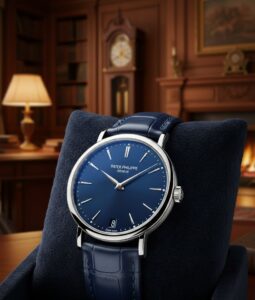
Cases are typically modest in size, often ranging from 32mm to 36mm. Gold and gold-filled cases were common, though stainless steel examples exist and are increasingly appreciated for their versatility.
Case finishing was subtle. Polished bezels, thin lugs, and minimal crown profiles were standard.
- Dial Aesthetics
Dials are where vintage dress watches truly shine. Features often include:
- Two-hand or central seconds layouts
- Applied gold or steel markers
- Dauphine, leaf, or baton hands
- Minimal text and logos
- Complications (or Lack Thereof)
Most vintage dress watches are time-only. When present, complications are discreet: small seconds, date windows introduced in the 1950s, or occasionally power reserve indicators.
The absence of complications is part of the appeal.
Popular Brands Known for Vintage Dress Watches
The history of vintage dress watches cannot be understood without examining the brands that shaped the category.
- Patek Philippe
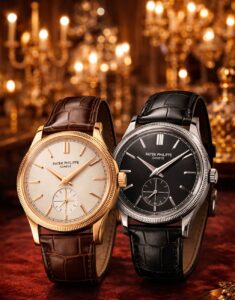
Patek Philippe defined the high-water mark of dress watch design. Vintage Calatrava models are the benchmark for proportion, dial balance, and finishing.
- Vacheron Constantin
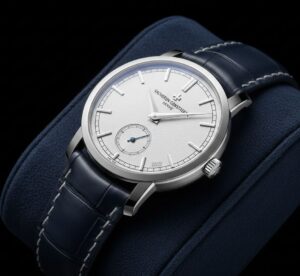
Often understated compared to Patek, Vacheron produced exceptionally elegant dress watches with refined cases and beautifully finished movements.
- Audemars Piguet
Before sports watches defined the brand, Audemars Piguet was known for ultra-thin dress watches and complex finishing. Vintage examples are subtle and highly respected among knowledgeable collectors.
- Longines
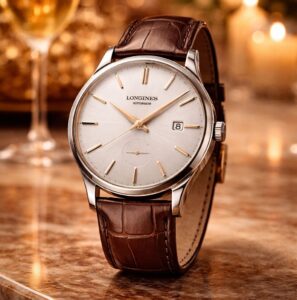
Longines produced high-quality, accessible dress watches with excellent movements and timeless design.
- Omega
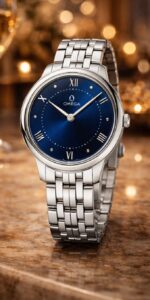
While sports watches are often associated with Omega today, the brand produced countless elegant dress watches in the mid-20th century. Omega dress watches feature exceptional movements and refined cases, often at approachable prices.
Also Read: Top 10 Collectible Vintage Omega Watches
Why Vintage Dress Watches Matter Today
Vintage dress watches offer something increasingly rare: restraint. In an era of oversized cases and aggressive designs, they represent a quieter form of luxury.
They also provide historical continuity. Wearing a vintage dress watch connects the present to a period when craftsmanship and proportion were central to design.
For collectors, these watches reward knowledge rather than spectacle. Condition, originality, and subtle differences matter more than branding alone.
Collecting Considerations
When collecting vintage dress watches, originality is critical. Refinished dials, replacement hands, or over-polished cases can significantly reduce value.
Size should be evaluated in context. Smaller dimensions are correct for the era and should not be dismissed.
Finally, service history matters. Thin vintage movements require skilled watchmakers, and quality servicing preserves both function and value.
Giftex – A World of Collectibles Auction
This February, Giftex presents a carefully curated selection of luxury and vintage watches through it’s ‘A World of Collectibles’ auction.
Collectors and enthusiasts will have the opportunity to explore exceptional examples from respected watchmakers, each chosen for its originality, condition, and historical relevance. This auction offers a rare chance to acquire timeless watches that embody both elegance and collectibility.
The Enduring Appeal of Luxury Dress Watches
Luxury dress watches are more than simple timekeeping instruments. They are expressions of style, proportion, and fine craftsmanship. Defined by their slimmer profiles, restrained dials, and frequent use of precious metals paired with leather straps, these watches reflect a philosophy of elegance that transcends trends.
Their versatility allows them to move effortlessly from formal occasions to everyday wear, making them an essential element of a well-considered collection. Whether appreciated for their design, mechanical integrity, or historical significance, vintage dress watches continue to hold a lasting place in the world of fine horology.


About Post Author