What Is Figurative Painting? Evolution, Styles, and Examples
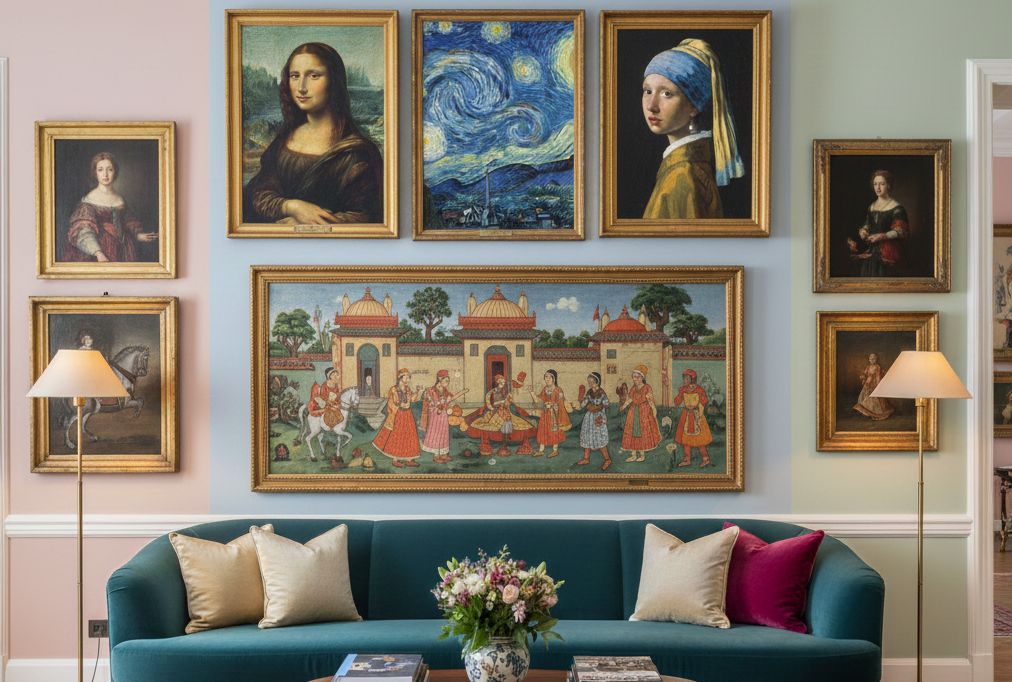
What do Leonardo da Vinci’s “Mona Lisa,” Vermeer’s “Girl with a Pearl Earring,” or Munch’s “The Scream” have in common? Painted in different centuries, across different cultures, these works are all celebrated examples of famous figurative paintings. Figurative artwork has remained a steadfast constant throughout the duration of art history. Even as styles, techniques, and ideologies changed, artists repeatedly returned to the human figure and the visible world as a primary subject. From cave walls to contemporary canvases, figurative art continues to evolve while maintaining its essential connection to lived experience.
Figurative Paintings are those paintings that are able to portray scenes as seen in the real world. Figurative art is a cornerstone of human creativity, defined by its representation of recognisable subjects drawn from the observable world – people, animals, landscapes, and still-life. Unlike abstract art, which prioritises shapes, colours, and forms detached from reality, figurative art retains a tangible connection to the visible.
In this guide, we will walk through the evolution of figurative painting and take a closer look at Indian figurative painting and figurative artists.
What Is Figurative Painting?

Figurative paintings are works that depict recognisable subjects from the real world. These may include human figures, animals, landscapes, urban scenes, or still-life objects. The defining feature of figurative art is its reference to observable reality, even when the representation is stylised, expressive, or symbolic.
The term “figurative art” gained particular importance with the rise of abstract painting in the early twentieth century. As abstraction moved away from direct representation, figurative painting came to describe art that retained visual references to the real world. Unlike abstract art, which prioritises form, colour, and composition independent of subject, figurative art maintains a tangible connection to what we see around us.
Figurative art can be defined as any artwork that retains a strong reference to the real world, particularly the human figure. As a result, the genre can be seen as more of an umbrella term that encompasses many sub-genres such as portrait painting, landscape and still-life.
Also Read: History of Portraiture Painting
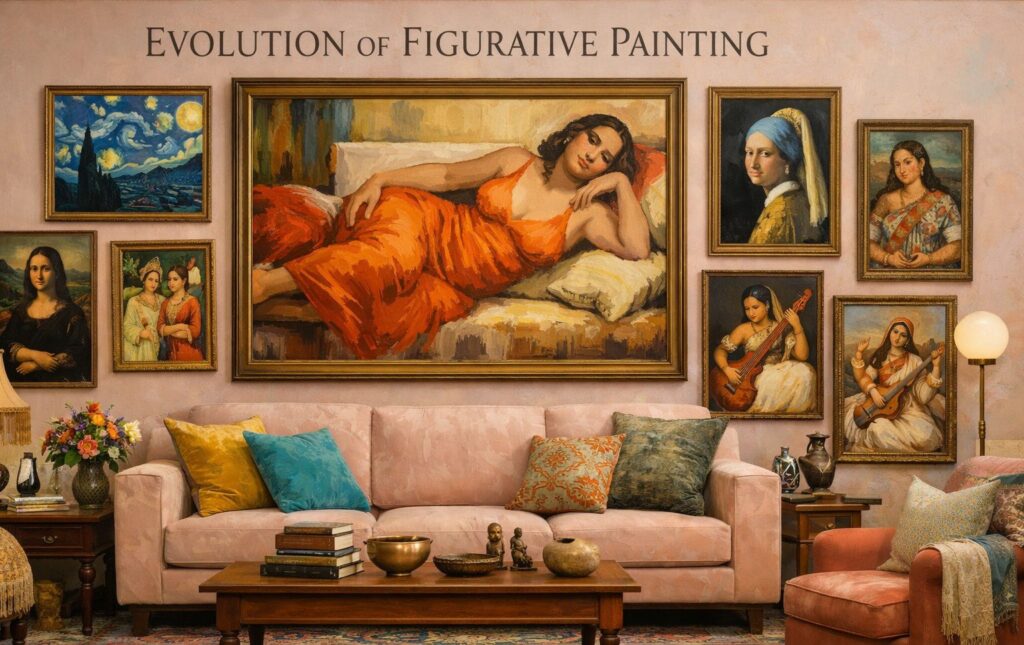
Evolution Of Figurative Painting
- Figurative Art: Beginnings

The origins of figurative art date back to the Palaeolithic era, with cave paintings in Lascaux and Altamira depicting animals in motion and human figures engaged in ritual or survival. Early humans painted animals, hunters, and ritual scenes on cave walls, not as decoration but as expressions of belief, survival, and communal memory.
- Renaissance: The Golden Age of Figurative Painting
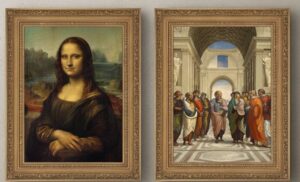
The Renaissance (14th–17th century) marks a high point in the history of figurative art. With renewed interest in Greco-Roman ideals and scientific observation, artists like Leonardo da Vinci, Michelangelo, and Raphael produced works that combined anatomical precision with emotional depth.
Leonardo’s Mona Lisa exemplifies Renaissance figurative art through its lifelike presence, subtle expression, and psychological depth.
During this period, figurative art was closely tied to religious and mythological themes, but it also laid the groundwork for portraiture as a means of capturing individual identity.
- Baroque to Modernity: Expanding the Language of Figuration
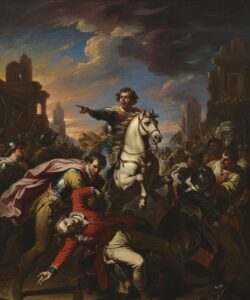
In the Baroque period of the seventeenth century, figurative painting became more theatrical, dynamic, and emotionally charged. Artists moved away from the calm balance of the Renaissance toward dramatic compositions that heightened movement, tension, and light. Baroque figuration sought not just to depict the figure, but to move the viewer emotionally.
The eighteenth and nineteenth centuries saw figurative painting broaden further through the rise of Romanticism and Realism. Painters such as Francisco Goya and Eugène Delacroix depicted dramatic historical events, inner turmoil, and human suffering, often using exaggerated gestures and intense colour to convey psychological states.
In the Baroque period of the seventeenth century, figurative painting became more theatrical, dynamic, and emotionally charged. Artists moved away from the calm balance of the Renaissance toward dramatic compositions that heightened movement, tension, and light. Baroque figuration sought not just to depict the figure, but to move the viewer emotionally.
The eighteenth and nineteenth centuries saw figurative painting broaden further through the rise of Romanticism and Realism. Painters such as Francisco Goya and Eugène Delacroix depicted dramatic historical events, inner turmoil, and human suffering, often using exaggerated gestures and intense colour to convey psychological states.
In contrast, Realist painters turned their attention to everyday life. Artists like Gustave Courbet portrayed ordinary people, labourers, and unidealized bodies, challenging the traditional hierarchy of subjects in art.
- Modern Transformations of Figurative Art
The nineteenth and twentieth centuries brought dramatic changes to figurative painting. Artists began questioning traditional representation and exploring new ways to express perception and emotion.
At the dawn of the twentieth century, figurative art underwent profound transformations in response to photography, rapid industrialisation, and the trauma of modern warfare. With photography capable of capturing likeness with precision, painters no longer felt bound to visual accuracy. Instead, they explored distortion, fragmentation, and abstraction to convey deeper truths.
Figurative Painting in the Indian Context
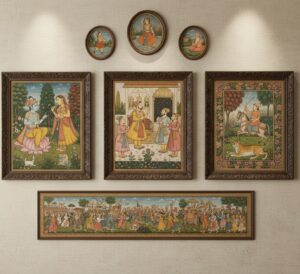
India has a long and continuous tradition of figurative art, shaped by religious, cultural, and social narratives. From ancient murals to contemporary canvases, the human figure has remained central to Indian visual expression.
Early Indian figurative painting can be seen in the murals of Ajanta and Ellora, where figures are depicted with fluid lines, expressive gestures, and a strong sense of movement. These paintings emphasise narrative and emotion rather than strict realism, blending spiritual symbolism with human presence.
Miniature painting traditions further developed figurative art in India. Mughal, Rajput, and Pahari schools portrayed court life, mythology, and romantic themes through detailed figures and expressive compositions.
Why Indian Figurative Painting Endures
- Cultural Continuity and Tradition
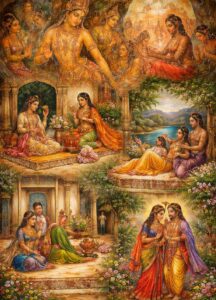
Indian figurative painting draws strength from an unbroken visual tradition that spans thousands of years. From ancient murals and temple sculptures to miniature paintings and modern canvases, the human figure has remained central to storytelling and expression.
- Spirituality and Symbolism
Spirituality is deeply embedded in Indian figurative painting. Figures are rarely just physical forms; they often represent philosophical ideas, divine principles, or moral states. Symbolic colours, gestures, and attributes transform the human body into a vessel of meaning.
- Diversity of Styles and Schools
Indian figurative painting cannot be confined to a single style or school. It encompasses a wide range of approaches, from the refined elegance of miniature traditions to the bold modernism of post-independence artists. Regional influences, personal narratives, and evolving techniques contribute to its diversity.
- Adaptability to Modern Contexts
Despite its deep historical roots, Indian figurative painting adapts seamlessly to contemporary life. Modern artists use the figure to explore urban realities, shifting identities, technology, and global influences.
- Figurative Painting as Social Commentary
Indian figurative painting has long served as a powerful platform for social critique. Through their canvases, artists address issues such as inequality, political tension, gender roles, and cultural change. The recognisable human figure makes these narratives immediate and relatable, turning art into a space for reflection and dialogue.
Contemporary Indian Figurative Artists
Today, figurative painting remains a thriving art form in India. Contemporary artists use the human figure to address issues of identity, gender, memory, and urban life.
Artists like Arpita Singh, Nalini Malani, Subodh Gupta, Bharti Kher, Atul Dodiya, Jogen Chowdhury, blend tradition with modernity, exploring identity, urban life, mythology, and social issues through their artwork.
Giftex: Masterpieces Under Hammer
Giftex: Modern and Contemporary Art Auction returns in January 2026, featuring outstanding works by renowned Indian artists across a wide range of genres and styles. Spanning diverse genres and artistic expressions, the auction promises a compelling view of India’s evolving art scene. Don’t miss this extraordinary art event and stay tuned for further updates.
The Enduring Allure of Figurative Painting
Figurative painting endures because it speaks directly to human experience. Viewers instinctively relate to faces, bodies, and familiar scenes. Even when figures are distorted or symbolic, they offer an entry point for emotional connection.
In a world increasingly shaped by technology and abstraction, figurative art provides a sense of presence and intimacy. It reminds us of our physical and emotional reality.
From prehistoric caves to contemporary galleries, figurative painting has evolved continuously, adapting to changing times while maintaining its core connection to the visible world. In the Indian context, it remains a powerful medium through which artists negotiate tradition, modernity, and identity.
Figurative painting is not simply a style. It is a visual language that continues to evolve because it remains deeply human.


About Post Author