
Wrapped in Time: Exploring the Shapes of Vintage Shawls
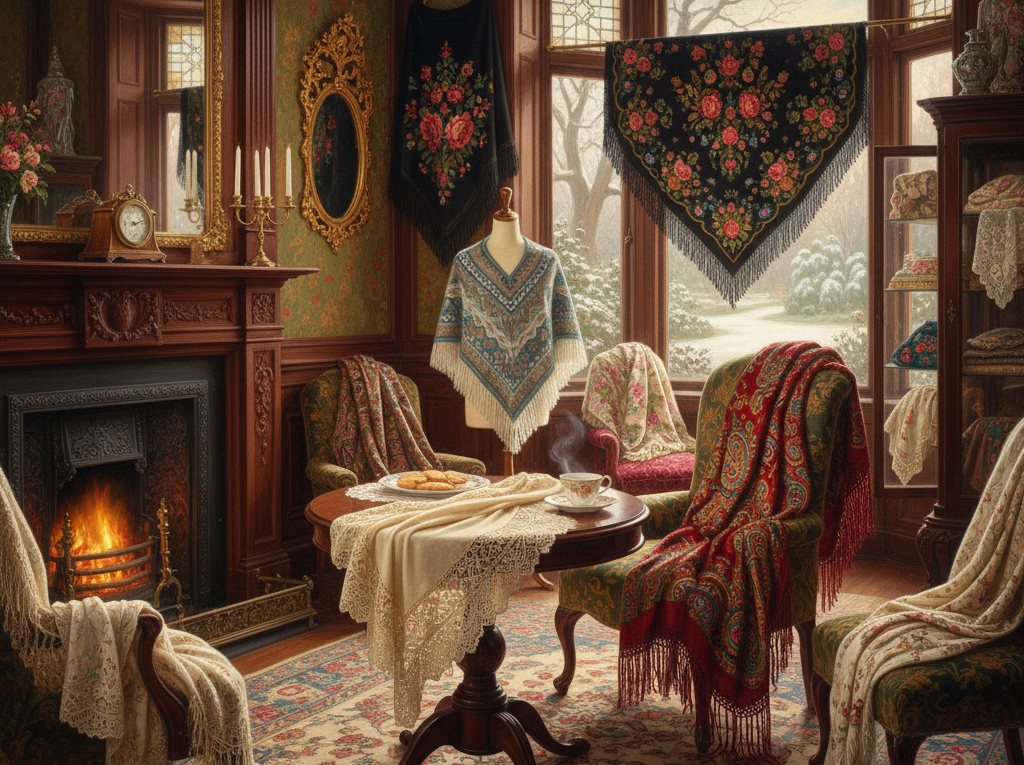
The word shawl evokes images of warmth and beauty, of being wrapped in silk or wool, and of a softness that feels almost delicate. Vintage shawls take that feeling even further. They whisper stories of the past. They feel alive. They carry the weight of time, the spark of a maker’s imagination, and the story of the hands that once draped them with care. Many people love vintage shawls for their rich colours, detailed embroidery, and long history. But did you know that shawls come in different shapes, each created with a purpose, a style, and a unique way to drape? From a sharp triangular shawl to the classic rectangular wrap, the variety is wider than most expect. If you enjoy textiles, collecting antiques, or love fashion with character, understanding these shapes connects you not only to style but also to the cultural stories behind them. For collectors and fashion aficionados, understanding the different shapes of vintage shawls is the key to unlocking their true versatility and historical allure. Let’s walk through the basic shapes of shawls and see when each type shines.
The Allure of Vintage Shawls: A Woven Legacy
The fascination with vintage shawls goes far beyond mere fashion. These are textile treasures, often handcrafted with techniques and materials that are rare or entirely lost today, such as a true Pashmina Shawl, intricate lacework, or complex Kashmiri embroidery.
Antique shawls take this magic even further. These pieces are usually more than 80 to 100 years old and reveal details that are rarely seen in modern textiles. The value and appeal of a specific shawl are determined by its fibre (silk, wool, cashmere), its quality and pattern (Dacca muslin, Paisley patterns), its condition, and its shape. The shape is crucial, as it dictates how the piece falls, how it is worn, and consequently, its historical utility and aesthetic impact.
Also Read: How Vintage Shawls are Sustainable Treasures
5 Basic Shawl Shapes
- Rectangular Shawls: The Classic Foundation
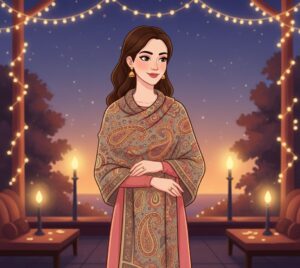
The rectangular shawl is the most widely recognised shape. Traditionally known as a stole or wrap, it features a long, even length and medium width. Often synonymous with the famous Paisley shawls of the 19th century, this shape offered maximum coverage and a grand drape. This shape has been common across cultures, from Himalayan wool weaves to European silk wraps.
What makes it special:
A rectangular shawl drapes smoothly, can be layered easily, and offers generous coverage without bulk. It works with both formal and casual looks.
Best occasions to wear:
Evening events, winter gatherings, religious ceremonies, weddings, and travel. It pairs effortlessly with gowns, sarees, kurtas, coats, or even jeans.
- Square Shawls: The Folding Canvas
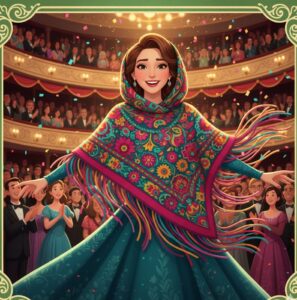
Square shawls are less common today but were beloved in many regions, especially in the 19th and early 20th centuries. You can fold a square shawl diagonally to create a triangle or drape it open for fuller coverage.
The square shawls often featured a central design element that was framed by the folded shape.
What makes it special:
It offers versatility. Fold it for a crisp triangular line or wear it unfolded for maximum warmth.
Best occasions to wear:
Cool evenings, heritage festivals, or any outfit that needs a structured layered look. Also good for semi-formal or festive events. Wearing it diagonally over the shoulders, like a cowl, highlights the centre point of the garment.
- The Triangular Shawl: The Elegant Drape
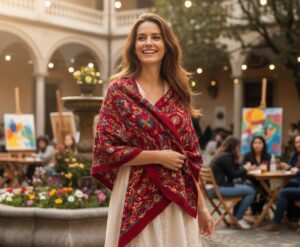
Triangular shawls create a sharp, pointed silhouette that highlights embroidery and patterns more dramatically. This shape is common in folk traditions across Eastern Europe, Central Asia, and parts of the Middle East.
The triangular shawl (sometimes called a half-shawl) is inherently less formal and offers a softer, more fluid drape that is flattering to the neck and shoulders.
What makes it special:
The pointed back and shorter sides create a natural drape that frames the shoulders and chest. It feels both romantic and bold.
Best occasions to wear:
A triangular knit shawl would be perfect for outdoor gatherings, artistic events, and boho-inspired outfits. The pointed back allows the line of a dress to be seen while the front ends can be tied or tucked neatly into a jacket. It’s the easiest shape to wear with modern clothing.
- The Half-Moon Shawl: The Curved Comfort
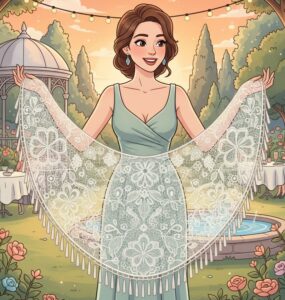
Less common in early antique shawls but a distinctive vintage shape, the half-moon (or crescent) shawl is cut on a curve, offering a beautiful, cascading drape.
This shape gained popularity in lace-making traditions in Europe. The curved design sits comfortably around the shoulders and stays in place without much adjusting.
What makes it special:
The crescent shape is flattering and light. It feels elegant without being overwhelming.
Best occasions to wear:
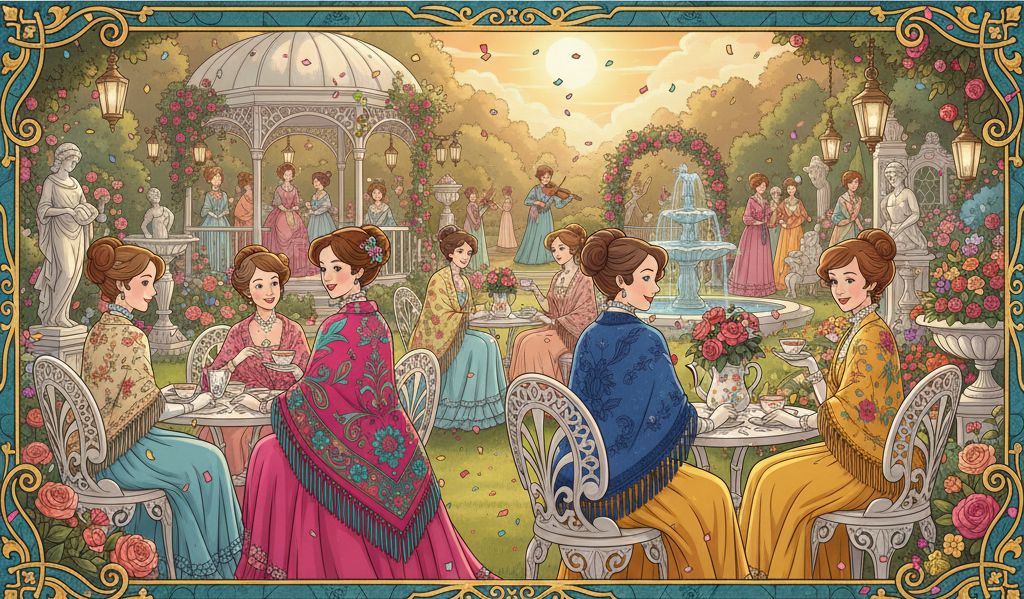
Garden parties, brunches, summer evenings, or anytime you want grace without too much layering. Excellent for covering the shoulders with a low-cut dress or for added warmth.
- Faroese or Shaped Back Shawls: Elegant Warmth
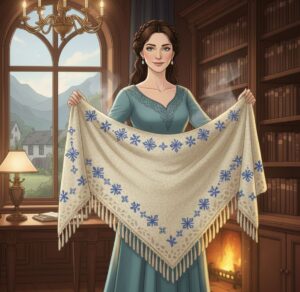
These shawls include a central back panel and gently shaped wings. They were created in the Faroe Islands for warmth, functionality, and beauty. A “Faroese shawl” is a traditional garment from the Faroe Islands known for its unique, “shaped back” that allows it to drape over the shoulders and stay in place without sliding off. The distinctive design typically includes a centre back panel or spine with a flared gusset and two triangular side panels that form wing-like shapes
What makes it special:
It hugs the body naturally and stays put. The shaping creates a snug, comfortable fit.
Best occasions to wear:
Cold weather outings, travel, and casual everyday styling. This shawl shape is perfect for someone who wants comfort with character.
Vintage Shawl Styling Tips: When to Choose Each Type of Shawl
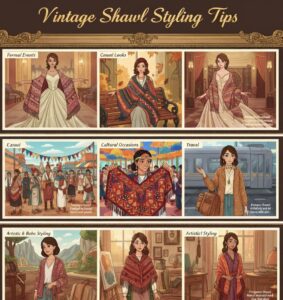
- Formal events:
Rectangular shawls, square shawls, and crescent shawls work best. They sit smoothly over elegant outfits.
- Casual looks:
Triangular, Faroese, and long, narrow shawls make great companions for relaxed styling.
- Cultural or heritage occasions:
Rectangular and square shawls often feature traditional motifs and feel appropriate for ceremonies.
- Travel:
Faroese shawls are practical, while rectangular shawls fold easily and double as blankets.
- Artistic or boho styling:
Triangular shawls steal the spotlight.
- Winter warmth:
Square shawls and rectangular shawls woven in thick wool are unbeatable
Giftex: A World of Collectibles Auction
If you enjoy collecting textiles, finding rare pieces, or exploring global craftsmanship, Giftex is a name you should know. Giftex hosts a world of collectibles auction that brings together timeless creations from around the globe. Among its offerings, the textile auction stands out for its remarkable selection.
From vintage shawls to antique carpets, Giftex offers textile treasures that appeal to collectors, designers, decorators, and enthusiasts. You can discover everything from handwoven masterpieces to rare pieces that rarely appear on the market. Stay tuned for our next Textile Auction details and discover your own piece of woven legacy!
The Unfolding Story
The shawl is much more than a simple accessory; it is a profound piece of art and history. By decoding the geometry of different shapes of vintage shawls, you not only appreciate their function but its entire historical context. Next time you encounter an antique shawl, remember that its shape is the first clue in the fascinating, woven story it holds.
And if you are ready to bring a piece of textile history home, auctions like Giftex open the door to a world filled with vintage shawls, antique carpets, and rare finds that turn every room or outfit into a story worth sharing.


About Post Author
