
Enduring Magic: The Beauty of Antique Regency Furniture
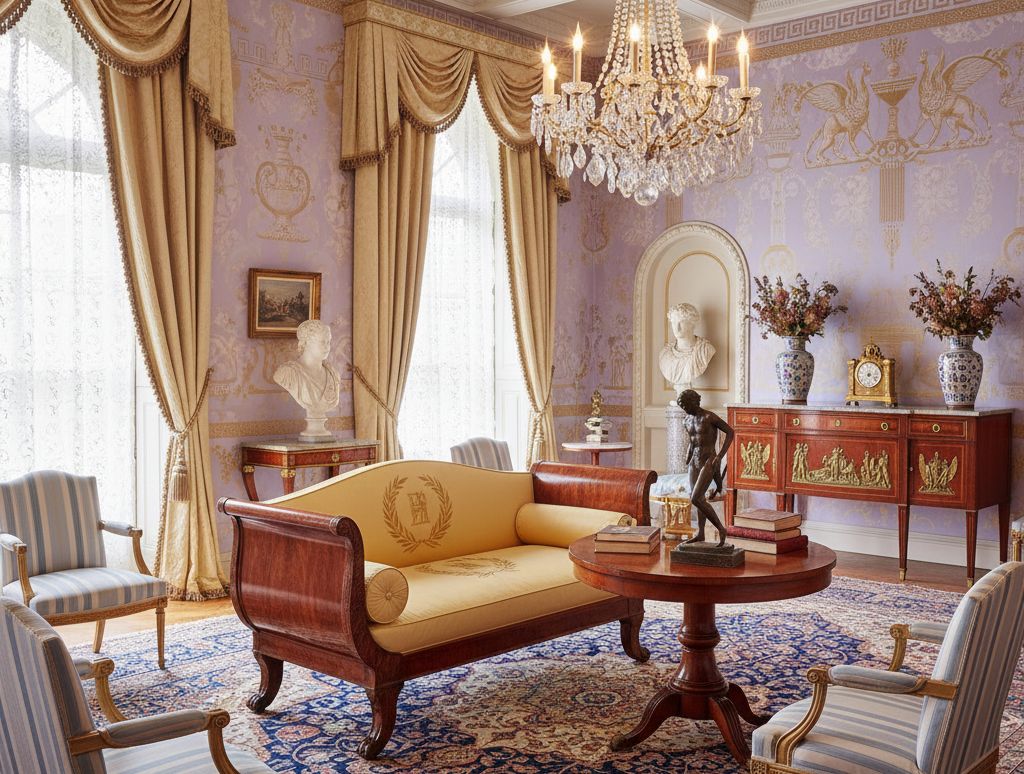
Some design moments feel frozen in time. The Regency era is one of them. Think grand drawing rooms, confident shapes, striking silhouettes, and a look that feels refined without trying too hard. Walk into a space filled with Regency style furniture, and you sense it right away. The room feels balanced, elegant, and full of character.
Regency style furniture is an elegant and popular choice for today’s home. Regency era furniture is well-suited for both historic homes and modern apartments.
This guide will walk you through what the Regency era was, what defines Regency furniture style, what some famous antique Regency furniture that are worth acquiring, and how to decorate with it.
The Regency Era
The Regency Era took place in the United Kingdom. It began after the reign of King George III (a period of time known as the Georgian Era), who suffered a long bout of physical and mental illness at the end of his life. In 1811, a Regency Act was passed by Parliament, which declared the King unfit to rule. His eldest son, George, Prince of Wales, was named Prince Regent, and he ruled in his father’s stead until he was named King George IV upon the death of his father in 1820. While the formal Regency only lasted nine years, the Regency Era also includes the rule of King George IV from his coronation until his death in 1830.
The Prince Regent himself was a notorious and flamboyant patron of the arts. His personal taste—which favoured the opulent, the exotic, and the dramatic—guided the design trends of his court, moving the look away from the more delicate Georgian styles toward something bolder, cleaner, and more majestic.
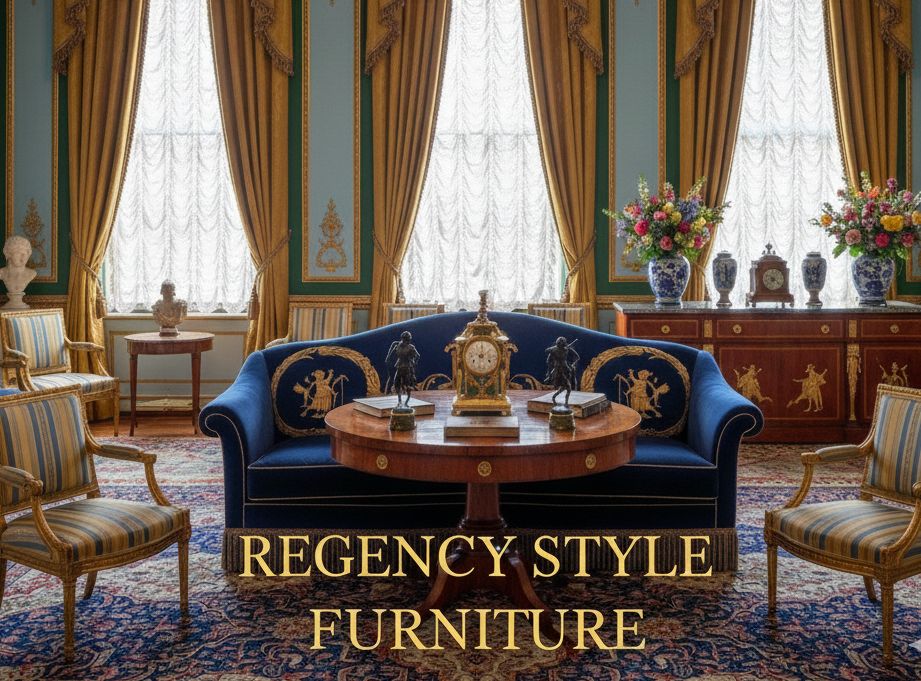
Also Read: Georgian Furniture: Age of Balance & Beauty
What Influenced Regency Furniture
- The Prince Regent: England’s Ultimate Tastemaker
No figure shaped the Regency style more than the Prince Regent, later King George IV. His taste set the tone for the entire era. He had a bold eye, a love for beauty, and a desire to surround himself with the best design of his time. The resulting Regency style furniture became a powerful blend of Greek and Roman classical forms, Egyptian motifs, and a touch of exotic flair.
- Neoclassicism and the French Empire Style
Although Britain and France were political enemies during the Napoleonic Wars, French taste still found its way into British design. Neoclassicism was the bigger force behind Regency furniture. The period saw a renewed interest in symmetry, proportion, and ancient forms.
- Inspiration from Ancient Greece and Rome
The early 1800s were full of archaeological discoveries that excited Europe. Finds from Greece, Rome, and Egypt opened a window into ancient design.
Influential designers helped bring this classical vision to life. Architect John Nash, one of the leading figures of the era, and known for his work on Buckingham Palace, introduced bold neoclassical ideas that shaped both architecture and furniture.
Characteristics of Regency Furniture
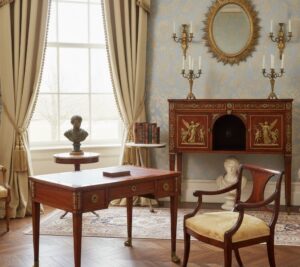
To gain confidence in identifying authentic pieces, look for these hallmark traits. These details are the backbone of the Regency furniture style.
- Strong, Straight Lines
The overall silhouette is clean. Even when the piece has curves, the frame feels structured and clean.
- Classical Motifs
Expect symbols like lyres, palmettes, acanthus leaves, rosettes, and reeded legs.
- Fine Woods and Veneers
Mahogany and rosewood dominate. Satinwood and zebrawood veneers often appear in decorative panels.
- Brass Detailing
Brass handles, gallery rails, inlays, and accents add subtle shine.
- Lightness of Form
Even larger pieces feel balanced. Makers avoided bulky proportions.
- Quality Craftsmanship
Joinery is precise. Surfaces are smooth. Carvings are sharp and clear.
Types of Regency Style Furniture
https://www.youtube.com/watch?v=wvGYSoPxtSw
Video Credit:
Myers & Monroe
Regency design touched every room in the home, so there is a wide range of forms. Below are some of the most popular types:
- Regency Sideboard

Sideboards from this period often feature a sweeping front, tapered or reeded legs, and elegant drawer arrangements. Today, they also serve as stylish storage pieces in living rooms or entryways. Brass handles and decorative veneers are common.
One standout example from a past Giftex auction was a remarkable Regency style long sideboard. It featured a rich mahogany and rosewood body, a smooth marble top, and refined brass ornaments.
- Regency Chairs
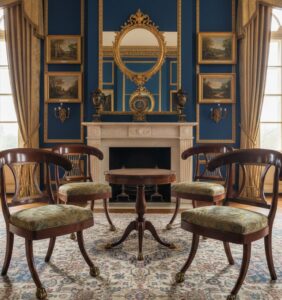
Chairs are among the most recognisable pieces in this style. You will often see curved backs, sabre legs, and well-shaped seats. Some chairs include a lyre back or a panel of decorative veneer.
- Regency Sofas and Settees
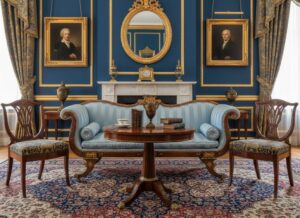
These seating forms mix comfort with clean lines. The frames usually show visible wood along the back or sides. Scroll arms appear often. Many antique Regency sofas work beautifully in modern interiors.
- Regency Table
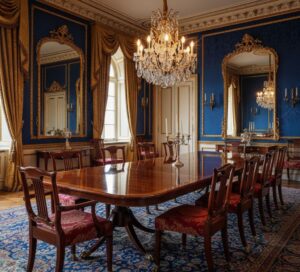
This category covers card tables, centre tables, dining tables, and work tables. Tripod pedestal bases, splayed legs, and circular tops are common. Some tables hide clever mechanisms that fold, spin, or open. The craftsmanship becomes obvious once you study the joints and surface finish.
- Regency Bookcases and Cabinet
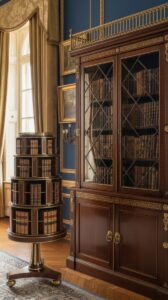
Tall, slim bookcases or glazed cabinets or revolving bookshelves carry the signature light touch of the era. These pieces often have brass gallery rails on top or small geometric details.
- Regency Desks
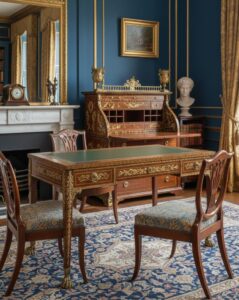
Writing tables and bureaus from this era highlight both beauty and function. Expect straight legs, neat drawers, and leather tops with gilt tooling. A Regency desk can serve as the heart of a study or home office.
Decorating With Antique Regency Furniture
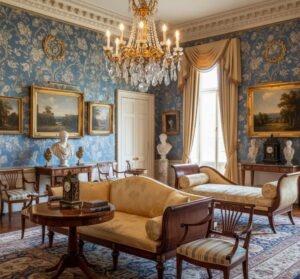
You do not need an old manor house to use Regency era furniture. The style blends well with modern décor because it favours clean structure, warm wood, and visual balance.
- Start with one showpiece
Pick a sideboard, desk, or settee. Let it ground the room and build your look from there.
- Mix old and new
Pair a Regency table with contemporary dining chairs or place a Regency chair next to a modern sofa. The contrast looks intentional and confident.
- Keep the palette calm
Soft whites, muted greens, warm neutrals, and deep blues highlight the classical shapes without competing.
- Use metal accents
Brass lamps, mirrors, and frames echo the brass details in the furniture.
Giftex: A World of Collectibles Auction: Your Trusted Destination
For collectors seeking to acquire antique furniture from various eras, the Giftex auction is the ideal destination. The Giftex auction brings together a wide selection of vintage and antique pieces, including authentic Regency style furniture and many other historic styles.
The Enduring Legacy of Regency Elegance
The Regency era furniture period, though fleeting, left an indelible mark on the history of design. More than just a collection of fashionable pieces, it represents a revolutionary shift towards Neoclassicism. Investing in Antique Regency furniture means acquiring a piece of history.
Whether you collect, decorate, or simply admire fine design, Regency style furniture brings presence and personality to any space.


About Post Author