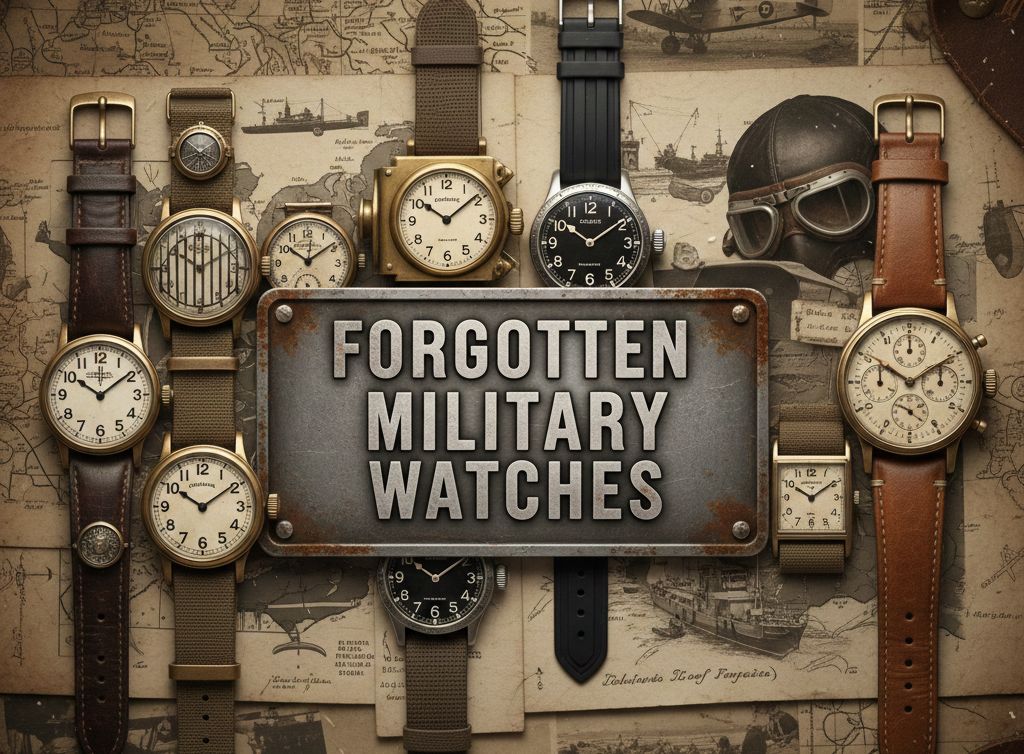
The Forgotten Military Watches That Built Modern Watch Design
As the saying goes, necessity is the mother of invention. Nearly all luxury products we know today were born out of practical need, and watches are no exception. Nowhere is this influence more apparent than in the world of wristwatches—not only in pieces intentionally designed with a military or tactical aesthetic, but across countless styles and genres throughout the industry.
When most watch enthusiasts talk about iconic timepieces, names like the Rolex Submariner, Omega Speedmaster, or Panerai Luminor quickly come up. These watches have rightly earned their legendary status, yet their origins run far deeper than many realise.
These rugged instruments were never meant to be luxurious or stylish. They were tools first and foremost. In doing so, they quietly laid the foundation for what we now define as the modern tool watch—a legacy that continues to shape watchmaking today.
This is the story of those forgotten military watches and how their innovations echo in the wristwatches we wear now.
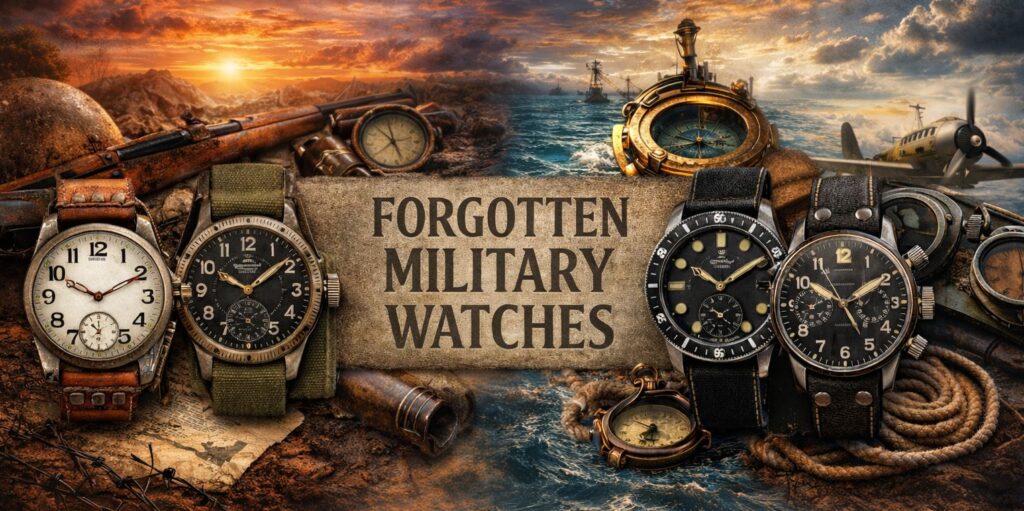
The Origin of Men’s Wristwatches
It’s unlikely that an elegant dress watch, such as a Patek Philippe Calatrava or a Vacheron Constantin Patrimony, brings to mind battlefields and muddy trenches. Yet the truth is that men’s wristwatches, as we know them today, are largely a military invention.
Long before wristwatches were socially acceptable for men, women had been wearing timepieces on bracelets and pendants since the mid-19th century. For men, however, pocket watches remained the standard well into the early 20th century. World War I changed that. On the battlefield, soldiers needed both hands free at all times, whether operating weapons, coordinating movements, or navigating hostile terrain. Precise timekeeping, however, was essential for synchronising attacks, artillery barrages, and troop movements. The wristwatch became a practical solution to a deadly problem.
Trench Watches: Function Over Form
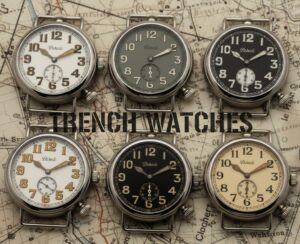
Early military wristwatches were not refined creations. They were improvised tools. Watchmakers responded to wartime demands in a makeshift but effective way, adapting existing pocket watches by soldering wire lugs onto their cases. These lugs allowed the watches to be secured to leather or canvas straps and worn on the wrist.
Despite their crude origins, trench watches marked a turning point in horology. They proved that wrist-worn timepieces were not only practical but essential. To fully understand the lasting impact of these early military designs, it helps to examine how wristwatches evolved across the three major theatres of warfare: land, sea, and air.
A. Land: The Birth of the Field Watch
Warfare on land demanded watches that were simple, rugged, and immediately legible.
The Dirty Dozen
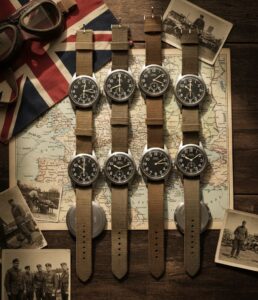
Among the earliest and most legendary examples of military watches are the so-called Dirty Dozen, consisting of 12 watches from 12 different watchmaking firms, issued to British servicemen during the last two years of World War II and made in extraordinarily limited numbers.
The 12 companies that took up the gauntlet are a combination of famous names and mostly forgotten ones: Buren, Cyma, Eterna, Grana, Jaeger-LeCoultre, Lemania, Longines, IWC, Omega, Record, Timor, and Vertex. In addition to their dial designs, all the watches’ caseback carried a “W.W.W.” stamp — for “Watch, Wrist, Waterproof” — and the Broad Arrow emblem that marked them as property of the U.K. government.
Hamilton and Bulova
Over in the United States, watchmakers like Lancaster, PA-based Hamilton and New York-based Bulova were also making watches for the war effort that adhered to military specifications.
During World War II, Hamilton ceased all civilian production for a time to focus on mass production of timekeepers for American military units, including marine chronometers for the Navy and wristwatches for Army troops. These watches were made of chrome-plated base metals, measured around 34 mm in diameter, and used luminous radium paint on their dials for nighttime legibility.
Modern examples like the Hamilton Khaki Field or similar military-inspired watches are direct descendants of these land-based tools.
B. Sea: The Rise of the Dive Watch
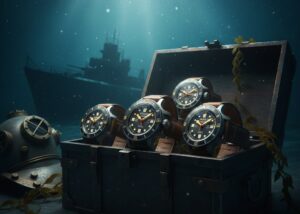
If land warfare demanded durability, naval warfare demanded something more complex: water resistance.
Early attempts at waterproof watches appeared before World War II, but it was military demand that pushed the technology forward.
One of the most influential military dive watches came from Panerai, developed for the Italian Royal Navy. Oversized cases, highly luminous dials, and simple layouts made these watches readable even in murky conditions. At the same time, Rolex was refining waterproof case construction, laying the groundwork for what would later become the Submariner. Today’s dive watches, whether professional instruments or luxury status symbols, still follow rules established by military necessity. Even those never intended to see the ocean owe their existence to wartime innovation beneath the waves.
C. Air: Precision Above the Clouds
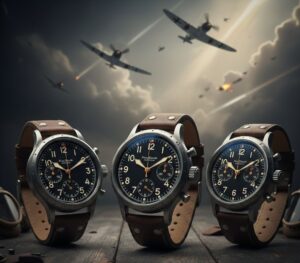
Aviation introduced an entirely different set of challenges. Pilots needed watches that were not just durable, but extremely precise. Navigation depended on accurate timekeeping, often calculated down to the second.
Flieger Watches and the Rise of the Military Pilot’s Watch
The earliest true military-issued pilot watches are most commonly associated with the German flieger watches, named after the German word Flieger, meaning “flier.” These watches trace their origins to a specific class of timekeepers developed in the 1930s for Germany’s military aviators known as B-Uhren, short for Beobachtungs-Uhren, or “observation watches.”
Unlike civilian wristwatches of the era, B-Uhren was unapologetically oversized. With cases measuring an enormous 55mm in diameter, they were designed to be worn over flight jackets rather than directly on the wrist.
Legibility was paramount. The dials were stark and purposeful: matte black backgrounds, oversized white Arabic numerals, and bold minute tracks.
Today, original B-Uhren are among the most historically significant and collectible military pilot watches in existence.
Chronographs in the Cockpit
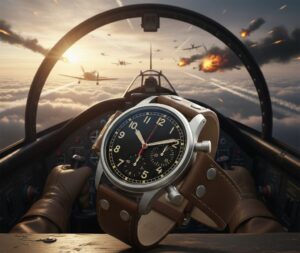
While observation watches handled navigation and time synchronisation, chronographs became equally vital tools for military aviators. Pilots relied on chronographs to calculate flight duration, fuel consumption, speed, and distance. In an era before digital instruments and GPS, these calculations could mean the difference between completing a mission and disaster.
Military pilot chronographs underwent rapid evolution during the Second World War. They featured large pushers for use with gloves, highly legible dials, and movements adjusted to perform reliably despite temperature fluctuations and altitude changes.
Although Breguet is best known today for its refined, complicated luxury timepieces, the brand has deep roots in aviation history. For decades, Breguet supplied chronographs to France’s naval air force, producing highly functional instruments built to strict military specifications.
British RAF-issued chronographs and American military pilot watches followed similar principles. Regardless of nationality, aviation watches shared the same priorities: accuracy, clarity, and ease of use under pressure. These shared design cues would later shape civilian pilot watches long after the war ended.
Read More About Chronograph Watches Here
From Battlefield to Luxury Collectible
What ties all these forgotten military watches together is not just history. Its purpose.
Modern tool watches owe much of their DNA to military innovations:
- Readable dials originated from field and aviation watches.
- Water resistance standards trace back to military dive watches.
- Shock resistance and rugged construction came from field and pilot watches.
- Precision standards came from navigation needs.
Today’s tool watches—whether worn by adventurers, professionals, or style enthusiasts—carry traits that were once battlefield essentials. Collectors and watch lovers treasure these historical pieces not just for their age, but for their role in shaping what a functional timepiece truly is.
Final Thoughts
The watches we admire today—whether rugged field pieces, professional divers, or precise chronographs—are built on a long legacy of military innovation. These forgotten timekeepers weren’t designed for fashion. They were built for survival, efficiency, and accountability.
Collecting them isn’t just about owning an antique; it’s about preserving a piece of history that quietly shaped the wristwear world.


About Post Author