
Timeless Writing Instruments: What Makes Luxury Pens Collectible
The precious luxury pen! This unassuming little instrument that’s been the trusty sidekick of history’s greatest minds is not just a tool for writing but can be a fascinating collectible as well.
In a world of disposable things, luxury pens are the opposite. They’re meant to last, to age, and to tell stories. A fine pen isn’t just a tool for writing. It’s an object of design, craftsmanship, and personal history. For collectors, especially those drawn to vintage collectible pens, the appeal goes far beyond ink on paper.
Over the past decade, the luxury pen market has been quietly but steadily growing. More people are discovering fountain pens, mechanical pencils, and limited-edition writing instruments through social media, speciality retailers, and pen shows. What was once a niche hobby is now a global community of pen enthusiasts, investors, and collectors.
But what actually makes a luxury pen collectible? Why does one vintage pen sell for a few hundred dollars while another commands tens of thousands? Let’s break it down with this guide.
Also Read: Vintage Pen Collecting Guide
What Constitutes a Luxury Pen?
To the untrained eye, many pens look the same. At first glance, it can be hard to tell a mass-produced pen from a true luxury writing instrument.
Experienced users, however, notice the differences immediately.
At a basic level, there are three main categories of pens: fountain pens, rollerball pens, and ballpoint pens. While all three can be well-made, fountain pens are typically the most valuable and collectible, followed by rollerball pens, with ballpoints trailing behind.
This hierarchy exists for a reason.
Luxury fountain pens are usually built around gold nibs, often 14k, 18k, or higher, which are carefully shaped, tipped, and finished to provide a smooth and expressive writing experience.
Beyond the writing mechanism, a luxury pen is defined by several core qualities:
Authenticity and craftsmanship come first. Materials are another key distinction.
In short, a luxury pen isn’t just about appearance. It’s about how the pen is made, how it writes, how long it lasts, and the legacy it carries.
What Makes a Luxury Pen Collectible?
So, what gives a luxury pen its collectible status? What turns a finely made writing instrument into something sought after, preserved, and passed down rather than simply used and replaced?
- Rarity: How Hard Is It to Find?
Rarity is one of the most obvious drivers of value in collectible luxury pens. Simply put, the fewer examples that exist, the more desirable a pen becomes.
Rarity can come from several sources:
- Limited production runs, especially numbered editions
- Discontinued models that were only made for a short time
- Early production pieces from iconic brands
- Pens tied to a specific historical moment
For example, a Montblanc limited edition fountain pen made in a run of 888 pieces will usually attract more attention than a standard production model, even if both are beautifully made. Vintage pens from brands like Parker, Waterman, Sheaffer, and Pelikan can also be rare if they were produced before World War II or during periods of material shortages.
Collectors should look beyond marketing language. “Limited” doesn’t always mean rare. A run of 10,000 pens is technically limited, but it’s not scarce.
- Condition: Originality Matters More Than Perfection
Condition is critical in the vintage pen market, but it’s often misunderstood. Many new collectors assume a pen must look brand new to be valuable. That’s not always true.
Collectors evaluate:
- Cracks, chips, or warping in the body
- Condition of the nib, especially flexibility and tipping
- Original finishes versus later polishing
- Correct parts for the model and era
A lightly worn pen with original parts is usually worth more than a heavily restored one. Over-polishing can soften edges, remove chasing, or erase imprints, all of which reduce collector value.
- Demand: What Collectors Actually Want
Rarity alone doesn’t create value. Demand does.
Some luxury pens are rare but unpopular, while others are widely collected despite higher production numbers. Demand shifts over time, influenced by trends, brand storytelling, and collector education.
High-demand categories include:
- Vintage fountain pens with flexible gold nibs
- Iconic designs like the Parker 51 series
- Limited edition luxury pens tied to art, literature, or history
Demand also grows with visibility. As more pen enthusiasts enter the hobby, interest in certain models increases.
- Provenance: The Story Behind the Pen
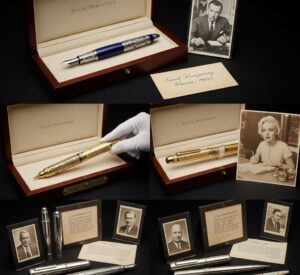
Provenance is about history and ownership. It’s one of the most powerful and sometimes overlooked factors in collectible pens.
A pen becomes more valuable when its story is documented and meaningful. This can include:
- Ownership by a notable individual
- Association with a historical event
- Original purchase receipts or correspondence
For example, a luxury pen owned by a writer, political figure, or artist carries emotional and historical weight. Even without famous ownership, complete sets with original boxes, papers, and documentation add credibility and value.
Collectors should be cautious, though. Pen provenance only adds value when it’s verifiable. Stories without evidence rarely influence serious buyers.
- Brand Heritage and Craftsmanship
Provenance is about history and ownership. It’s one of the most powerful and sometimes overlooked factors in collectible pens.
A pen becomes more valuable when its story is documented and meaningful. This can include:
- Ownership by a notable individual
- Association with a historical event
- Original purchase receipts or correspondence
For example, a luxury pen owned by a writer, political figure, or artist carries emotional and historical weight. Even without famous ownership, complete sets with original boxes, papers, and documentation add credibility and value.
Collectors should be cautious, though. Pen provenance only adds value when it’s verifiable. Stories without evidence rarely influence serious buyers.
- Brand Heritage and Craftsmanship
Brand matters, especially in the luxury pen world.
Manufacturers like Montblanc, Cartier, Parker, Waterman, etc., built reputations over decades, sometimes centuries. Their history of craftsmanship, innovation, and consistency gives collectors confidence.
Luxury pen collecting is often about trust. Collectors trust certain brands to:
- Use high-quality materials
- Maintain design continuity
- Support long-term servicing
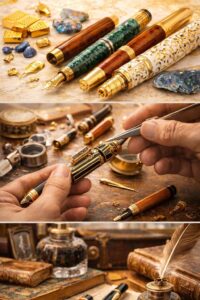
Craftsmanship plays a major role here. Hand-finished nibs, complex filling mechanisms, and meticulous engraving all elevate a pen from a functional object to collectible artifact.
- Materials: From Celluloid to Solid Gold
Materials can dramatically affect collectibility.
Vintage pens made from celluloid are highly prized for their depth, warmth, and patterns that modern plastics can’t replicate. Ebonite, hard rubber, sterling silver, and lacquer also attract collectors when well preserved.
In modern luxury pens, materials like:
- Solid gold or platinum
- Urushi lacquer
- Exotic woods or stones
add both intrinsic and aesthetic value.
- Limited Editions and Artistic Value
Many luxury pen brands release limited editions tied to themes like literature, architecture, or historical figures. Some become collectible. Others don’t.
What separates the two is artistic merit and restraint. Pens that feel thoughtfully designed, rather than heavily decorated, tend to age better in the market.
Collectors should ask:
- Does the design feel timeless?
- Is the theme meaningful or superficial?
- Functionality and Writing Experience
At the end of the day, a pen is still meant to write.
A great writing experience enhances collectibility, especially among enthusiasts who use their pens regularly. Smooth nibs, balanced weight, reliable filling systems, and comfortable grip sections all matter.
Some of the most sought-after vintage fountain pens are beloved because they write beautifully, not just because they look good.
Final Thoughts
A collectible luxury pen is more than an expensive object. It’s a balance of rarity, condition, demand, history, craftsmanship, and emotion. Whether you’re drawn to vintage collectible pens or modern limited editions, the best collections are built slowly and thoughtfully.
Look closely. Ask questions. Learn the stories behind the pens. That’s where real value begins.


About Post Author