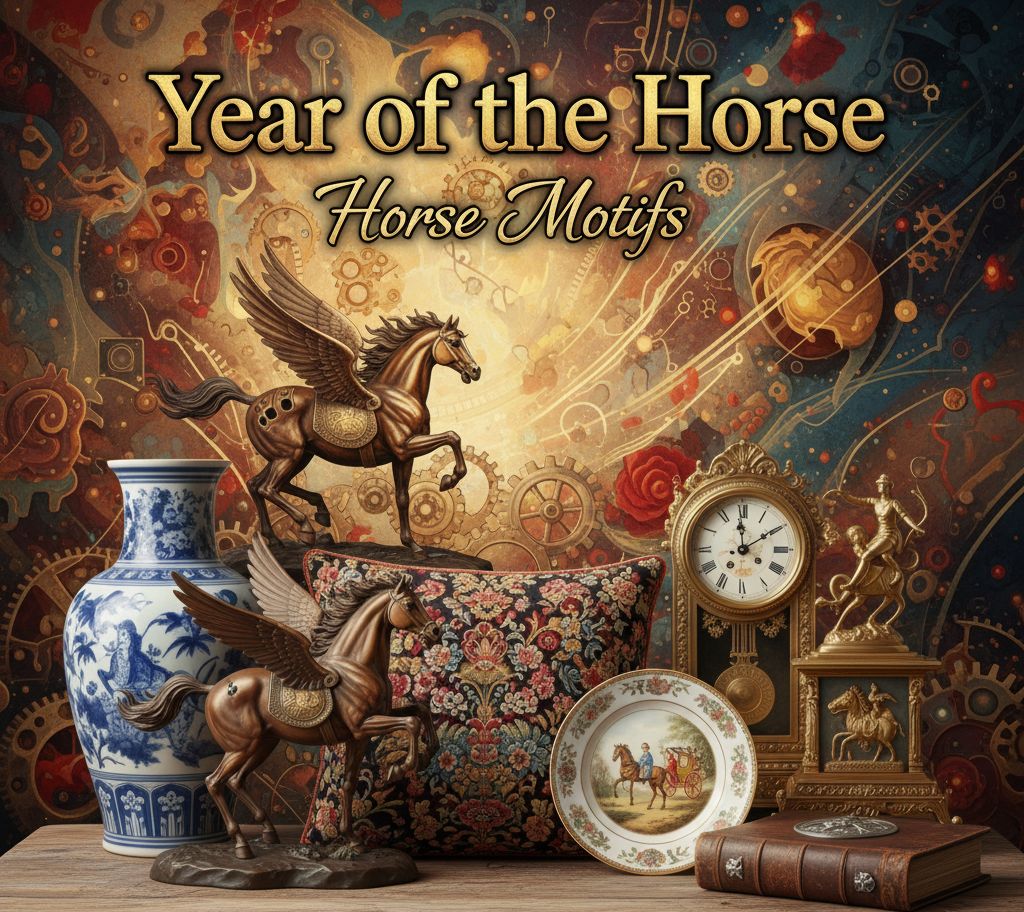
Galloping Through History: The Horse Motif in Design
The Year of the Horse is here. What is the Year of the Horse? What does it mean when the Year of the Fire Horse arrives, a cycle that comes only once every 60 years?
February 17 marked the arrival of the Year of the Horse. The horse, among the twelve zodiac animals, signifies action. It urges decisive movement, bold choices, and forward momentum. With its unwavering association with strength and forward drive, it is no surprise that horses have been part of human history for thousands of years. From literature where a knight rides in on horseback to rescue the vulnerable, to paintings where horses are displayed in all their majesty, the image of the horse has carried deep meaning. That meaning has also found its way into antique and vintage decorative arts.
As we welcome the Year of the Fire Horse, it feels fitting to explore the horse motif in detail. Why has it endured? What does it symbolize? And where do we find it across the world of antiques and interiors?
Also Read: Timeless Elegance of Edwardian Furniture
The Horse in the Chinese Zodiac
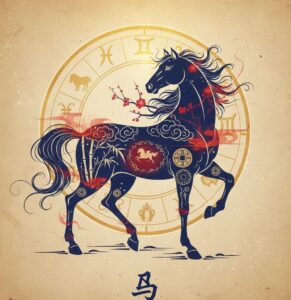
The Chinese zodiac comprises twelve animal signs, each representing a year within a twelve-year cycle. Each sign is believed to confer distinct traits on people born in its year, influencing personality, relationships, and fortune.
The Horse occupies the seventh position in the zodiac. Traditionally, it is associated with speed, endurance, vitality, and power. But the symbolism of the horse extends far beyond one culture.
Symbolism of the Horse Across Cultures and Art

Across civilizations, the horse has carried layered meanings. In ancient Egypt and Mesopotamia, horses appeared in carvings and murals linked to royalty and the elite. Classical Greece celebrated the horse in monumental works such as the Parthenon frieze, emblematic of civic glory.
-
Power and Authority
In many societies, ownership of horses signaled wealth and status. Kings, generals, and nobility rode horses into battle and ceremony.
-
Freedom and Movement
A horse in motion suggests liberation. In art, a galloping horse often captures a desire for independence or a break from limitation.
-
Prestige and Nobility
In European portraiture from the Renaissance onward, aristocrats were frequently painted on horseback to assert rank. The image conveyed command and refinement in a single gesture.
-
Spiritual Strength
In some cultures, the horse was seen as a companion to the divine or a guide between worlds.
-
Loyalty and Partnership
Unlike many other animals used for labour, the horse formed deep bonds with its rider. This partnership elevated it beyond a mere working animal into a symbol of trust and shared purpose.
These meanings naturally translated into decorative arts, where the horse became both ornament and message.
Read More On The Meaning Of Motifs In Decorative Arts
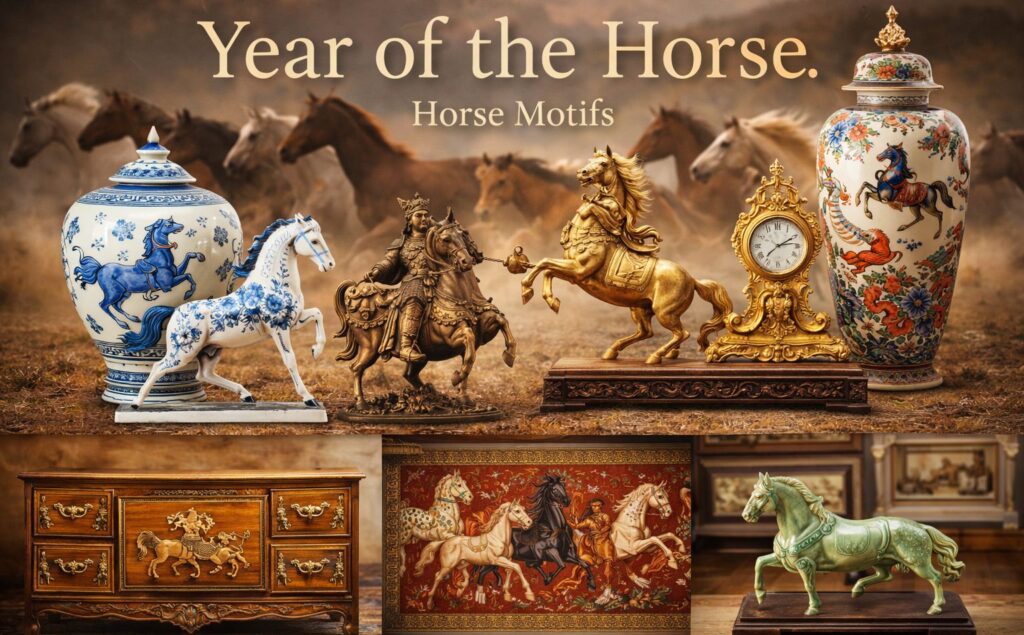
Horse Motifs Across Various Arts And Antiques
Horse motifs in antique decorative arts symbolize power, grace, freedom, and prosperity, frequently appearing across cultures in paintings, sculptures, and textiles. Even in Indian decorative arts and interiors, the horse motif is popular in Vastu Shastra for bringing positive energy. “7 Horse” paintings represent success.
-
The Horse in Art: From Ancient to Contemporary
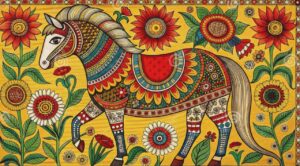
The horse has been a central subject in art for centuries.
Ancient Beginnings
In ancient cave paintings, horses appear as some of the earliest recorded images. They were essential to survival and imagination.
Greek and Roman Era
In classical Greek sculpture, horses symbolized athletic perfection and military prowess. Roman reliefs depicted mounted emperors to communicate dominance.
Renaissance
During the Renaissance, artists such as Leonardo da Vinci studied equine anatomy in detail. The horse became a vehicle for artistic mastery.
Indian Art
Features prominently in Bankura terracotta, Madhubani paintings, and Mughal/Rajput miniatures, representing divine or royal power.
-
Horse Motifs in Decorative Arts
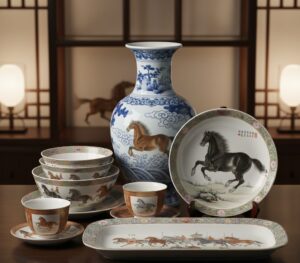
Beyond fine art, the horse found a strong presence in decorative objects.
-
Porcelain
Horse motifs are common in porcelain from both East and West. In China, particularly under the Qing dynasty, porcelain painters frequently depicted horses in landscapes.
In Europe, Meissen porcelain and Sèvres porcelain produced elegant figurines and tableware featuring prancing or rearing horses. These objects were prized by collectors and displayed in cabinets as markers of refined taste.
2. Figurines and Sculpture
Bronze horse sculptures became especially popular in the 19th century. Small-scale reproductions of classical equestrian statues decorated drawing rooms and studies.
Ceramic and terracotta horse figurines, inspired by Tang dynasty models, also appeared in revival styles during the late 19th and early 20th centuries.
3. Mantel Clocks
In French Empire and Victorian interiors, mantel clocks often featured equestrian themes. A bronze horse and rider might stand atop a gilded clock case, merging timekeeping with classical symbolism. These clocks were focal points on marble mantels, reinforcing themes of discipline, motion, and prestige.
4. Silver and Metalwork
Horse motifs also appear in antique silver. Equestrian-themed trophies, stirrup cups shaped like horse heads, and engraved serving pieces reflect the social importance of hunting and racing culture in Britain and beyond.
-
Horse Motifs in Textiles
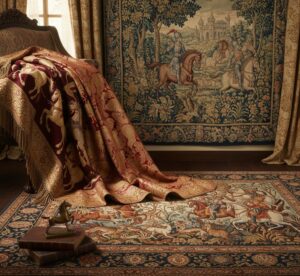
Textiles offer another rich field for the horse motif.
-
Antique Shawls and Embroideries
In Central Asian and Persian textiles, stylised horses often appear in embroidery. They may be simplified into rhythmic shapes, repeating across the fabric.
2. Carpets and Rugs
Equestrian scenes appear in antique Persian and Caucasian rugs. These carpets were not merely floor coverings. They were woven stories.
In European tapestries, hunting scenes with mounted riders were popular in grand estates.
3. Vintage Equestrian Fabrics
In the 20th century, equestrian prints gained renewed popularity. Designers used bridles, saddles, and horse silhouettes in upholstery and scarves.
Why the Horse Motif Endures
The horse motif has survived every shift in taste, from classical grandeur to modern minimalism. Trends fade. Materials change. Yet the horse remains.
-
A Rare Balance of Strength and Grace
It endures because it captures a rare duality. Strength and beauty exist in the same form. In art and decorative objects, that balance translates effortlessly. A bronze horse on a desk feels grounded and powerful.
-
Visual dynamism
A horse suggests motion even when still. A lifted hoof, an arched neck, a flowing mane. The form itself implies energy. In interiors, this creates life and momentum without excess ornament.
-
Adaptability across styles
The motif works in every aesthetic language.
– Classical bronzes emphasize authority.
– Porcelain figurines express refinement.
– Minimalist line drawings convey modern restraint.
-
Universal Meaning
It carries universal meaning. Across cultures, the horse has been linked to travel, conquest, ceremony, and companionship.
-
Emotional resonance
There is something instinctive about our response to horses. They evoke freedom, partnership, and aspiration.
-
Works Across Various Decor
There is also a practical reason for its endurance. The horse fits seamlessly into different interiors. In a formal library, a patinated bronze horse adds gravitas. In a country home, an antique textile woven with equestrian motifs feels natural. In a contemporary apartment, a single sculptural horse form can act as a focal point without overwhelming the space.
Moving Forward with Intention
As the Year of the Fire Horse advances, it calls for courage and decisive action. The horse, whether cast in bronze, painted on porcelain, or woven into antique textiles, continues to embody power, elegance, and prestige.
For collectors and interior enthusiasts, the horse motif offers more than decoration. It connects a space to centuries of artistic heritage and cultural symbolism. A single thoughtfully chosen piece can anchor a room and quietly elevate it.
In welcoming the Year of the Fire Horse, perhaps the question is not only what it has in store for us, but how we choose to move with it.
Giftex: A World Of Collectibles Auction
Giftex presents its renowned “A World of Collectibles” auction this March, bringing together a carefully curated selection of exceptional vintage and antique pieces designed to elevate refined interiors. Collectors and enthusiasts alike are invited to discover rare finds that combine heritage, craftsmanship, and timeless appeal.


About Post Author