
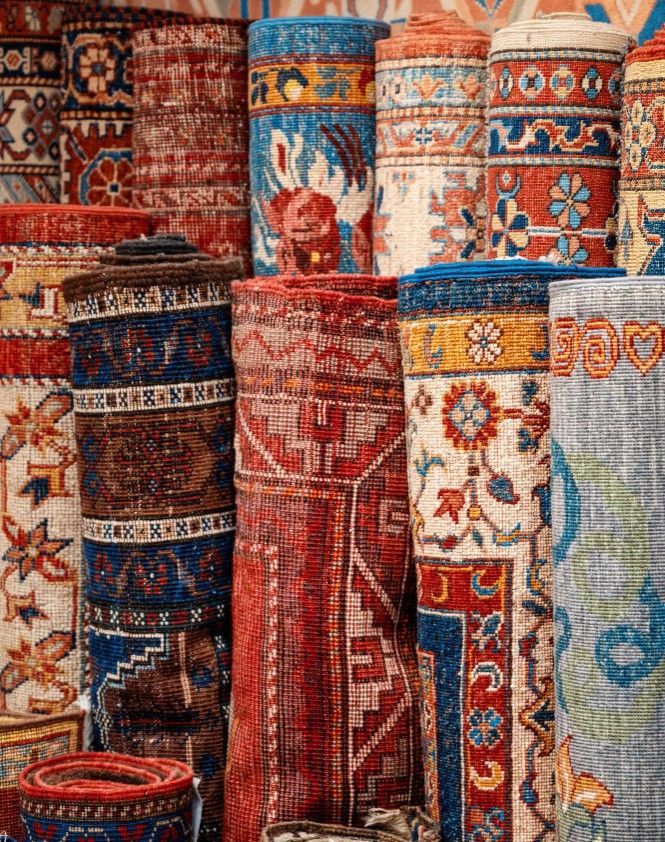
Indian Carpets: A Journey Woven Through Time
India has many undiscovered crafts to its name, many of which date back centuries. Among them, the carpet weaving industry has long been present, yet it is often overlooked despite its deep historical roots. Over time, the craft has been shaped by cultural exchanges, royal patronage, and generations of skilled artisans. Today, it is regarded as one of the largest handicraft industries in the country and is also recognized worldwide for its quality and artistry.
Across different regions, carpets are still produced by hand using techniques that have been passed down through families for generations. As a result, Indian carpets have come to be admired not only as home décor but also as works of art.
In this blog, a journey through the history, materials, and regional styles of Indian carpet weaving will be explored.
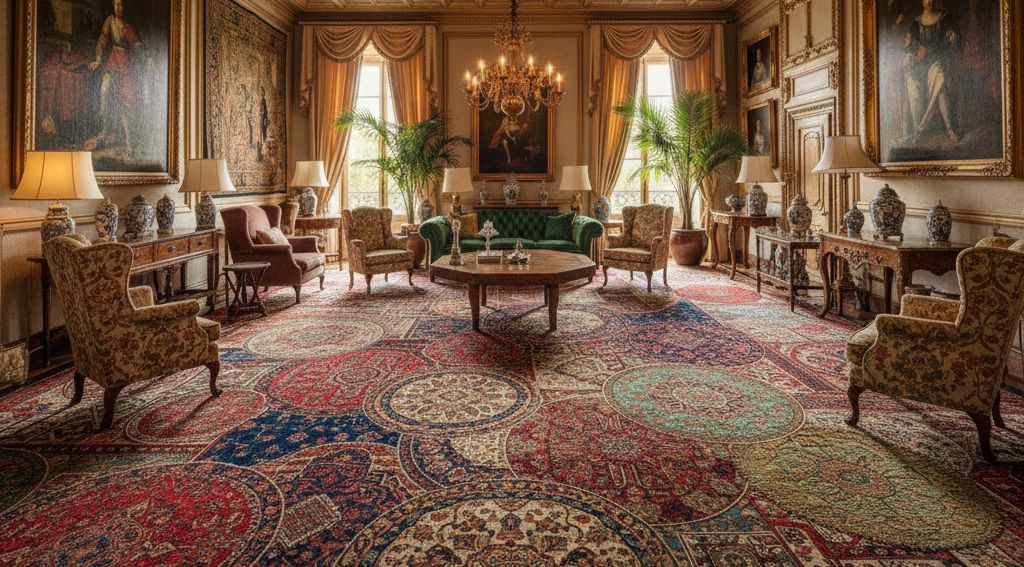
Also Read: Timeless Threads: The Story of Oriental Carpets
Origins of Carpets & Rugs in India
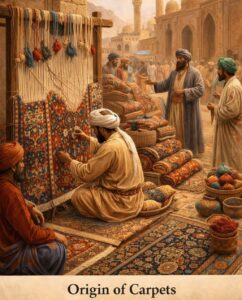
The story of carpet weaving in India can be traced back several centuries. However, before pile carpets were introduced, flat-woven rugs known as dhurries were widely used across the country. These rugs were traditionally woven by women within households and were valued for their versatility. They were used not only as floor coverings but also as meditation mats, bedding, and wall hangings.
However, a major transformation was later introduced during the Mughal era. When the Mughal emperor Babur arrived in India in the 16th century, it was said that he missed the luxury textiles and carpets of Persia. As a result, skilled Persian weavers were invited to India, and the art of weaving pile carpets was gradually introduced.
During the reign of Emperor Akbar, the craft was further developed and refined. Many of the finest Mughal carpets admired today are believed to have originated during Akbar’s rule.
The Process of Carpet Weaving
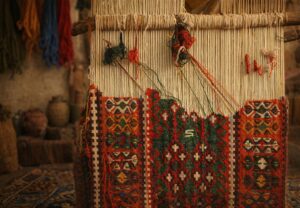
The process of carpet weaving in India is known to be extremely elaborate and labour-intensive. Each carpet passes through several stages before it is completed.
- First, the design is created. Traditionally, detailed patterns are drawn on graph paper so that artisans can follow them while weaving.
- Second, the loom is prepared. The loom acts as the foundation upon which the carpet is woven. Vertical threads known as the warp are stretched tightly across the loom, while horizontal threads called the weft are interwoven during the weaving process.
- Third, the knotting stage begins. In hand-knotted carpets, each knot is tied individually around the warp threads.
- Finally, once the weaving has been completed, the carpet is trimmed, washed, and stretched.
Materials Used in Rugs and Carpets
Several natural materials are traditionally used in Indian carpets.
- Wool is one of the most common materials, as it provides durability and warmth.
- Silk is also widely used, especially in luxury carpets produced in Kashmir. Silk carpets are valued for their soft texture and fine detailing.
- Cotton is typically used for the warp and weft threads because it provides strength and stability.
- In addition, natural dyes were historically used to colour the threads. These dyes were extracted from plants, minerals, and insects. As a result, carpets often displayed rich and earthy tones that aged beautifully over time.
Evolution of the Carpet Industry in India
Over the centuries, the Indian carpet industry has gone through several transformations.
- During the Mughal period, carpets were primarily produced for royal courts and wealthy patrons. The designs reflected Persian influence, but local motifs and colours were gradually incorporated.
- However, during the British colonial period between the 18th and 20th centuries, the industry faced significant challenges.
- After India gained independence in 1947, efforts were made to revive the traditional craft. Government initiatives and export programs were introduced to support artisans.
- Today, Indian carpets are exported across the world.
Regional Variations in Indian Carpets
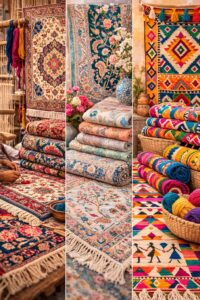
Different regions of India have developed their own unique styles of carpet weaving.
- Uttar Pradesh, particularly Bhadohi, Mirzapur, and Agra, is often referred to as the Carpet Capital of India. Nearly 90 per cent of the country’s carpets are produced here. Hand-knotted wool and silk rugs with Persian-inspired designs are especially popular in this region.
- Kashmir is known for its exceptionally fine silk carpets. These carpets often feature intricate floral patterns and detailed motifs that require thousands of knots per square inch.
- Rajasthan, including cities like Jaipur, Bikaner, and Ajmer, is famous for durable woollen carpets and colourful dhurries. The designs here are often bold and geometric.
- In the North-Eastern states, such as Arunachal Pradesh and Sikkim, Tibetan-style carpets are commonly woven.
The Allure of Vintage Indian Carpets
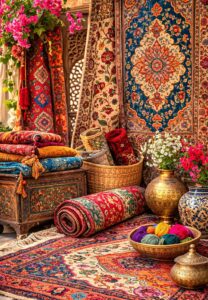
While modern carpets continue to be produced in large numbers, vintage Indian carpets have been receiving increasing attention from collectors and interior designers.
Vintage carpets are generally defined as carpets that are at least 20 to 100 years old. Over time, the fibres soften, the dyes mellow, and the patterns develop a distinctive character. As a result, each vintage carpet carries a unique sense of history.
Unlike machine-made rugs, vintage Indian carpets were almost always created by hand. Because of this, small imperfections are often present. However, these irregularities are usually considered signs of authenticity and craftsmanship.
Furthermore, vintage carpets often reflect design traditions that are no longer widely produced. Persian-inspired motifs, Mughal floral patterns, and traditional Indian symbolism can frequently be seen in older carpets. Consequently, these rugs are often valued not only as decorative pieces but also as cultural artefacts.
In interior design, vintage Indian carpets are often used to add warmth and character to modern spaces. Their muted colours and intricate patterns allow them to blend with a variety of décor styles, from traditional homes to contemporary apartments.
Protecting and Encouraging the Craft
Despite its global recognition, the carpet weaving industry still faces several challenges. Many artisans struggle with low wages, limited access to markets, and competition from machine-made rugs.
However, various initiatives have been introduced to support the craft. Artisan cooperatives, fair trade organizations, and government programs have been established. Additionally, greater awareness among consumers has been encouraged. By choosing handmade carpets, buyers can help sustain the livelihoods of weaving communities and protect a centuries-old craft.
Conclusion
Carpet weaving is an art that has been alive in India in one form or another since time immemorial. From the simple dhurries woven in households to the intricate silk carpets produced in royal workshops, the craft has evolved through centuries of cultural influence and artistic innovation.
Although machine-made products have taken over much of the global market, the spirit of Indian artisans has ensured that handmade carpets continue to survive. The vintage Indian rugs admired today are reminders of that legacy.
Ultimately, the beauty of Indian carpets lies not only in their patterns or materials but also in the stories they carry. As appreciation for these works of art continues to grow worldwide, the timeless allure of vintage Indian carpets is likely to endure for generations to come.
Giftex: A World of Collectibles Auction
This March, Giftex returns with yet another exciting Collectibles Auction, bringing together a remarkable world of rare finds and timeless treasures.
From antique treasures to vintage collectibles, the auction will feature an exceptional selection for collectors and enthusiasts alike. Among the highlights are beautifully preserved vintage carpets, exquisite shawls, and other unique pieces that reflect history, craftsmanship, and enduring style.


About Post Author