Chinese Famille Porcelain: A Legacy of Colour & Craft
The word “China” carries a rare double meaning, though both are in the context of the Chinese nation. It could mean the country “China” with centuries of history and culture behind it, or it could mean that beautiful, polished ceramic, typically a blue and white Chinese porcelain. This shared meaning is no coincidence. It emerged when Chinese porcelain began its long journey westward along the Silk Road, becoming so closely associated with its place of origin that the material itself took the country’s name.
For centuries, Chinese porcelain has been admired as a luxury object, prized by emperors, nobles, and collectors across Asia, the Middle East, and Europe. Early exports were dominated by blue-and-white Chinese ceramic wares until the late seventeenth century, when Chinese porcelain painters began embellishing their wares with multicoloured overglaze enamels. With vibrant new hues now possible, Chinese porcelain took a colourful turn. These colorful ware are collectively called the Chinese Famille porcelain.
Chinese porcelain had always been considered a luxury treasure and have adorned the rooms of royalty and nobles alike.
In the modern times, this antique treasure is while still retaining its majesty and grandeur, has become a cosy part of everyday life. A blue and white Chinese porcelain bowl holding fruits, a Famille vase holding fresh flowers and porcelain plates used as both wall art and for elevated dining experience, these Chinese ceramics continues to enchant by blending aesthetics with daily living.
In this guide, we are going to explore the fascinating history of Chinese Famille porcelain.
Learn More About Gilt Porcelain Here
What Is Chinese Famille Porcelain?
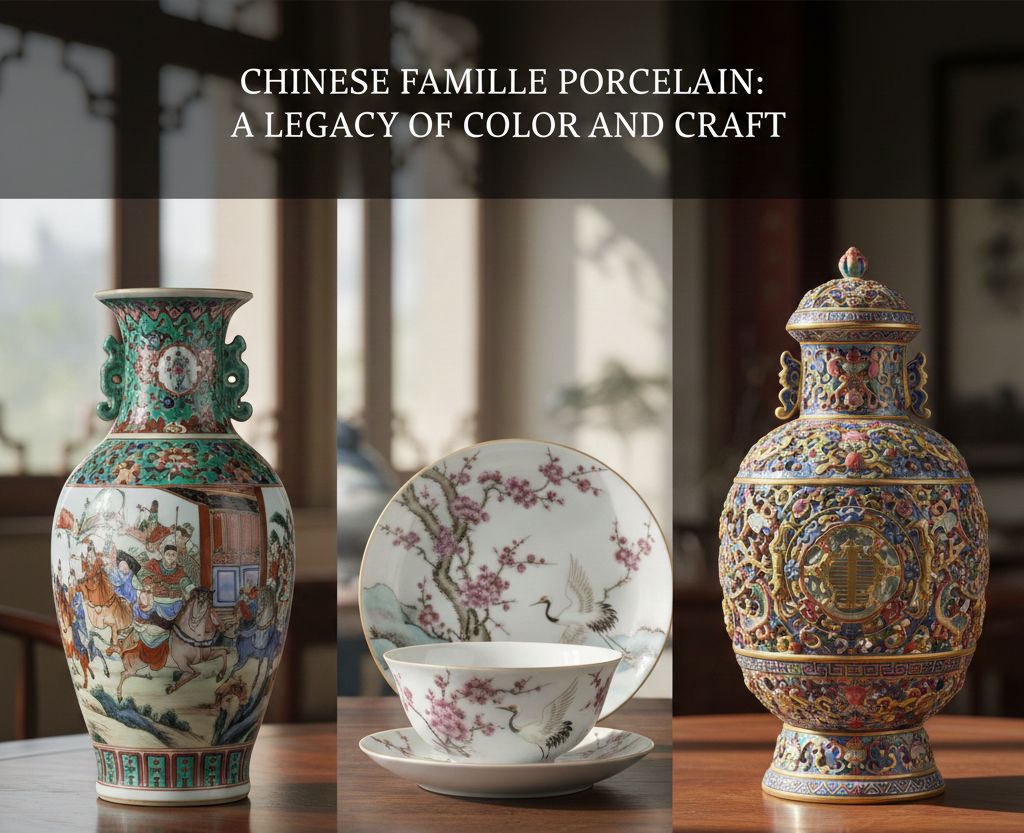
“Famille” is a French term meaning “family,” introduced by European collectors in the nineteenth century to classify Chinese porcelains by their dominant enamel colours. Unlike earlier underglaze blue decoration, Famille porcelains are defined by overglaze enamels applied after the first firing, then fixed with additional firings at lower temperatures.
This technique allowed for a wider palette and more painterly detail. Figures gained expressive faces, flowers showed subtle shading, and scenes became more narrative.
History And Background of Chinee Famille Porcelain
Porcelain truly entered its golden era during the Ming Dynasty. Jingdezhen became known as the “Porcelain Capital” of the world. However, it was the Qing Dynasty pushed ceramic craftsmanship to its technical peak, especially during the reigns of Kangxi, Yongzheng, and Qianlong.
- The Kangxi Era: Birth of Famille Verte and Enamel Ware
The Kangxi period marked a turning point in Chinese porcelain. After political instability at the end of the Ming dynasty, imperial kilns at Jingdezhen were revived and improved. New enamel pigments, some imported through trade routes, gave artists brighter greens, yellows, reds, and blues.
Kangxi era introduced Famille Verte, or “Green Family,” porcelain and Enamel Ware, with bright imported pigments and intricate overglaze designs.
- The Yongzheng Era: The Elegance of Famille Rose
https://www.youtube.com/watch?v=DCh2zXaBTgc
Video Credit: China Cultural Expedition
The short but artistically profound reign of the Yongzheng Emperor brought a new aesthetic to Chinese porcelain, favouring elegance, refinement, and a more restrained beauty. It was during this period that Famille Rose, or Fencai (“pink colours”), emerged and rapidly gained prominence. The defining characteristic of Famille Rose is its opaque pink or purple enamel, derived from colloidal gold, which allowed for unprecedented nuanced shading and a soft, powdery pastel look.
- The Qianlong Era: Grandeur and Extravagance
The Qianlong Emperor’s reign marked the peak of the Qing Dynasty’s power and prosperity, and this was reflected in the porcelain produced during his time. Qianlong-era ceramics were known for their grandeur, extravagance, and technical brilliance. This era is famous for ambitious creations such as revolving vases with hidden inner layers that could spin, revealing different scenes through openwork panels. Some pieces combined Chinese motifs with European influences, reflecting increased contact with the West.
Key Types of Chinese Famille Porcelain
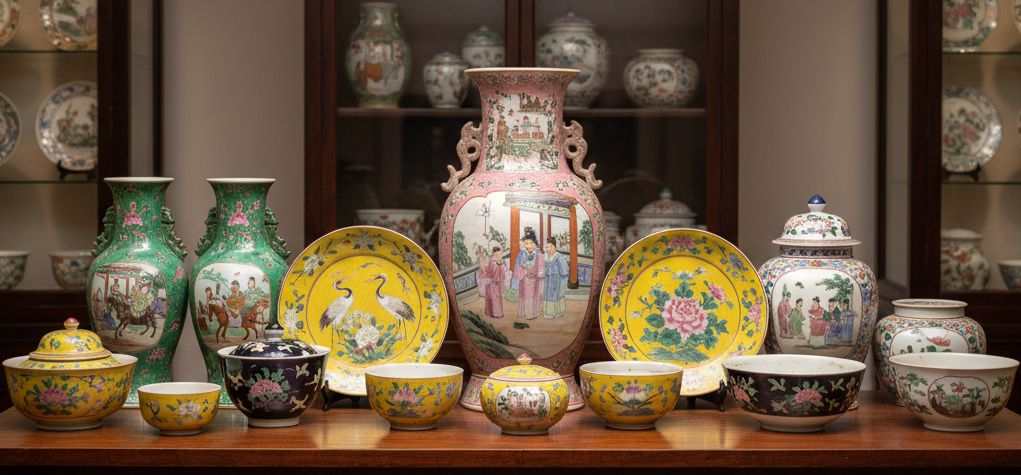
- Famille Verte (Green Family)
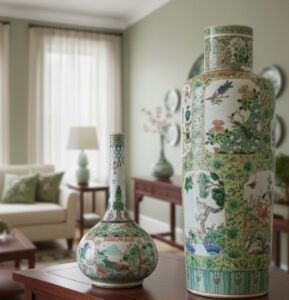
Dominant during the Kangxi era, Famille Verte is characterized by strong, vibrant green enamels. Scenes are often busy and narrative-driven, depicting scholars, warriors, children at play, or episodes from classical literature. These pieces feel lively and expressive, making them visually striking even from a distance.
- Famille Rose (Pink Family)
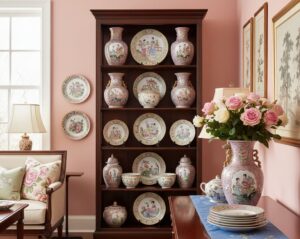
Famille Rose features soft pink and purple enamels, along with pale blues, yellows, and greens. Popular during the Yongzheng and Qianlong periods, these wares often depict flowers, birds, landscapes, elegant ladies, and even European figures or decorative patterns.
- Famille Jaune (Yellow Family)
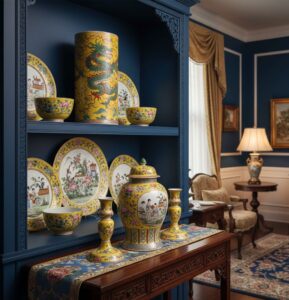
Famille Jaune uses a rich yellow ground, traditionally associated with imperial authority. Designs are often painted in Famille Verte-style enamels on top of the yellow glaze. These pieces were usually reserved for court use and carry strong symbolic meaning.
- Famille Noire (Black Family)
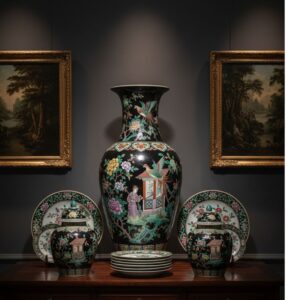
Famille Noire porcelain features a black ground decorated with colorful enamels, often in the Famille Verte palette. Though rarer, these pieces are highly dramatic, with strong contrast between the dark background and vivid decoration.
Motifs and Their Meanings
The motifs adorning Chinese Famille porcelain are not merely decorative; they are imbued with rich symbolism, reflecting Chinese culture, beliefs, and aspirations.
- Flora and Fauna: Flowers like peonies (wealth, honour), lotus (purity), chrysanthemums (longevity), and plum blossoms (resilience, beauty in adversity) are common. Birds such as phoenixes (empress, good fortune), cranes (longevity) also frequently appear.
- Mythological Creatures: Dragons (imperial power, strength, good fortune), qilin (good omens, prosperity), and fenghuang (phoenix, auspiciousness) are powerful symbols.
- Human Figures and Narrative Scenes: Scenes from classical literature, historical events, famous plays, or everyday life are popular, often conveying moral lessons or illustrating cultural narratives.
- Landscapes: Mountains, rivers, and pavilions evoke harmony with nature and philosophical contemplation.
Decorating Tips with Chinese Famille Porcelain
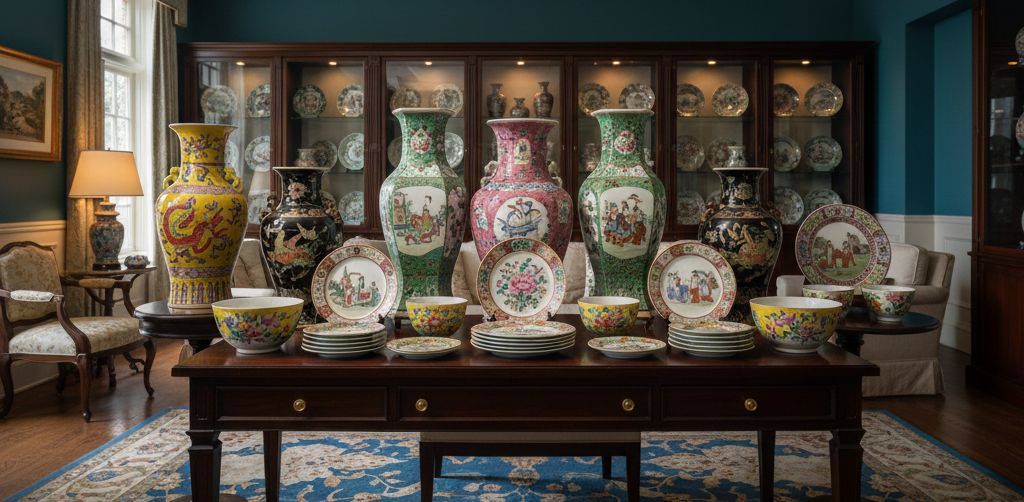
Incorporating Chinese Famille porcelain into your home décor can add a touch of timeless elegance, vibrant colour, and historical depth.
- Vases as Focal Points: A large Famille Rose or Verte vase, especially on a console table, mantelpiece, or pedestal, can serve as a stunning focal point.
- Wall Art with Plates: Decorative plates can be arranged in clusters or rows on a wall, creating an eye-catching display.
- Shelf Styling: Smaller bowls, ginger jars, or figurines can be artfully arranged on bookshelves or display cabinets.
- Contrast and Complement: Use these colorful pieces to add a pop of colour to a neutral room. Conversely, in a vibrant space, choose pieces with complementary colours to tie the room together.
A Legacy of Colour and Craft
Chinese Famille porcelain represents one of the most creative chapters in ceramic history. From the bold energy of Kangxi Famille Verte porcelain to the refined beauty of Yongzheng Famille Rose and the extravagant brilliance of Qianlong masterpieces, these wares reflect the values, ambitions, and artistry of their time.
While once reserved for emperors and nobles, Famille porcelain has found a place in modern life. It continues to bridge past and present, art and function, tradition and daily use.
Owning or appreciating a piece of Famille porcelain is not just about possessing an object; it’s about holding a tangible piece of history, a vibrant narrative of imperial grandeur and artistic mastery.


About Post Author