
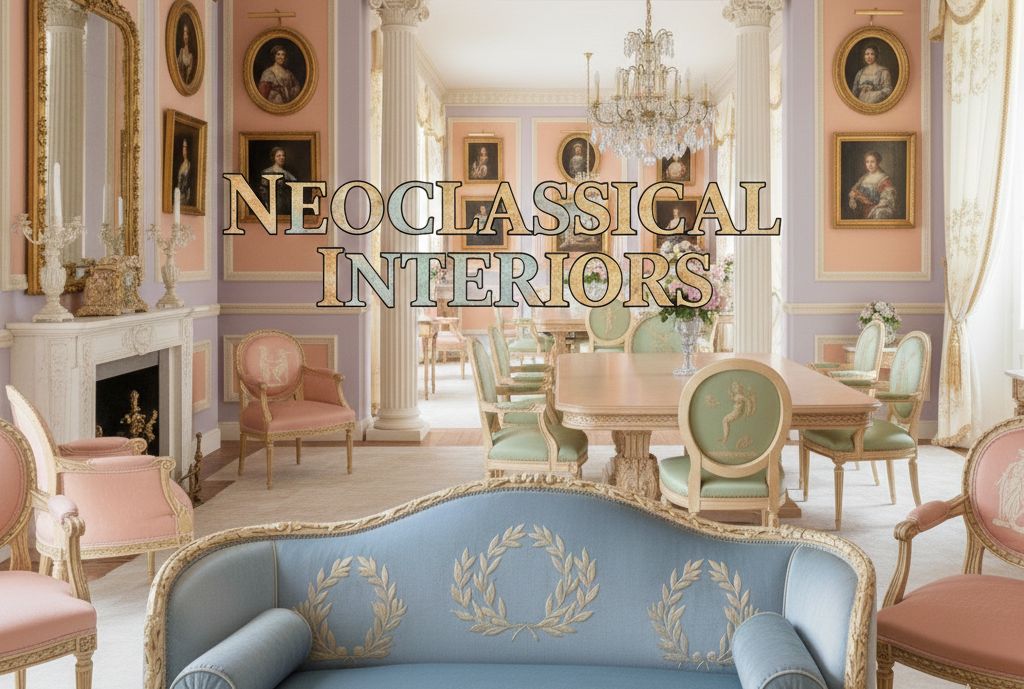
Neoclassical Furniture: The Enduring Appeal of Classical Elegance
It was the time of the Industrial Revolution. Global trade was expanding. Amidst this, society began to move away from the ornate extravagance of Rococo towards Neoclassical design. The discoveries of ancient sites like Pompeii and Herculaneum further fuelled this fascination, as affluent society members sought to recreate the refined beauty of the classical world within their own homes. Thus, the neoclassical movement, emerging during the late 18th century, was driven by both societal and political changes
This refined art movement drew inspiration from traditional design in a new, more modern approach. This movement of decorative art was represented in literature, music, visual art, architecture and of course, the furniture style during the 18th century.
The best way to describe neoclassical furniture design would be a style of furniture that incorporated decorative motifs, detailing, and classical antiquity throughout its designs.
Today we’ll explore the features of neoclassical furniture, key pieces of this furniture style and how to build your own Neoclassical-inspired space.

Also Read: A Guide To Antique Furniture Maintenance
The Birth and Development of Neoclassicism
Neoclassicism began to take shape in the mid-18th century, during a time of immense cultural and political transformation. Europe was restless. Old systems were being questioned. Against this backdrop, artists and designers looked backward, finding inspiration in the perceived clarity and moral strength of ancient Greek and Roman civilizations. What emerged was not simple imitation, but reinterpretation. Designers adapted classical forms to modern needs, emphasizing proportion, symmetry, and craftsmanship.
From France, Neoclassicism spread throughout Europe and into Britain. Each region interpreted the style slightly differently, influenced by local traditions and tastes. Despite these regional variations, the core principles remained consistent.
Neoclassical Furniture Characteristics
- Symmetry and Balance
Symmetry is one of the most defining features of Neoclassical design. Furniture pieces are carefully proportioned to create a sense of visual equilibrium. Tables, cabinets, and seating often mirror themselves from left to right, producing a calm, orderly appearance.
- Geometric Precision
Neoclassical furniture marked a clear departure from the playful curves and elaborate scrolls of the Rococo period. Instead, designers favoured straight lines, crisp angles, and clearly defined shapes. Rectangles, squares, circles, and ovals appear frequently, creating furniture that feels architectural rather than decorative.
- Classical Motifs and Ornamentation
While Neoclassical furniture avoids excess, it is far from plain. Decoration is present, but it is intentional and symbolic. Common motifs are drawn directly from Greek and Roman architecture and art. These include fluted columns, pediments, laurel wreaths, acanthus leaves, and rosettes.
- Tapered and Fluted Legs
One of the most recognizable details in Neoclassical furniture is the leg design. Legs are typically straight, tapered, or fluted, inspired by classical columns. This replaces the cabriole legs popular in earlier periods, which featured dramatic curves.
- Materials and Craftsmanship
Neoclassical furniture places great importance on quality materials and skilled craftsmanship. Woods such as mahogany, walnut, and oak were commonly used, chosen for their durability and fine grain. Surfaces were often polished to a soft sheen rather than a high gloss.
Key Pieces of Neoclassical Furniture
- Dining Tables
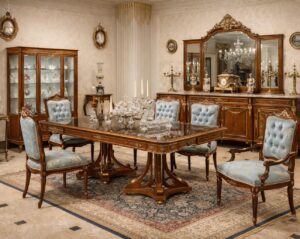
Neoclassical dining tables are often the centerpiece of formal interiors. Typically, rectangular or oval, they feature sturdy construction and architectural legs. Ornamentation is minimal but precise.
A hallmark of Neoclassical dining tables is the use of classical motifs, such as fluted columns, adorned with intricate carvings inspired by ancient Greek and Roman architecture.
- Neoclassical Settee and the Daybed
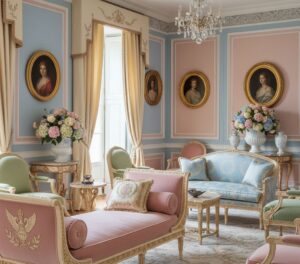
Elegant seating is a cornerstone of Neoclassical design. Chairs and sofas from this period emphasize upright posture and refined comfort. Common forms include the Neoclassical settee and the daybed, both inspired by ancient Roman reclining furniture.
Frames are usually carved wood with restrained detailing. Upholstery tends toward muted tones, often accented with classical patterns.
- Classical Side Tables
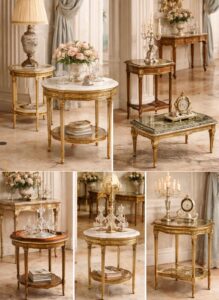
Side tables in the Neoclassical style are functional works of art. Often circular or square, they feature slender legs and minimal ornamentation. Some include marble tops or inlaid surfaces that reference classical geometry. These pieces work well as accent furniture, adding sophistication without visual clutter.
- Antique Mirrors
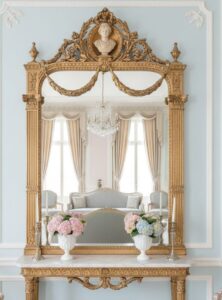
Mirrors with ornate classical frames are quintessential in Neoclassical interiors. Frames often feature laurel wreaths, columns, or pediments, echoing ancient architectural forms. Beyond their decorative role, mirrors were used to enhance light and create a sense of grandeur in formal rooms.
- Desks, Consoles, and Dressers
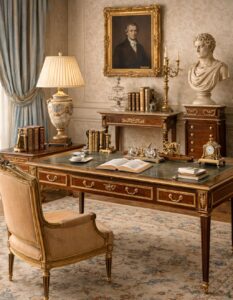
Neoclassical desks and consoles combine elegance with practicality. Writing desks often include fine drawers and restrained brass hardware, while console tables are designed to sit against walls, emphasizing symmetry. Dressers from this period showcase precise joinery and subtle decorative panels, balancing beauty with storage.
Neoclassical Elegance: Enrich Your Home with Timeless Furniture
Creating a Neoclassical interior requires patience and a discerning eye. Authentic antique pieces are not always easy to find, and quality varies widely. The key is focusing on proportion, materials, and craftsmanship rather than age alone.
In recent years, online auction houses have become an increasingly valuable resource for sourcing Neoclassical furniture. Platforms such as Giftex make it possible to access antique and vintage pieces from across regions.
Tips for Bringing Neoclassical Style Into Your Home
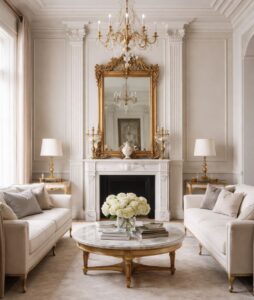
You don’t need to recreate an 18th-century salon to enjoy Neoclassical design. In fact, the style works best when applied thoughtfully and selectively.
- Start with a Statement Piece
Begin with one strong focal point rather than trying to furnish an entire room at once. A Neoclassical dining table, an antique mirror with a classical frame, or an elegant settee can anchor the space. These pieces naturally draw attention because of their proportions and craftsmanship, so they don’t need competition.
- Use Symmetry in Layout
Symmetry is central to Neoclassical interiors, and it’s something you can easily apply without buying new furniture. Arrange seating in pairs, center artwork or mirrors above consoles, and balance both sides of a room visually
- Keep the Colour Palette Refined
Neoclassical interiors favour light, restrained colours that enhance architectural clarity. Neutral tones such as cream, ivory, soft gray, and warm beige create a calm backdrop. These shades allow the form and material of the furniture to take center stage.
- Mix Old and New Thoughtfully
Neoclassical furniture pairs surprisingly well with contemporary elements when done carefully. A classical table beneath modern lighting or an antique mirror above a minimalist console can create a layered, collected look.
- Focus on Quality Over Quantity
Neoclassical design values craftsmanship and proportion above abundance. It’s better to have fewer, well-made pieces than a room filled with furniture.
Neoclassical Style: A Classical Revival
Neoclassical furniture endures because it speaks to universal ideals. Balance, clarity, and timeless beauty never go out of style. Born from the intellectual rigour of the Enlightenment and shaped by political change, Neoclassicism offers more than visual appeal. It offers a sense of order in an ever-changing world.
Whether through an antique settee, a refined dining table, or a classically framed mirror, Neoclassical furniture brings history into the present. It invites us to slow down, appreciate craftsmanship, and surround ourselves with pieces designed to last.


About Post Author