The Enduring Charm of Regency Era Silver
If you have watched Bridgerton, you have seen Regency silver at work, even if you did not notice it. It glints softly on candlelit dining tables, rests in graceful tea services, and frames the rituals of polite society. Silver in the Regency era was not just decoration. It was a marker of status, a practical household material, and a quiet symbol of refinement. To understand Regency silver is to understand how people lived, entertained, and expressed wealth in early nineteenth-century Britain.
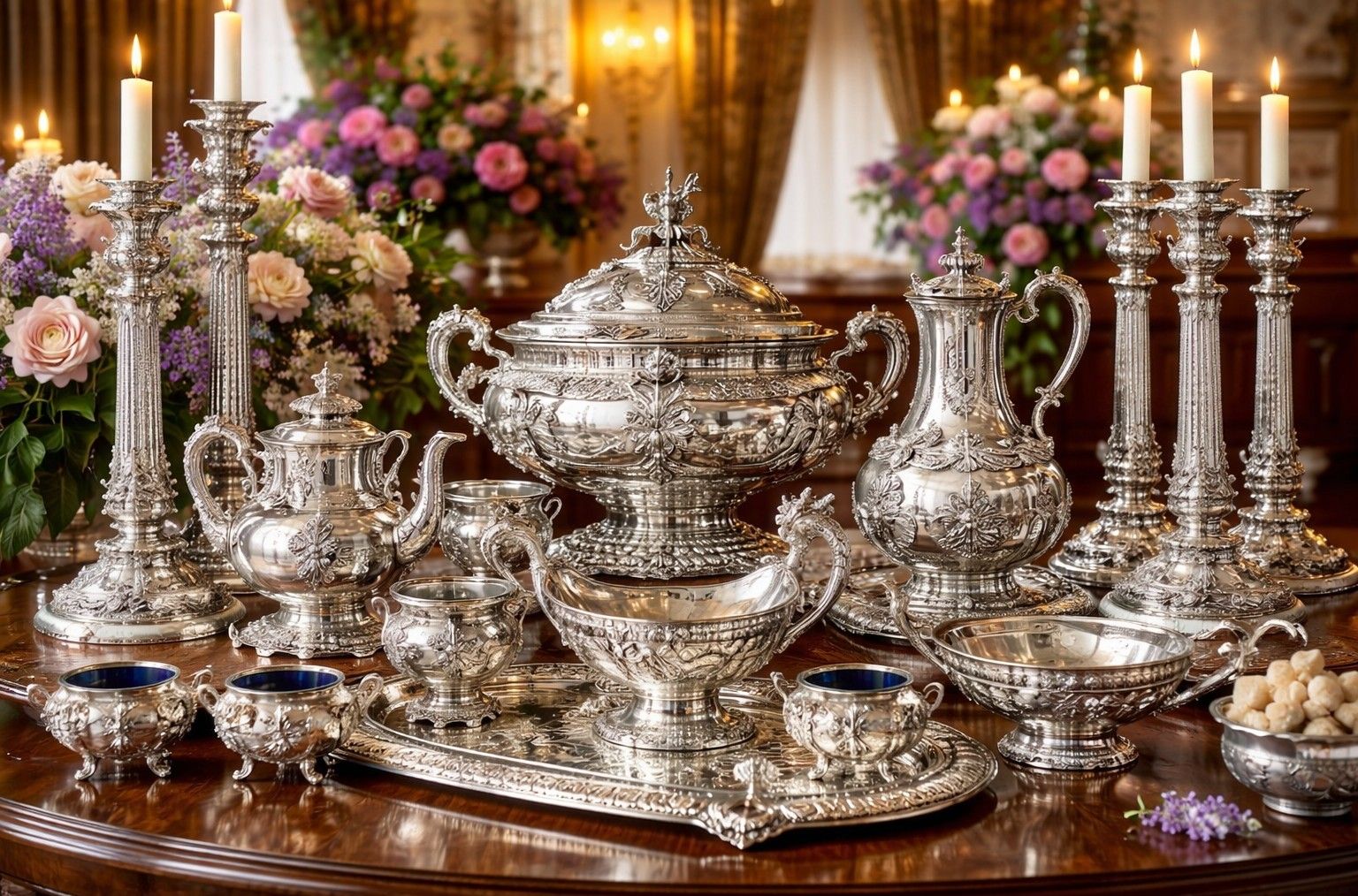
Regency era silver represents a distinct and highly regarded phase in the development of British antique silver. Made in the early nineteenth century, these pieces reflect a move toward restrained design, classical influence, and careful craftsmanship. Silver from this period was produced in large quantities for domestic use, yet it remained a clear indicator of wealth, education, and social position.
Unlike Rococo, the term Regency refers to a period rather than a style. In fact, the silver made during the first quarter of the nineteenth century is splendidly diverse. Much of it was startlingly new, using the motifs of classical decoration in revolutionary ways with an entirely fresh twist.
That same silver exists today, not behind museum glass, but as collectible antiques with real presence and history. Regency era silver is especially appealing because it balances beauty with usefulness. These pieces were made to be handled, poured from, lifted, and used every day, which gives them a warmth that later, more decorative styles often lack.
Whether you are interested in history, antiques, interior design, or period dramas, Regency-style silver offers a fascinating window into the world of the British upper and middle classes.
Also Read: Edwardian Era Silver
What is Regency Era Silver
The Regency silver era (roughly 1811–1820 officially, but extending from 1795 to 1837 in taste) is renowned for producing some of the most elaborate, opulent, and eclectic decorative arts in British history. Emerging during a period of extreme wealth for the aristocracy and the Napoleonic Wars, Regency silver represents a shift from simple neoclassical elegance to a dramatic, heavily ornamented style heavily influenced by antiquity and the French Empire.
Regency Style Silver Motifs
The distinctive look of Regency silver is closely tied to the work of leading English silversmiths, most notably Paul Storr, whose designs helped define the period. Regency ornamentation is rarely excessive. Instead, decoration is deliberate, often symbolic, and drawn from classical, mythological, and exotic sources.
Classical and Neoclassical Motifs
Classical influence sits at the heart of Regency design. Inspired by ancient Greek and Roman art, these motifs reflect the period’s admiration for balance, order, and idealised beauty.
- Acanthus Leaves
Acanthus leaves were widely used on Regency silver, particularly along borders, on handles, and at the bases of candlesticks and candelabra.
- Shells
Scallop shells appear frequently on rims, feet, and applied decorative elements.
- Masks
Decorative masks were a recurring feature, with lion masks symbolising strength and authority.
- Figures and Mythical Creatures
Winged busts, cherubs, sphinxes, and griffins appear across higher-end Regency silver
- Architectural Elements
Many Regency silver forms borrow directly from architecture. Fluted columns, urn-shaped bodies, and swagged garlands reflect the influence of ancient temples and monuments.
Egyptian and Exotic Motifs
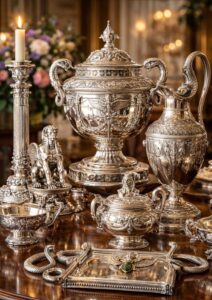
Regency silver also reflects a fascination with distant cultures, driven in part by travel, trade, and political events.
- Sphinxes and Lotus Blossoms
Napoleon’s Egyptian campaigns sparked widespread interest in Egyptian design. As a result, sphinxes and lotus blossoms began to appear on silver, especially on grand or ornamental pieces.
- Serpents
Serpent-headed handles were used on items such as inkstands and silver-gilt objects.
- Chinoiserie
Elements inspired by Eastern design, including pagodas, dragons, and birds of paradise, reflect the period’s fascination with Asia.
Naturalistic and Heraldic Motifs
Alongside classical and exotic influences, Regency silver often incorporates natural and heraldic decoration.
- Floral Designs
Flowers and scrolling vines were applied to silver surfaces, sometimes in a restrained manner, sometimes more boldly.
- Laurel Wreaths
Laurel wreaths were among the most popular decorative symbols of the period.
Types of Regency Silver
Regency silversmiths produced a wide range of both functional and ornamental silver, with particular emphasis on dining and entertaining.
- Candelabras and Candlesticks
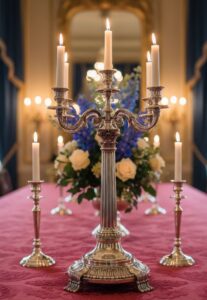
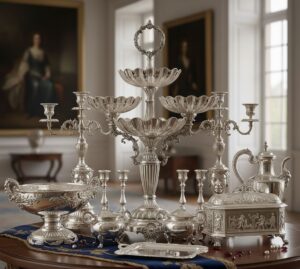
Often designed in a classical revival style, Regency candelabras and candlesticks frequently feature fluted Corinthian columns, stepped bases, and, in more elaborate examples, figural stems or ornate branching arms.
- Wine Coolers and Ice Pails
Among the most dramatic Regency silver forms, wine coolers and ice pails were large, sculptural objects.
- Soup Tureens and Entrée Dishes
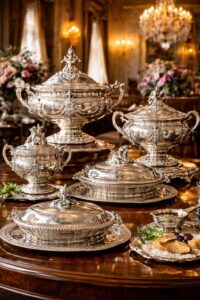
Grand and substantial, soup tureens and entrée dishes were designed to dominate the dining table. Often raised on pedestal bases and fitted with decorative handles or finials, they served as focal points during formal meals.
- Tea and Coffee Sets
Tea and coffee services were essential to Regency domestic life and carried strong social meaning. Sets were often carefully matched and decorated with floral motifs, scrolling borders, or classical detailing.
- Table Centrepieces and Epergnes
Elaborate table centrepieces, often called epergnes, were created to fill the centre of the dining table.
- Flatware and Cutlery
Regency flatware ranges from restrained to richly decorated. Popular patterns included Kings and Queens patterns, often featuring high-relief ornamentation.
Decorating with Regency Silver Today: Simple Tips
- Use silver as an accent, not a set
You do not need matching pieces. A single Regency candlestick, tray, or bowl can add character without overwhelming a space.
- Mix old silver with modern surfaces
Regency silver looks especially striking against contemporary materials like marble, glass, dark wood, or linen. The contrast keeps it fresh rather than formal.
- Let candlelight do the work
Silver comes alive in soft light. Use Regency candlesticks on dining tables, sideboards, or mantelpieces to highlight their shape and surface.
- Think beyond the dining room
A silver tray works beautifully on a coffee table, bedside table, or bathroom counter. Tea pieces can hold flowers or be styled on open shelving.
- Group pieces in odd numbers
Display two or three items together rather than a full service. Vary heights and forms to create a natural, collected look.
- Use silver for everyday moments
Regency silver was made to be used. A cream jug for milk, a small bowl for keys, or a tray for letters keeps the silver part of daily life.
- Balance ornaments with space
If a piece has decorative motifs or sculptural detail, give it room. Clean surroundings allow the craftsmanship to stand out.
- Seasonal styling works well
Silver adapts easily. Pair it with flowers in spring, fruit in summer, and candles in winter. It changes mood without losing elegance.
A Silver That Still Feels Alive
Regency era silver has a presence that goes beyond age or value. It feels alive because it was made for living. It reflects a time when objects were chosen carefully, used daily, and expected to last.
Whether discovered through a period drama or found in an antique shop, Regency silver continues to capture attention. Its appeal lies in its balance of beauty and practicality, history and usefulness. That balance is what makes it timeless.
Giftex: A World Of Collectibles Auction
This February, Giftex presents A World of Collectibles, an online auction showcasing a carefully curated selection of silverware alongside a wide range of other desirable collectibles. Bringing together timeless design, craftsmanship, and character, the auction offers something for both seasoned collectors and those discovering antique silver for the first time


About Post Author