
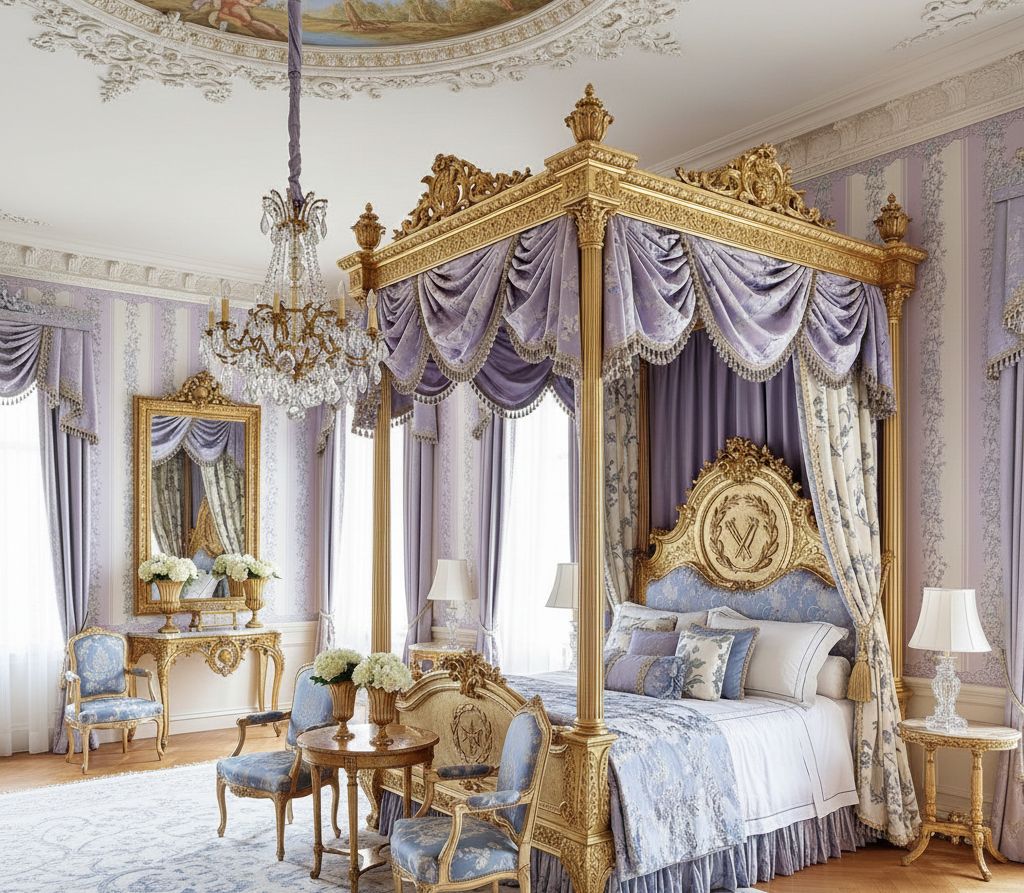
The Gilded Age: Exploring the Timeless Allure of Giltwood Furniture
There is something magical about gilded furniture. Few materials catch the light the way gold leaf does. It can turn a quiet corner into a focal point and turn an ordinary room into a space that feels curated, storied, and full of life. The effect is immediate. The moment your eye lands on giltwood, you sense luxury.
Giltwood furniture adorned the grandest of interiors ever since it was popularised in Europe by Louis XIV in the 17th century, when he built the gleaming palace of Versailles. Almost every surface was embellished and rimed with shining gold leaf, from to giltwood mirrors, and even the armchairs glittered; it’s hardly surprising that the French monarch became known as the Sun King.
His vision set the tone for European taste. Before long, the fashion crossed the Channel and found its place in English country houses. The rising aristocracy, eager to signal wealth and refinement, decorated their Palladian interiors with gilded mirrors, carved tables, and richly ornamented chairs.
For centuries, giltwood has symbolised opulence, craftsmanship, and prestige. From Georgian giltwood mirrors to exuberant Louis XIV armchairs, gilded furniture remains a strong expression of grandeur. This blog explores what giltwood furniture is and delves into the history of giltwood furniture. We will also highlight famous pieces often found in auction houses that you can acquire, and provide expert tips on how to incorporate these magnificent golden treasures into your decor.
Also Read: Radiance of Gilt Porcelain
What is Giltwood Furniture?
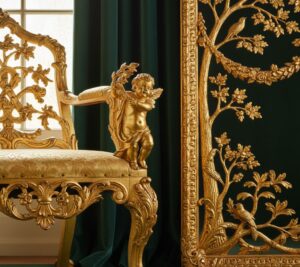
“Giltwood” refers to wooden furniture or architectural elements that have been coated with a thin layer of gold leaf. The process of applying gold leaf to a surface is known as gilding.
Craftsmen begin with carved wood, coat it in gesso, smooth it, apply bole (a coloured clay base), lay the gold leaf, then burnish or mattify the surface. The result is a finish that looks like solid gold without the weight or cost. Over time, gold leaf ages gracefully. Its natural patina is one of the qualities collectors value most.
Although gilding itself has ancient roots, giltwood rose to prominence as a dominant decorative element in seventeenth-century France.
Gilding Methods and Techniques
Understanding how giltwood is made helps you appreciate why antique pieces feel so alive. Here are prominent gilding techniques that shaped the giltwood furniture we know today.
- Water Gilding
Water gilding is the most traditional and luxurious method. It begins with layers of gesso made from plaster and glue. After being sanded smooth, the surface receives coats of bole. Gold leaf is then applied using water to activate the glue.
When dry, the gold can be burnished with an agate stone, creating a mirror finish.
- Oil Gilding
Oil gilding is the laying of a gold leaf over an adhesive that can be applied with a brush over gesso or tempera paint. The finish is slightly more matte, but it is durable.
The finish is slightly more matte, but it is durable.
- Meccatura Gilding
Meccatura or Mecca Gilding is an Italian technique that consists of the application of a colored varnish on burnished silver or tin foil with the aim of both imitating the golden surface and protecting the metal from tarnishing.
https://www.youtube.com/watch?v=0HVvHLYsL58
Video credit: She Holds Dearly
History of Gilding
Gilded antiques have been dated back to 3000BCE, originating in the Middle East, where tomb paintings have been discovered that represent gold beaters preparing to gild. Its rise in European furniture was a direct reflection of escalating royal power and aristocratic desire for luxury.
The Origins of Giltwood: A History of Opulence
- The French Triumph: Louis XIV (17th Century)
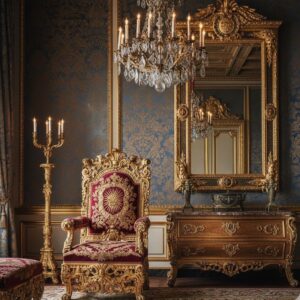
The definitive European trendsetter for giltwood was France’s Louis XIV, the ‘Sun King’. His ambition to create the most magnificent court in Europe culminated in the Palace of Versailles, a monument where nearly every interior surface was touched by gold. Under Louis XIV, giltwood became a visual language of power.
Famous pieces include:
- Louis XIV giltwood armchairs with tall backs and sculptural frames
- The newly emerging commode (chest of drawers)—often featuring heavy foliage, scrolls, and symbols of the king (like the sun and fleur-de-lis).
- Giltwood frames that amplified royal portraits.
This period is often called “the triumph of gilded wood.”
- The English Adoption: Georgian and Regency Eras (18th – Early 19th Century)
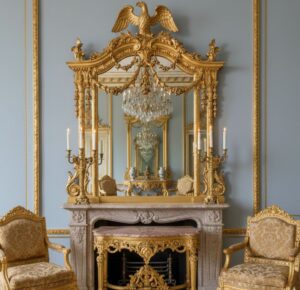
France influenced England, but British makers added their own voice. Georgian interiors relied on giltwood to brighten rooms, while Regency designers introduced stronger classical motifs.
Famous pieces include:
- Georgian pier mirrors, tall and architectural
- Regency convex mirrors crowned with eagles
- Victorian and Revival Styles
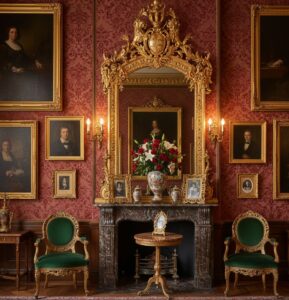
The nineteenth century revived earlier styles with enthusiasm. Giltwood became eclectic, bold, and sometimes theatrical.
Famous pieces include:
- Victorian overmantel mirrors with grand crests
- Balloon back side chairs with intricate carving
- Revival-style picture frames made for large salon paintings
Even in times of change, the appeal of gold leaf on carved wood remained strong.
Giltwood Furniture You Might Find at Auction
Auctions are full of giltwood treasures. Online auction houses like Giftex, with its World of Collectibles auctions, bring in antique and vintage furniture and decorative arts from many eras and styles.
You may come across:
- Giltwood mirrors
From Georgian to Rococo, mirrors are among the most common and collectible forms
- Giltwood console tables
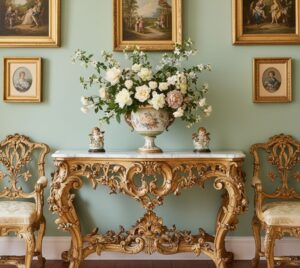
Often paired with marble tops. Rococo versions feel light and fluid, while Neoclassical ones are crisp and structured.
- Giltwood armchairs
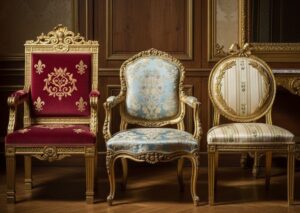
Louis XIV, Louis XV, and Louis XVI fauteuils remain desirable. Carving quality and original surfaces matter most.
- Girandoles and sconces
Perfect for bringing warm, ambient light into a room while adding sculptural detail.
- Giltwood chest of drawers
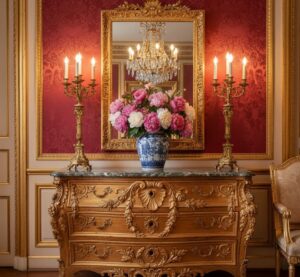
These are less common but highly sought after. They often combine fine carving with marble tops and original gilding, making them standout collector pieces.
Decorating with Giltwood Furniture: Bringing Grandeur Home
The inherent opulence of giltwood can be a powerful design tool in modern and traditional interiors alike.
Expert Decorating Tips:
- Create a Focal Point: Use a single, magnificent piece—such as a large giltwood mirror or a richly carved console table—to anchor a room.
- Mix Styles: Giltwood pairs beautifully with modern simplicity. Mix and match a Rococo giltwood frame with a contemporary abstract painting or a sleek, minimalist sofa.
- Use it for Lighting and Reflection: Giltwood mirrors are ideal for reflecting light and making a space feel larger and brighter.
- Layer Textures: The texture of gold leaf is best complemented by rich fabrics. Upholster a giltwood chair in velvet, silk damask to soften the metal’s formality.
The Enduring Radiance of Gold
The history of giltwood furniture is the history of European aristocracy and decorative arts, spanning the monumental grandeur of the Louis XIV court to the refined elegance of the Georgian period.
Gold leaf, applied by hand, turns carved wood into something timeless. It remains one of the most powerful materials in design, capable of lifting both traditional and modern interiors.


About Post Author