The Opulence of Ormolu Mounts in Furniture and Decorative Arts
Whether you are a seasoned antique collector or someone just beginning to explore the world of fine antiques, chances are you have come across the term ormolu. To the untrained eye, an ormolu mount can look like solid gold. But those in the know recognise it for what it truly is: one of the most sophisticated and enduring forms of decorative art ever produced.
First developed in France and often referred to as French ormolu, this technique became the backbone of European decorative arts throughout the 18th and 19th centuries. Ormolu is known as gilt bronze in English and bronze doré in French. While undeniably beautiful, it is also remarkably durable. Made from finely cast bronze coated in gold, antique ormolu designs combine strength with splendour.
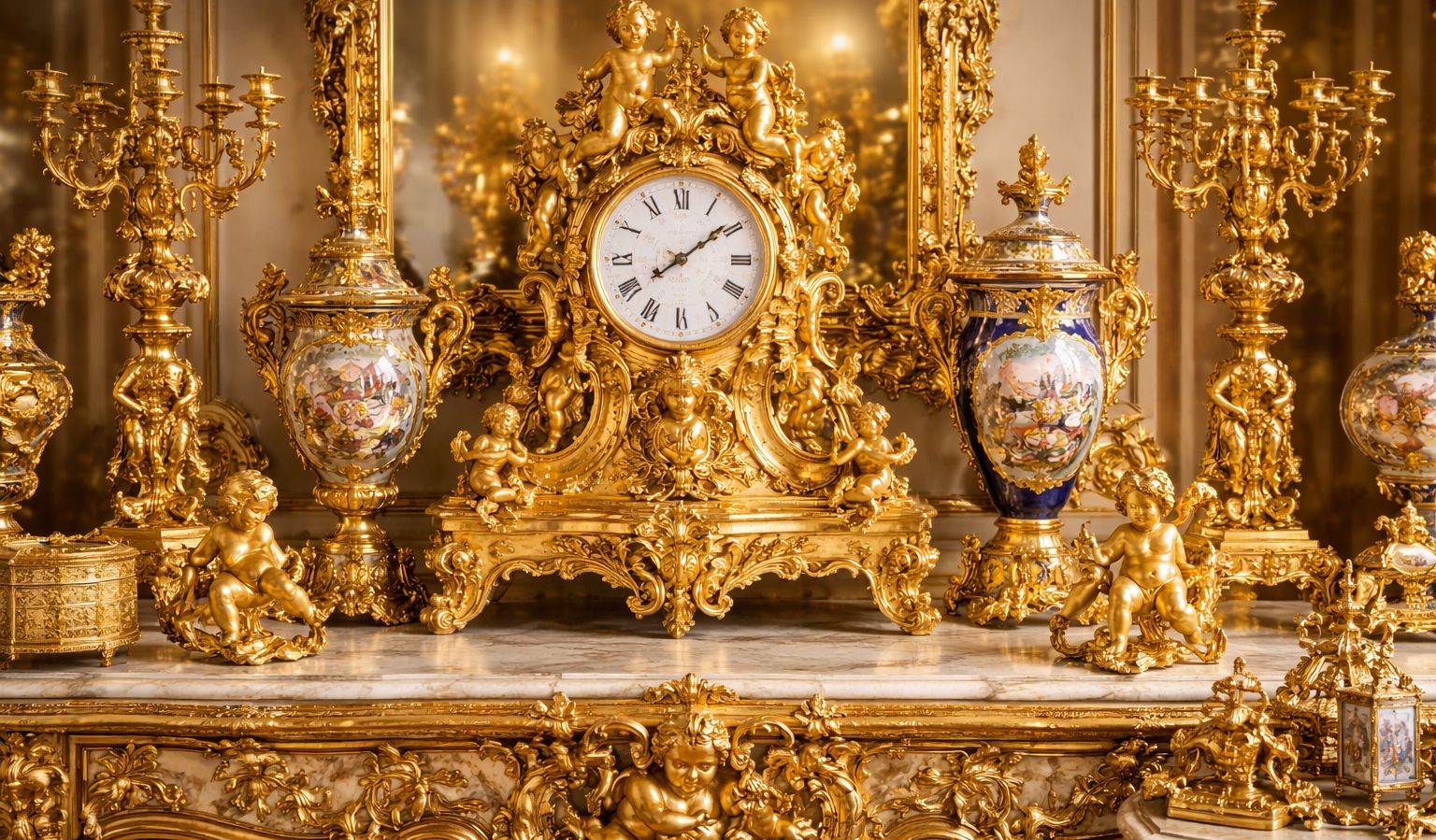
From the glittering courts of King Louis XVI to the imperial reign of Napoleon I, the French elite eagerly acquired furniture mounted with ormolu, along with clocks, candelabra, wall lights, and decorative objects. Today, antique ormolu furniture continues to captivate collectors and interior designers alike, prized for its craftsmanship, history, and unmistakable glamour.
In this guide, we explore the luxury, artistry, and enduring appeal of ormolu mounts, a material that is, in many ways, as good as gold.
Also Read: The Allure of Giltwood Furniture
What is Ormolu?
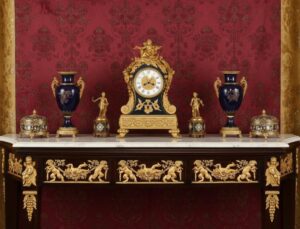
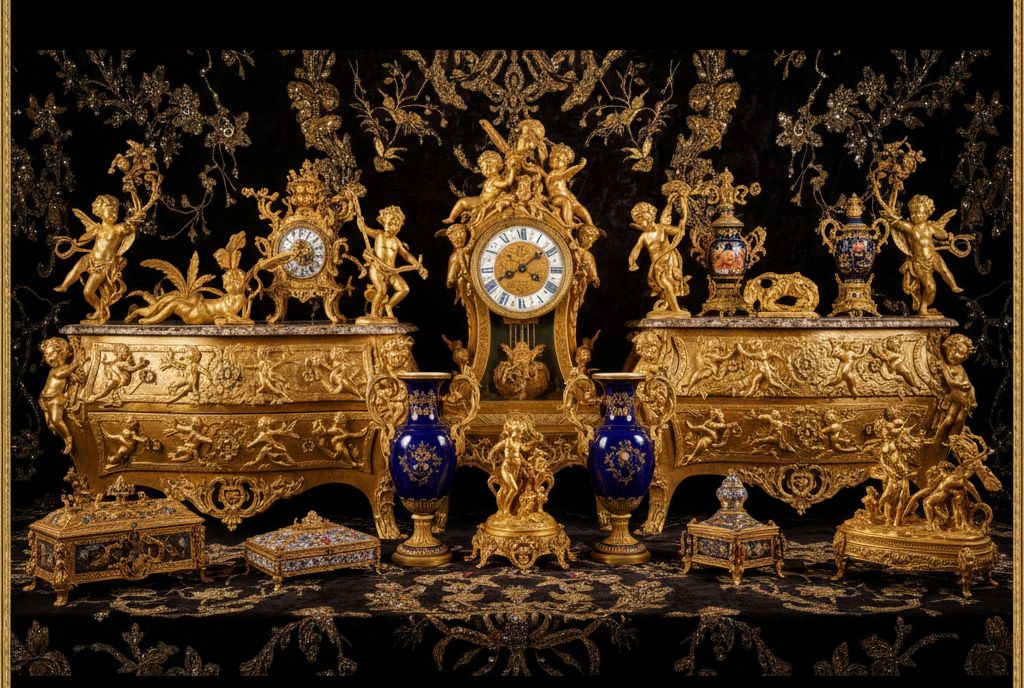
What are Ormolu mounts? Ormolu mounts are decorative elements made from bronze that have been gilded with gold. These mounts were applied to furniture and objects not only for decoration, but also for protection and structural support. Corners, feet, edges, and handles were often reinforced with ormolu, which prevented wear while enhancing the overall design.
Unlike solid gold, ormolu allowed craftsmen to create intricate shapes and fine details without the prohibitive cost. The result was furniture that looked luxurious, yet remained practical and robust.
https://www.youtube.com/watch?v=c9ENy4cl01o
Video Credit: The Collectibles Guide
The Art of Gilding: How Ormolu Was Made
The traditional method of creating ormolu is known as mercury gilding, a process now banned due to its toxicity. Bronze was coated with an amalgam of gold and mercury, then heated so the mercury evaporated, leaving a layer of pure gold bonded to the surface.
This technique produced a rich, warm glow that modern gilding methods struggle to replicate. Antique ormolu often displays subtle variations in tone, with matte and burnished areas used to highlight depth and detail.
The process was dangerous for craftsmen, but the results were extraordinary.
A Glimpse into the Glittering History of Ormolu
Ormolu first appeared in France in the mid-17th century, emerging from a culture that prized technical mastery as much as visual splendour. The process demanded exceptional precision, artistic judgement, and patience. Artisans began by sculpting a detailed model, around which a mould was formed. Molten bronze alloy was then poured into the mould and left to cool. Once released, the cast piece was painstakingly chased by hand to sharpen details and refine surfaces before being gilded with gold.
The result was an object that captured the warmth and richness of gold while benefiting from the strength and durability of bronze.
During the 18th and early 19th centuries, ormolu grew immensely popular across Europe, with France firmly at its centre.
Ormolu was strongly linked to two major artistic movements of the era: Rococo and Neoclassicism. Rococo ormolu mounts are celebrated for their exuberance, featuring flowing curves, asymmetrical forms, and richly detailed natural motifs such as foliage, shells, and flowers. In contrast, Neoclassical ormolu reflected a shift toward order and restraint. These mounts were symmetrical and refined, often incorporating motifs inspired by ancient Greece and Rome, including laurel wreaths, urns, rosettes, and classical figures.
Antique Ormolu Furniture and Decorative Arts Through the Ages
Ormolu has played a defining role in the evolution of European furniture and decorative arts.
- The Early Baroque Period: Power and Prestige
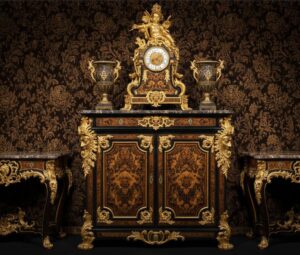
In the late 17th century, ormolu began to appear on grand Baroque furniture created for royal and aristocratic interiors. During this period, mounts were bold and sculptural, designed to emphasise strength and authority. Large, architectural forms, masks, scrolls, and dramatic foliage were common motifs.
Ormolu was used generously on cabinets, tables, and clocks, often combined with ebony, tortoiseshell, and brass marquetry.
- The Rococo Era: Movement and Ornament
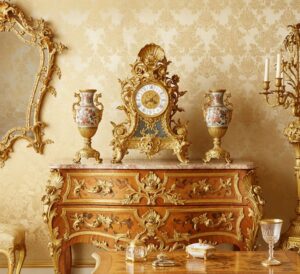
The Rococo period of the early to mid-18th century marked a high point for ormolu in decorative arts. Furniture became lighter in appearance, more playful, and increasingly curvilinear. Ormolu mounts followed suit, embracing asymmetry, fluid lines, and naturalistic motifs such as shells, flowers, and leafy scrolls.
During this era, ormolu was widely used on commodes, writing desks, mirrors, lighting, porcelain and glass objects. Mounts often flowed seamlessly into the shape of the furniture, blurring the line between structure and decoration
- The Neoclassical Period: Order and Refinement
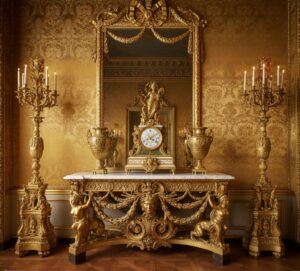
By the late 18th century, tastes shifted toward the clarity and balance of Neoclassicism. Inspired by the rediscovery of ancient Greek and Roman art, ormolu designs became more restrained and symmetrical. Decorative motifs included urns, laurel wreaths, rosettes, ribbons, and classical figures.
They appeared on refined commodes, secrétaire desks, tables, and mantel clocks, often paired with fine woods, marble tops, and elegant proportions.
- The Empire Period: Grandeur and Symbolism
Under Napoleon I in the early 19th century, ormolu took on a more monumental and symbolic role. Empire-style furniture featured strong lines, rich materials, and bold ormolu mounts that reinforced imperial authority. Motifs such as eagles, lions, laurel crowns, and military emblems were common.
Ormolu was used extensively on furniture, clocks, candelabra, and decorative objects, often in heavier, more sculptural forms.
Ormolu Beyond Furniture: The Decorative Arts
Beyond furniture, ormolu played a vital role in the decorative arts. Clocks housed in elaborate ormolu cases became centrepieces in grand interiors. Chandeliers and wall lights combined ormolu with crystal to reflect and amplify candlelight. Picture frames, ormolu mirrors, vases, and mounted porcelain benefited from ormolu’s ability to add structure, protection, and luxury.
These objects were often produced by specialist bronziers working in collaboration with cabinetmakers, clockmakers, and porcelain factories, resulting in works of remarkable cohesion and quality.
Ormolu in Interior Design Today
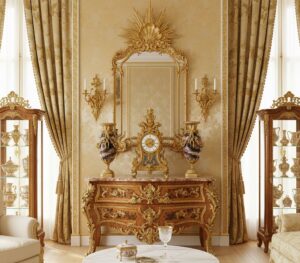
While rooted in history, ormolu is far from outdated. Interior designers frequently use antique ormolu furniture to add contrast and richness to modern interiors.
A single ormolu-mounted commode can transform a minimalist space, adding warmth and depth without overwhelming it. Ormolu clocks, mirrors, and lighting introduce subtle luxury and a sense of heritage.
Because ormolu pairs well with wood, marble, lacquer, and stone, it integrates easily into both traditional and contemporary settings. Its reflective quality also enhances light, making rooms feel more inviting.
The Enduring Appeal of Antique Ormolu
Across centuries and styles, ormolu remained a constant marker of quality and refinement. Its ability to adapt to different artistic movements while maintaining technical excellence is one of the reasons antique ormolu furniture and decorative arts remain so highly prized today.
A Material as Good as Gold
Ormolu mounts represent the perfect marriage of art and engineering. They elevate furniture beyond mere function, turning everyday objects into works of art. With their rich colour, durability, and historical significance, antique ormolu pieces continue to hold their place among the most desirable decorative arts in the world.
Whether you are collecting, decorating, or simply appreciating fine craftsmanship, ormolu offers a level of glamour and refinement that few materials can match. It is, quite simply, a material as good as gold.


About Post Author