The Rise of Expressionism in Indian Modern Art
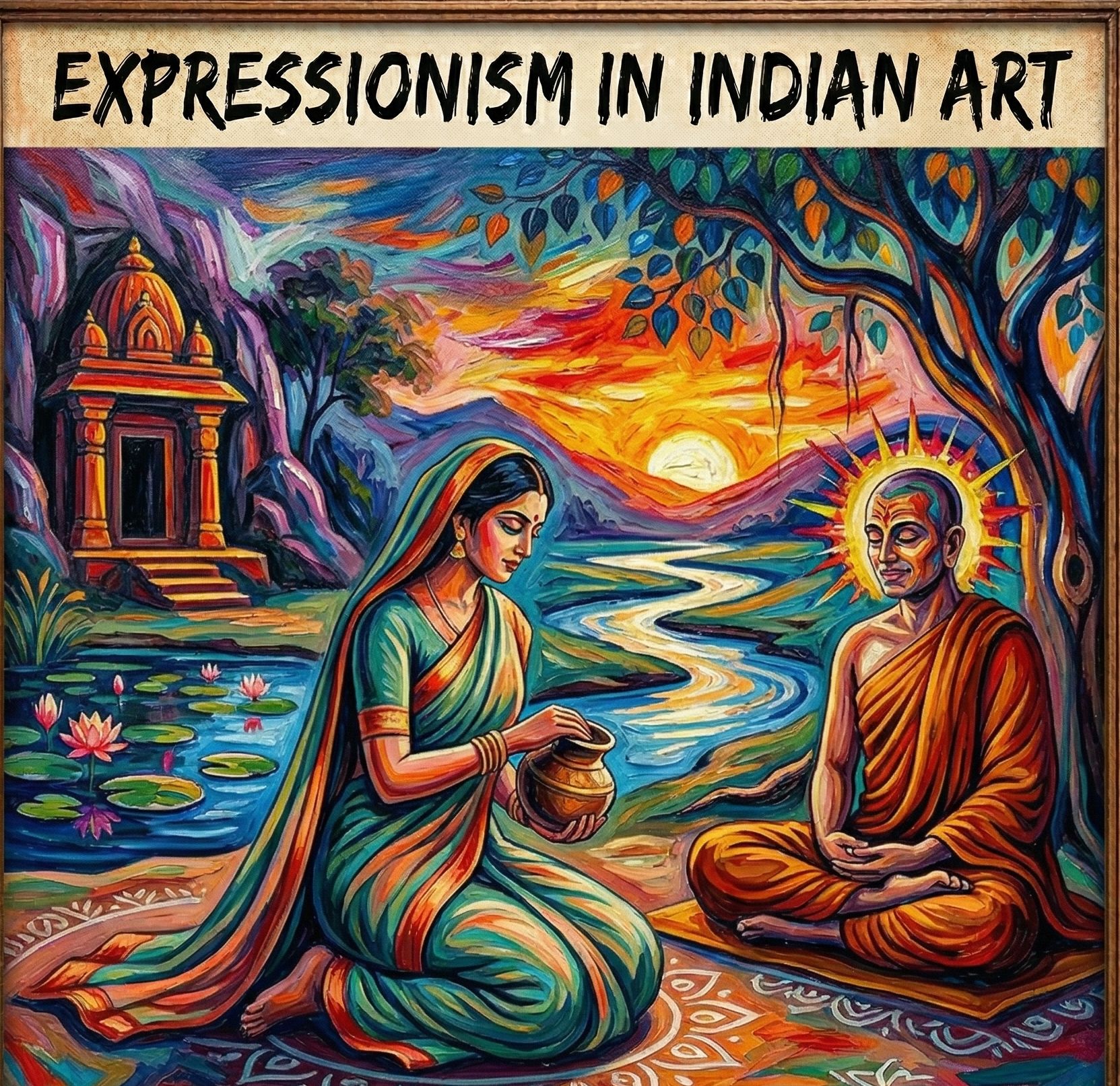
Expressionism is what is seen, felt, and perceived. When it is translated into the language of art, the Expressionism art movement is defined by the emphasis on emotion through bold brush strokes and intense colour. Rather than reality being copied, it is reshaped. Inner feelings are projected onto the canvas. As a result, art is not just observed, it is experienced.
It was considered a modern movement. Personal expression was prioritised over realistic depiction. Instead of painting what was seen, artists painted what was felt.
In order to create exaggerated emotional effects, dazzling colours were used. Unsettled and energetic brush strokes were applied. Forms were distorted. Figures were stretched or simplified. Therefore, a strong emotional response was evoked.
In this blog, the Expressionism art movement and its influence on Indian art will be explored in depth. Its origins, characteristics, and key artists who shaped this movement will also be discussed.
Also Read: The Psychology Behind Bidding In Art Auction
What is Expressionism?
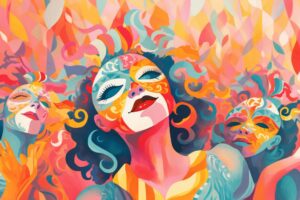
Expressionism originated in Germany in the early 20th century. It was developed as an experimental and innovative style before the First World War. During this time, artists felt a strong need to express their own views, emotions, and beliefs about the world.
The term “Expressionism” often refers to inner apprehensions of an individual. These emotions were translated into visual form. Viewers were encouraged to visualise the artist’s inner world.
Understanding Expressionism in the Language of Art
When Expressionism is understood in artistic terms, it becomes clear that it is not about perfection. It is about perception. It is about how reality is experienced internally.
Expressionism is what is seen, felt, and perceived. It focuses on emotional truth rather than visual accuracy. Therefore, it challenges traditional artistic standards.
As a result, artists are given the freedom to break rules. They can distort forms. They can exaggerate colours. They can simplify composition. All of this is done to communicate emotion effectively.
Expressionism in Indian Art
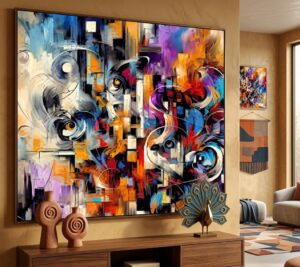
Expressionism in Indian art emerged after 1947. This period marked India’s independence. It was also a time of political transition, social transformation, and identity formation.
As a result, a new visual language was required.
Expressionism provided Indian artists with a way to move beyond colonial academic realism. It also helped them move away from decorative revivalism. Instead of focusing on surface beauty, deeper emotional and social concerns were addressed.
Expressionism in Indian art was developed as a blend. Western modernist techniques were combined with Indian themes.
During the 1950s and 1960s, modern art as a movement began to grow rapidly in India. It was during this time that many artists started exploring Western art movements such as Expressionism, Impressionism, Cubism, and Surrealism. However, these styles were not copied directly. They were adapted and transformed.
Role of the Progressive Artists’ Group
The Progressive Artists’ Group, formed in Bombay in 1947, played a central role in shaping modern Indian Expressionism. It became a platform for experimentation and innovation.
Artists associated with this group rejected traditional approaches. They embraced modern techniques. Emotional and psychological depth was prioritised.
- N. Souza used harsh line work and distorted figures. Social and religious structures were criticised.
Tyeb Mehta simplified the human figure into sharp, angular planes. Feelings of isolation and existential strain were conveyed. His work, Falling Figure, is a powerful example.
Thus, Expressionism in India was not a direct imitation of European models. Instead, it was a synthesis. Emotional force was merged with Indian themes, mythology, and post-independence realities.
Key Characteristics and Themes of Expressionism in Indian Art
Expressionism in India developed its own distinct identity. Several key characteristics and themes can be observed.
-
Distortion and Emotion
Distortion was widely used. Figures were altered and exaggerated. This was done to express subjective reality. Emotions such as frustration, exhilaration, and solitude were highlighted.
-
Bold and Symbolic Colour
Vibrant colours were used extensively. Colours were not realistic. Instead, they were symbolic. Emotional meaning was conveyed through colour choices.
-
Subjective Reality
Personal perception was prioritised over objective reality. What the artist felt was considered more important than what was seen.
-
Social and Political Themes
Themes of identity, urbanisation, and political transition were explored. Post-independence struggles and psychological tension were reflected in artworks.
Top 10 Artists Who Made Expressionism Popular in Indian Art
Several artists played a crucial role in popularising Expressionism in India. Their works continue to influence contemporary art.
-
F. N. Souza
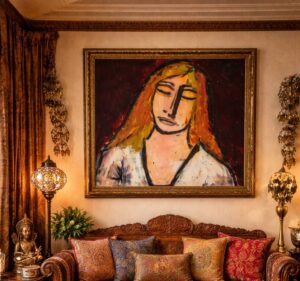
F. N. Souza is known for his bold and aggressive style. Distorted figures and harsh lines were used. Themes of religion, sexuality, and social hypocrisy were explored. His work reflects strong emotional intensity.
-
Tyeb Mehta
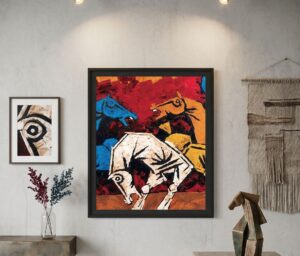
Tyeb Mehta is recognised for his simplified yet dramatic compositions. Human figures were reduced to essential forms. Emotional tension and existential struggle were conveyed through works like Falling Figure.
-
Jamini Roy
Jamini Roy drew inspiration from Indian folk art. However, expressive elements were incorporated. Simplified forms and bold outlines were used to create emotional impact.
-
Sunil Das
Sunil Das is known for his powerful sketches and paintings of animals, especially horses and bulls. His Bull Series and Horse Series depict motion, energy, and strength through expressive strokes.
-
M. F. Husain
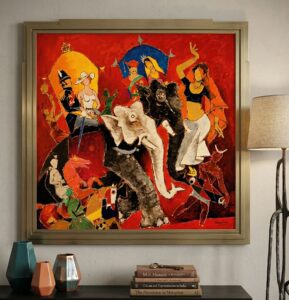
F. Husain is considered a master of expressive figurative painting. Bold colours and gestural lines were used. Themes of mythology, motherhood, and modern life were explored.
-
Amrita Sher-Gil
Amrita Sher-Gil used earthy tones and simple compositions. Quiet emotional depth was expressed. Her works, such as Three Girls and Young Girls, reflect the lives of Indian women.
-
Rabindranath Tagore
Rabindranath Tagore created dark and impulsive artworks. Subconscious emotions were explored. His portraits and figures reflect deep psychological states.
-
S. H. Raza
S. H. Raza used vibrant colours and gestural strokes. His work reflects personal experiences and emotional landscapes. Spiritual themes were often explored.
-
Jogen Chowdhury
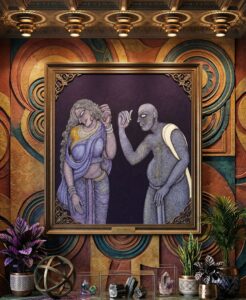
Jogen Chowdhury is known for his cross-hatching technique. Distorted human forms were depicted. Psychological tension and unease were expressed through his work.
-
Krishen Khanna
Krishen Khanna focused on human experiences and social realities. Expressive figures were used to depict common people and historical events. His work conveys empathy and drama.
Importance of Expressionist Painting Today
Expressionist painting continues to remain relevant in contemporary art. Its impact can be observed in multiple areas.
- Firstly, artistic freedom was expanded. Artists were no longer restricted by realism. Personal expression was encouraged.
- Secondly, emotional depth was prioritised. Feelings could be represented visually in a powerful way.
- Finally, Expressionism influenced other forms of art. Cinema, theatre, and literature were affected. Emotional storytelling became more prominent.
Contemporary artists continue to use Expressionist techniques. Distortion, bold colour, and abstraction are still widely used.
Conclusion
Expressionism is not just an art movement. It is a way of understanding the world. It is based on perception, emotion, and personal experience.
In India, Expressionism emerged as a response to change. It allowed artists to move beyond tradition. It enabled them to explore identity, conflict, and modern realities.
Through bold brush strokes, vibrant colours, and distorted forms, emotions were brought to life. A new artistic language was created.
Even today, Expressionism continues to inspire artists. It reminds us that art is not only about what is seen. It is about what is felt, understood, and perceived.
Giftex: Modern and Contemporary Art Auction
This April, Giftex returns with its renowned Modern and Contemporary Indian Art Auction. A curated selection will be presented, ranging from iconic masterpieces by celebrated artists to rare and exciting discoveries.
Discover timeless art treasures and experience the evolving narrative of modern and contemporary Indian art with Giftex this season.


About Post Author