
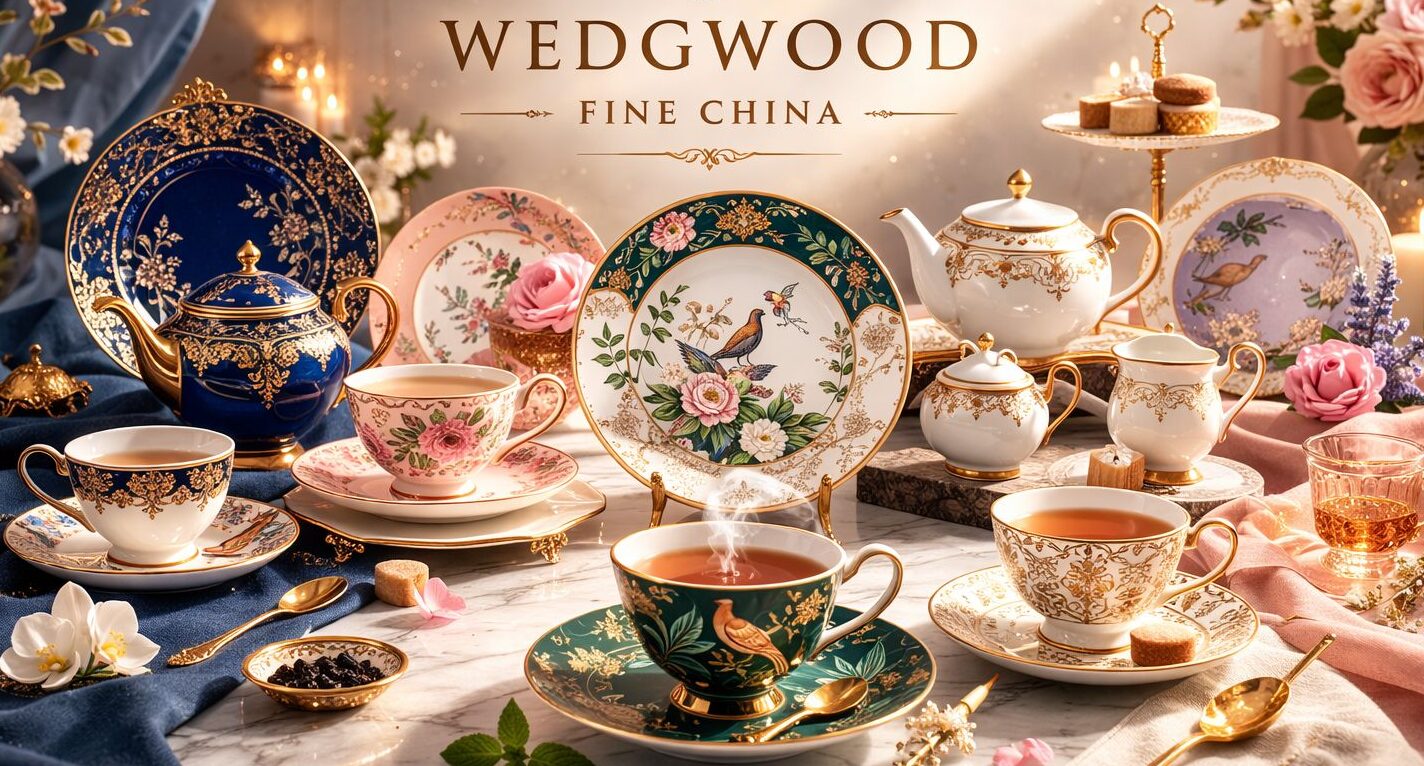
Wedgwood China: A Legacy of Craft, Design, and Collecting
“Beautiful forms and compositions are not made by chance, nor can they ever, in any material, be made at small expense.”
– Josiah Wedgwood
Wedgwood has been a beacon of excellence in bone China and ceramics for over 260 years. From its origins in England’s pottery industry to becoming a global icon, Wedgwood has become the standard for antique and vintage porcelain collectibles.
The company’s founder, Josiah Wedgwood I (1730 – 95), is remembered today as “Father of English Potters”. When people think about ceramics, they tend to only think in simpler terms: jugs and mugs made from earthen clay. However, the range and sophistication of ceramics reach far beyond that, a notion forever changed by Josiah Wedgwood. From vases to dinnerware, the Wedgwood collection offers something for every kind of collector.
In this blog, we delve into Wedgwood’s illustrious past and highlight some of the most iconic types and styles of Wedgwood china patterns.
Whether you’re curious about its history, drawn to a specific pattern, or thinking about starting a collection, understanding Wedgwood means understanding how design and industry grew up together in Britain.
Also Read: A Guide to Types of Antique Porcelain
History of Wedgwood
Wedgwood was founded in 1759 by Josiah Wedgwood in Burslem, Staffordshire, England. Josiah was a talented potter and an astute businessman who revolutionised the pottery industry with his innovative techniques and relentless pursuit of quality.
Beginning as an independent potter aged just 29, Josiah Wedgwood experimented avidly with clay, exploring its many possibilities.
Potter to Her Majesty
Josiah I’s company was already on its way to commercial success when a major commission came. One of Wedgwood’s earliest successes was “Queen’s Ware,” named after Queen Charlotte, who permitted him to style himself “Potter to Her Majesty.” From that point on, Wedgwood china became associated with elegance and status.
By the late 18th and early 19th centuries, Wedgwood pieces were exported widely.
What Makes Wedgwood China Distinct?
Wedgwood china is known for several defining qualities:
- Precision in craftsmanship
- Consistency in quality
- Innovative ceramic bodies
- Detailed, often hand-applied decoration
Iconic Types of Wedgwood
- Jasperware
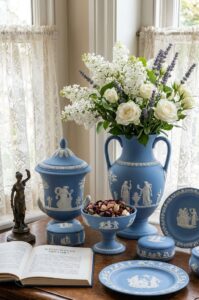
What it is: The most iconic, matte-finish, unglazed stoneware developed in 1774.
Characteristics: Known for classical white relief scenes on a coloured background, commonly pale blue (“Wedgwood Blue”), but also available in green, sage, black, and lilac.
The most recognisable version is the pale blue background with white figures. Vases, plaques, and trinket boxes in this style are staples in collections. Jasperware marked a turning point in decorative ceramics, combining archaeology, art, and industrial precision.
- Fine Bone China
What it is: Lightweight, durable, and luxurious, it is made from bone ash, clay, and stone.
Characteristics: Known for its milky, translucent appearance, it is often used for modern and traditional tableware, such as Wild Strawberry. Its smooth surface makes it ideal for detailed printed patterns and gilded decoration.
- Queensware (Creamware)
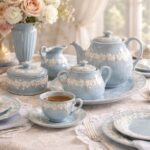
What it is: A durable, creamy-coloured earthenware developed by Josiah Wedgwood early in his career.
Characteristics: Perfected to resemble porcelain but at a more affordable price, it often features simple, elegant shapes.
- Black Basalt Ware
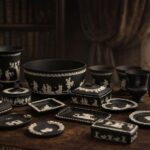
What it is: A matte, black stoneware perfected by 1769.
Characteristics: Often used for neo-classical style vases, busts, and tea sets, it is extremely tough.
- Other Notable Types
Majolica: Colourful, lead-glazed wares, often featuring high-relief, whimsical designs popular in the Victorian era.
Caneware (Bamboo): A light-coloured stoneware designed to look like bamboo, popular in the late 18th century
Popular Wedgwood Patterns
Over time, Wedgwood has introduced patterns that reflect different eras, artistic influences, and global traditions.
- Jasperware
While technically a ceramic body, Jasperware is also often treated as a pattern category because of its consistent visual style. Classical figures in white relief stand against coloured backgrounds. Scenes from mythology, muses, and pastoral imagery are common themes.
Collectors value Jasperware for its historical importance and recognisable aesthetic.
- Wild Strawberry
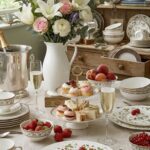
Wild Strawberry is one of Wedgwood’s most charming and enduring floral patterns. Delicate red strawberries, blossoms, and green leaves are scattered across a white background, often accented with fine gold trim.
The design feels traditional without being heavy. It suits both formal and casual settings.
- Blue Willow
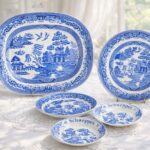
Blue Willow is one of the most recognisable blue-and-white designs in ceramic history. Although it was not originally created by Wedgwood, the company adopted and produced its own versions, helping cement its popularity.
The pattern features a romanticized Chinese landscape with pagodas, a bridge with figures crossing, willow trees, birds in flight, and stylised water scenes.
Blue Willow was inspired by traditional Chinese porcelain, but it is actually a British interpretation created in the late 18th century.
Its appeal lies in familiarity. Generations grew up with Blue Willow plates and serving dishes, which makes it emotionally as well as visually significant.
- Florentine
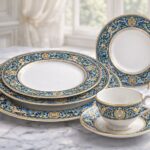
The Florentine pattern is a masterpiece of intricate design and luxurious detail. Introduced in the early 20th century, it features a richly decorated border with mythical griffins, floral scrolls, and elaborate medallions. The central field is often left white, framed by a dramatic border in cobalt blue, emerald green, black, or deep crimson.
This Wedgwood china pattern was inspired by Renaissance art and architecture.
Florentine feels formal and dramatic. It’s often chosen for statement dining tables or special occasions.
- Kutani Crane
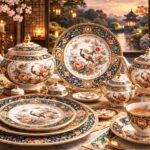
Kutani Crane is a Wedgwood china pattern that beautifully blends Eastern and Western design elements. Introduced in the 1970s, it features elegant cranes among blooming flowers set against a crisp white background with intricate gold detailing.
The inspiration came from traditional Japanese Kutani porcelain, known for its vibrant colours and detailed patterns.
Wedgwood’s interpretation refined the palette and balanced the decoration so it felt both decorative and restrained.
- Vera Wang Collections
In more recent decades, Wedgwood has collaborated with contemporary designers. The Vera Wang collections bring a modern sensibility to traditional bone china.
Patterns such as Lace Gold and Infinity use subtle textures, clean lines, and metallic detailing rather than dense florals or classical scenes.
The partnership shows how Wedgwood continues to evolve while keeping its emphasis on craftsmanship.
- Wonderlust
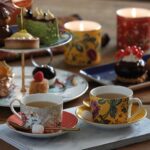
The Wonderlust collection represents a vibrant shift toward global inspiration and travel themes. Bold colours, exotic flowers, butterflies, and imaginative landscapes define the series.
Each design draws from different cultural references and destinations, creating a sense of movement and curiosity. Wonderlust feels playful and expressive compared to more traditional patterns.
It reflects how modern consumers often mix and match pieces rather than sticking to one formal service.
Caring for Wedgwood China
If you collect Wedgwood, proper care matters.
- Hand washing is safest, especially for gilded patterns.
- Avoid sudden temperature changes.
- Store plates upright with protective padding between them.
- Keep Jasperware free from prolonged moisture exposure.
Caring for Wedgwood is not just about maintenance; it’s about respecting the artistry and the history.
Wedgwood: Timeless Collectibles
Wedgwood china is more than tableware. It represents centuries of design evolution, technical innovation, and global artistic exchange. From the classical elegance of Jasperware to the dramatic richness of Florentine and the contemporary lines of modern collaborations, Wedgwood continues to balance tradition and change.
For collectors, it offers depth, variety, and enduring appeal. Whether you are drawn to blue-and-white romance, intricate Renaissance borders, or minimalist modern gold detailing, there is likely a Wedgwood pattern that speaks to your taste.
Giftex: A World of Collectibles Auction
This March, Giftex brings back its renowned A World of Collectibles Auction, an event that draws collectors, decorators, and history lovers alike.
From exquisite vintage pieces to rare antique finds, the auction showcases craftsmanship and design shaped over generations. Whether you are an experienced collector or simply looking for something distinctive for your home, this auction is a chance to discover objects with meaning.


About Post Author