Romanticism in Indian Art: Where Love, Longing & Identity Converge
Love has whispered through Indian art across centuries. It has been carried by verses, in melodies, and above all, in paintings. From the divine love of Radha-Krishna to the star-crossed lovers Laila and Majnu, Indian art has never treated romance as a simple union between two individuals. Instead, it expands into something deeper. It becomes a language of devotion, separation, memory, and even spiritual awakening.
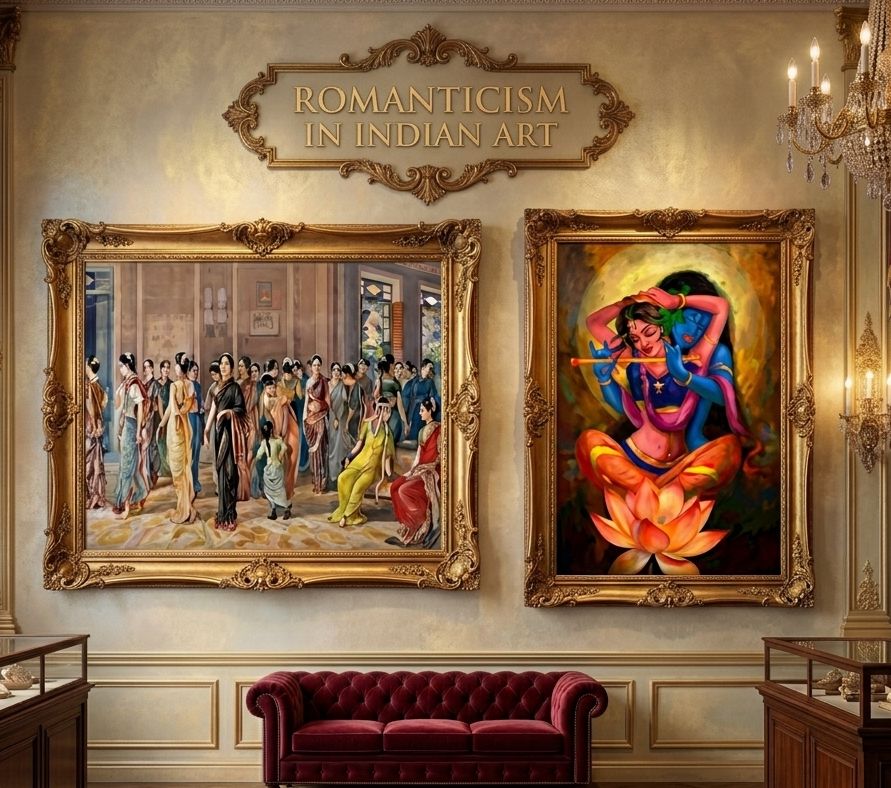
This layered understanding of love was further shaped and highlighted by the Romanticism art movement. Although Romanticism originated in Europe, its ideas found a unique and powerful expression in Indian art. Through this blog, the Romanticism art movement will be explored, along with its evolution in India and some famous romantic realistic artists of India who helped define its visual language.
Also Read: The World of Pahari Paintings
What is the Romanticism Art Movement?
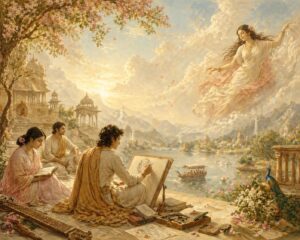
Romanticism was a 19th-century artistic, literary, and intellectual movement that developed roughly between 1780 and 1850. It emerged as a reaction against the Enlightenment, where logic, reason, and order had been emphasized above all else. In contrast, Romanticism placed emotion, imagination, and individual experience at the center of artistic expression.
Nature was no longer just a background; instead, it was treated as a powerful, almost spiritual force. Similarly, human emotions such as love, grief, awe, and longing were elevated as essential ways of understanding the world.
https://www.youtube.com/watch?v=_iuuGRC70oY
Video Credit: The Romanticism Art Movement by The Art Story
Romanticism and Its Arrival in India
Although Romanticism was rooted in Europe, its influence was gradually felt in India during the colonial period.
Initially, British artists introduced Romantic landscape painting in India. Through what came to be known as the Company School of Art, Indian artists began to adopt Western techniques such as perspective, shading, and realism. However, these techniques were soon blended with Indian themes, resulting in a hybrid visual language.
At the same time, a counter-response began to emerge. The Bengal School of Art played a crucial role in redefining Indian artistic identity. As a result, a more lyrical, emotional, and nostalgic style was developed, one that aligned closely with Romantic ideals.
Understanding Romantic Realism in Indian Art
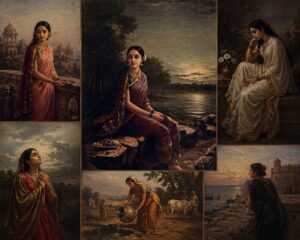
Romantic Realism can be understood as a blend of two artistic approaches. On one hand, the emotional depth and idealism of Romanticism are retained. On the other hand, the detailed and lifelike representation associated with Realism is incorporated.
Key Characteristics of Romanticism in Indian Art
Several defining features can be observed in Romanticism as it developed in India.
- Expression of the Human Condition
Firstly, a deep exploration of human emotion was emphasized. Feelings such as love, sorrow, devotion, and longing were vividly portrayed.
- Emotional Honesty
Secondly, emotional authenticity was valued. Artists attempted to convey genuine feeling, even when the subject matter was mythological or symbolic.
- Detailed and Lifelike Representation
At the same time, realistic techniques were adopted. Careful attention was given to anatomy, texture, and environment, allowing figures and settings to appear believable.
- Nature and the Sublime
Nature was often depicted as powerful and awe-inspiring. Mountains, rivers, forests, and skies were not merely decorative; instead, they were used to reflect emotional states and spiritual ideas.
- Historical and Mythological Themes
Finally, stories from Indian epics, folklore, and history were commonly explored.
Influence of the Bengal School of Art
The Bengal School of Art marked a significant turning point in Indian art history. It was developed as a response to colonial dominance and Western artistic standards.
Under the leadership of Abanindranath Tagore, a softer, more spiritual style was promoted. As a result, art became more introspective and poetic.
Moreover, this movement aligned closely with Romantic ideals. Emotion, memory, and national identity were emphasized, and therefore, art became a medium of both personal and cultural expression.
Famous Romantic Realist Artists in India
- Raja Ravi Varma (1848–1906)
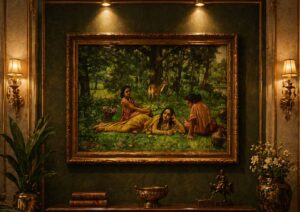
Raja Ravi Varma is often regarded as one of the pioneers of Romantic Realism in India. His paintings combined European realism with Indian mythology, creating a new visual language that was both accessible and emotionally engaging.
Notable works such as Shakuntala, Hamsa Damayanti, and Vasantika demonstrate his ability to humanize divine figures.
- Abanindranath Tagore (1871–1951)
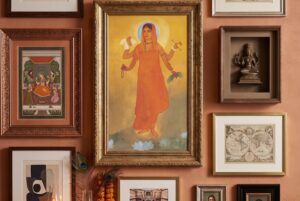
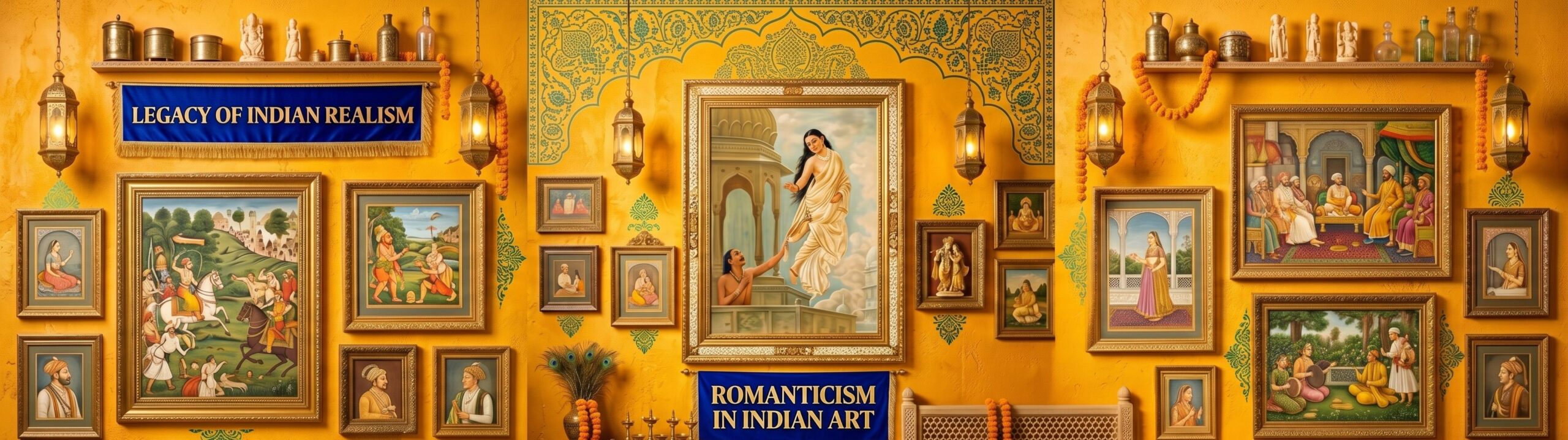
As the founder of the Bengal School of Art, Abanindranath Tagore played a crucial role in shaping modern Indian art. His work Bharat Mata became an iconic symbol of national identity.
Through his paintings, a sense of nostalgia and spiritual depth was conveyed. His style moved away from realism and instead embraced a more symbolic and emotional approach.
- Nandalal Bose
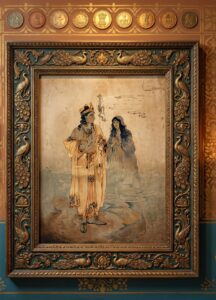
Indian folk traditions and rural life deeply influenced Nandalal Bose. Furthermore, his art carried a lyrical quality. His notable works such as Yama and Savitri and Sita’s Agni Pariksha clearly reflect the influence of the Romanticism art movement, especially in the way emotion, texture, and colour are handled.
- Jamini Roy (1887–1972)
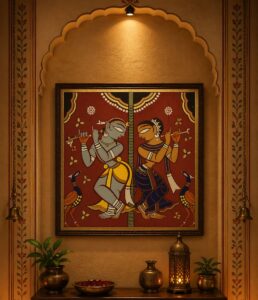
Jamini Roy developed a unique style that was inspired by folk art traditions. Bold lines, flat colours, and simplified forms were used to create visually striking compositions.
His works, such as Mother and Child and Radha Krishna, captured emotional intimacy while remaining rooted in traditional aesthetics.
Amrita Sher-Gil (1913–1941)
Amrita Sher-Gil brought a modern perspective to Romantic Realism. Influenced by European Post-Impressionism, her work explored themes of identity, solitude, and everyday life.
Paintings like “The Village Woman” and her self-portraits reveal a profound emotional sensitivity.
Final Thoughts
Romanticism in Indian art cannot be understood as a simple adoption of a European movement. Instead, it should be seen as a transformation. While the core ideas of emotion, imagination, and individuality were retained, they were reshaped within the Indian cultural and historical context.
As a result, Indian Romantic art became something uniquely its own. It blended mythology with realism, tradition with innovation, and personal emotion with collective memory.
Even today, the legacy of Romanticism continues to influence Indian art. Ultimately, Romanticism in India reminds us that art is not just about what is seen, but about what is felt.
Giftex: Modern and Contemporary Indian Art Auction
This April, Giftex returns with one of its most anticipated events of the year, The Modern Indian Art Auction. Known for bringing together collectors, enthusiasts, and art lovers, the platform once again opens its doors to a carefully curated selection of masterpieces that reflect India’s rich artistic journey.


About Post Author