
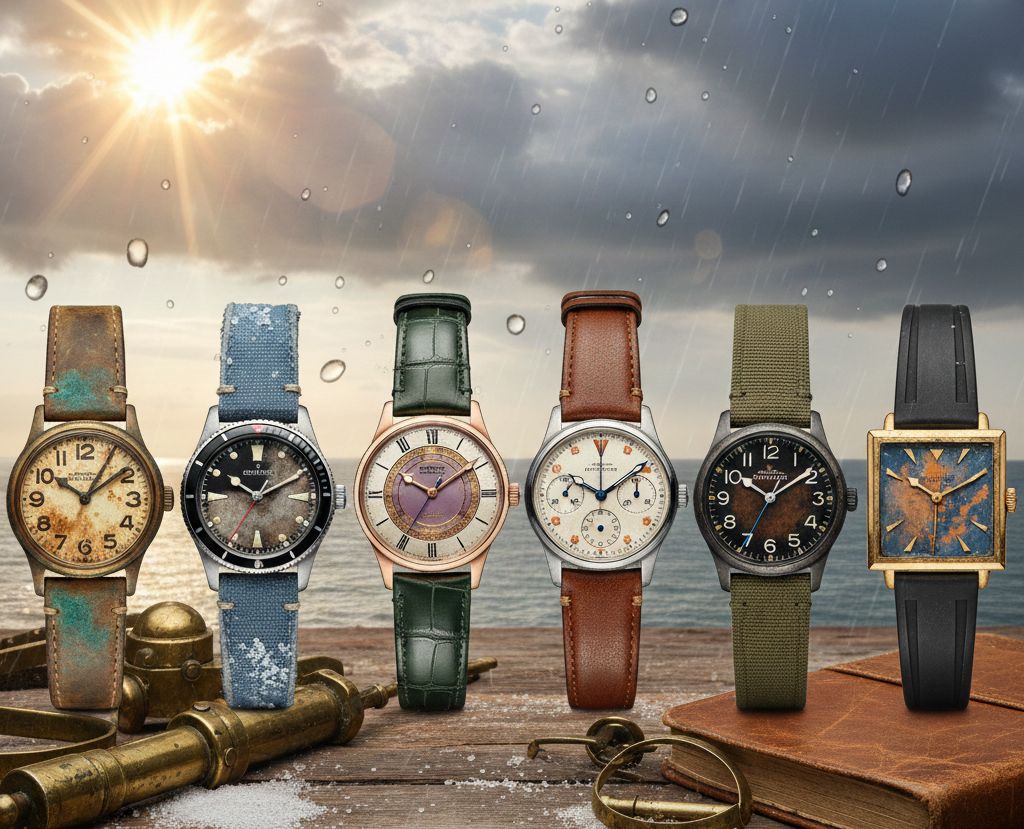
When Time Becomes the Value: The Magic of Vintage Watch Patina
In the enthralling world of vintage watch collecting, few things evoke as much fascination and admiration as the charm of patina. In most industries, ageing diminishes value. Cars rust, electronics slow down, and clothes fade. But the allure of vintage watch patina in the realm of watch collecting becomes the ultimate value driver.
Take, for instance, a vintage Rolex Submariner. The value of a Rolex with a brand-new dial as compared with that of an aged tropical dial will be less. In the case of vintage watch patina, time itself becomes the money driver.
Watch patina plays a significant role in how vintage collectors interpret age, value, and originality. This guide explains what patina is, how it forms, the value of uneven patina and why vintage collectors debate its appeal.
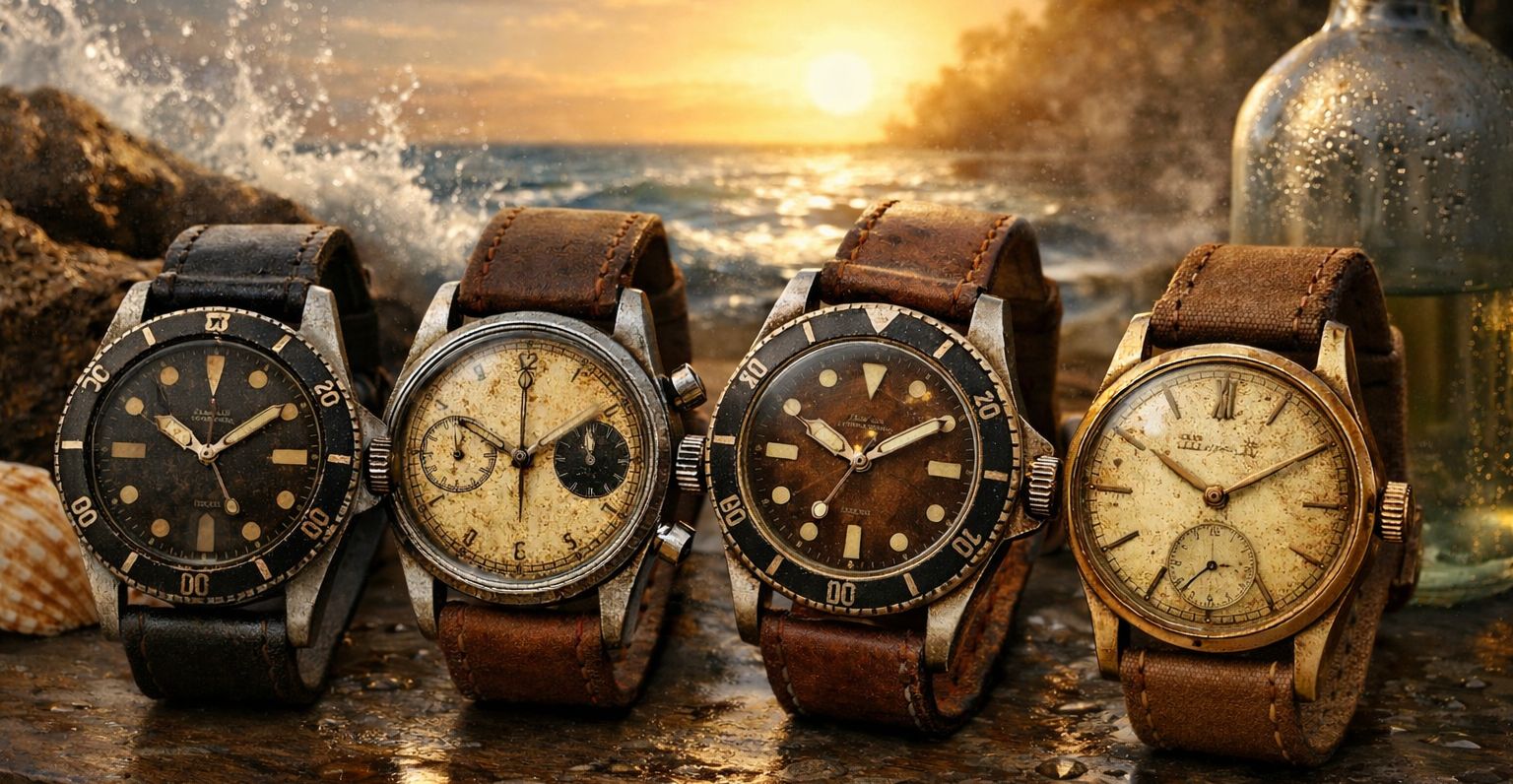
Also Read: Inside the World of Luxury Watch Crystals
What is Patina?

https://www.youtube.com/watch?v=13cxwCJ7xP8
Video credit: DuMarko
Patina is a term deeply rooted in the language of watch collecting and horology. It refers to the natural process of ageing that affects the materials of a watch over time, leading to changes in colour, texture, and character.
As the decades pass, these gracefully aged watches become testaments to the enduring allure of time. Patina turns a watch into a storyteller. It reflects years of use, travel, and environment, captivating collectors who value authenticity over perfection.
Patina versus Damage
While patina represents a gentle, organic ageing process that enhances a watch’s character and appeal, it’s important to distinguish patina from damage, such as cracks, chips, or extensive corrosion that can detract from a timepiece’s value or function.
Collectors celebrate patina when it enhances aesthetics without harming functionality. Once ageing crosses into structural failure, value and desirability can decline sharply.
The Many Facets of Patin
Patina appears across different components of a vintage watch, each contributing to its overall appeal.
- Case Patina
Metal watch cases, especially those made from brass, bronze, or silver, develop distinctive patina through oxidation. Bronze cases may take on bluish-green hues, while silver cases can show darker toning or soft matte textures. Even stainless steel can develop subtle softening of edges and surface tones over time.
- Dial Patina
Dial patina is often the most prized and visually striking form of ageing. Known commonly as tropical ageing, this occurs when original black or dark dials fade into shades of chocolate brown, caramel, or grey. Tropical dials are highly sought after because no two age in exactly the same way.
- Hand and Lume Patina
The ageing process also affects hands and luminescent materials. Early lume, once bright white or green, often fades into warm shades of cream, yellow, or pumpkin. Hands may darken slightly or develop subtle oxidation that matches the dial.
The Role of Patina in Watch Collecting
Patina holds a powerful emotional and financial pull in the vintage market. Its appeal rests on several key factors.
- Authenticity
Patina signals originality. A watch that has never been refinished or altered carries greater historical integrity than one restored to look new.
- Rarity
Natural ageing cannot be controlled or replicated. Tropical dials, evenly aged lume, and case oxidation occur unpredictably, making such watches genuinely rare.
- Emotional Connection
Patina connects collectors to the past. It transforms a watch from an object into a witness of time.
- Patina as a Provenance Marker
Patina also acts as a silent record of a watch’s life. Sun exposure hints at outdoor use. Humidity spotting may suggest tropical climates. Darkened lume can reflect decades of chemical change.
Experienced collectors often read patina like a map, using it to assess originality, usage patterns, and whether components belong together.
The Role of Lume in Patina Formation
One of the most significant contributors to patina in vintage watches is luminous material. Early luminous paints contained radium, a radioactive substance that glowed continuously without charging.
Over time, radiation degraded surrounding materials, causing lume to darken into shades of brown or orange.
Collectors value original lume because it confirms untouched condition. Relumed hands or dials, even if well done, often reduce desirability since they erase historical authenticity.
How Long Does It Take for a Watch to Develop Patina?
Patina does not follow a fixed timeline. Its development depends on the materials used, how the watch is worn, and the environment in which it lives.
Bronze cases are among the earliest to show signs of patina, often darkening within weeks as the metal reacts to air and moisture. Leather straps evolve over months, developing a natural sheen, richer colour, and soft creases that reflect daily wear.
Tritium lume typically requires decades to transition from its original pale shade to warmer tones of cream, yellow, or light brown. Vintage dial paints can take twenty to forty years to fade into the coveted tropical browns that collectors admire.
Modern materials, however, are designed to resist ageing. Ceramic bezels and sapphire crystals are chemically stable and protected by advanced coatings, meaning they will not develop true patina.
Also Read: Tropical Dial in Vintage Watches
Uneven Patina and Collector Debate
Uneven patina sparks ongoing debate in the collecting community. Some collectors love asymmetry, spotting, and irregular fading, seeing them as evidence of real life and natural ageing.
Others prefer even patina, where dial colour, lume tone, and hands age consistently. Watches with mismatched or extreme ageing can divide opinion, sometimes commanding premiums among niche collectors while being rejected by others.
Ultimately, uneven patina holds value when it appears organic and honest rather than the result of neglect or damage.
Artificial Patina and Modern Interpretations
As demand for vintage aesthetics has grown, modern manufacturers have begun imitating patina. Techniques such as faux patina, artificial ageing, and fumé dials aim to recreate vintage charm straight from the factory.
The key difference remains intent. Artificial patina is manually designed. True patina is experience.
Caring for Aged Watches: Honouring Patina

Preserving patina requires restraint. Over-cleaning, polishing, or replacing aged components can permanently diminish value.
Collectors should prioritise mechanical servicing while leaving cosmetic elements untouched. Proper storage, controlled humidity, and minimal exposure to harsh conditions help protect delicate, aged surfaces without erasing their character.
Honouring patina means accepting imperfections as part of the watch’s identity.
The Emotional Pull of Patina
Patina does not just tell a story. It invites imagination. Was that dial fade shaped by years at sea? Did the lume darken during long nights under harsh sun? Did those case marks come from daily wear or distant travel?
Each imperfection hints at a past life, turning the watch into a personal connection across time. That emotional resonance is why collectors chase patina, debate it endlessly, and pay dearly for it.
In vintage watch collecting, perfection lies not in flawlessness but in authenticity. Patina reminds us that time, when allowed to leave its mark, can create something truly priceless.
Giftex: A World of Collectibles Auction This February
This February, Giftex unveils its latest World of Collectibles auction, bringing together a curated selection of rare and exceptional pieces. Among the featured sections is a distinguished collection of vintage and luxury watches, showcasing timepieces valued for their craftsmanship, heritage, and enduring appeal. From historically significant models to collector-favourite icons, the watch segment promises to be a highlight for enthusiasts and seasoned collectors alike. Don’t miss the opportunity to explore watches where history, design, and value converge.


About Post Author